Technical Dossier
Product Details And Specifications
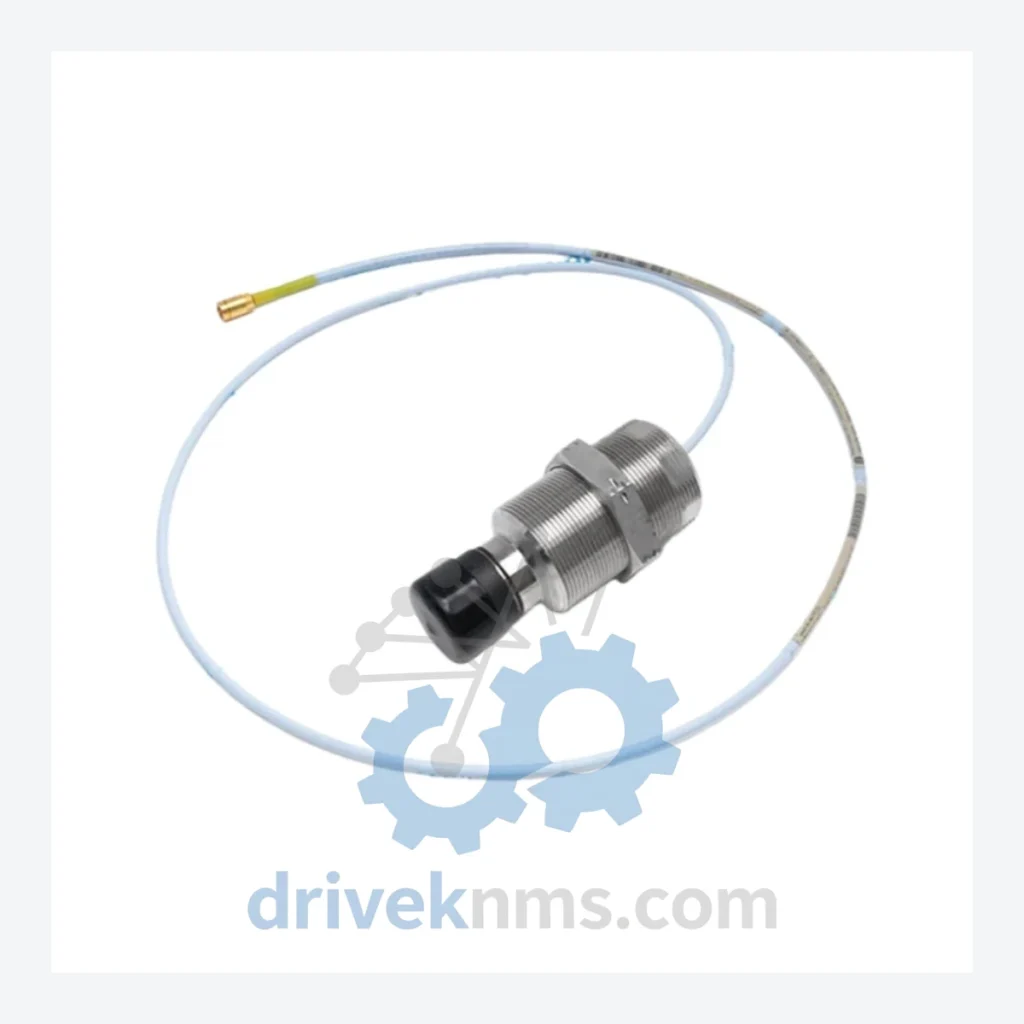
Bently Nevada 330851-08-000-064-10-01-05 Proximity Probe – Obsolete 3300 XL Series Spare Part
When a proximity probe fails inside a running turbomachinery protection system, the clock starts immediately. A single unmonitored shaft can trigger an unplanned shutdown. In facilities where the Bently Nevada 3300 XL Series forms the backbone of vibration monitoring, replacing that probe is not a matter of walking into a distributor — the 330851-08-000-064-10-01-05 has been discontinued by GE Bently Nevada, and sourcing a verified replacement through standard channels is no longer possible.
DriveKNMS holds sourcing status of the 330851-08-000-064-10-01-05. Inventory is finite and not replenishable from the manufacturer.
RFQ support for obsolete parts: Send the model number, required quantity and destination so DriveKNMS can confirm sourcing options before quotation.
Technical Specifications
Electrical parameters not listed above are not independently verified by DriveKNMS. Buyers are advised to cross-reference against original engineering drawings before installation.
Solving the Discontinued Hardware Crisis
The Bently Nevada 3300 XL proximity probe system was the industry standard for shaft vibration and position monitoring on steam turbines, gas turbines, compressors, and large rotating machinery throughout the 1990s and 2000s. Thousands of these systems remain in active service globally — not because plant engineers are unaware of newer alternatives, but because the cost and risk of replacing a functioning, validated protection system cannot be justified on a financial or operational basis.
The 330851-08-000-064-10-01-05 probe is a field-replaceable unit within that architecture. When it fails, the monitor channel goes into a fault state. Depending on system configuration, this can trigger a turbine trip or force operators to bypass the channel — both outcomes carry serious consequences. A tripped turbine in a power generation or petrochemical context means lost production. A bypassed channel means reduced protection on a piece of rotating equipment that may be worth tens of millions of dollars.
The replacement path that avoids both outcomes is straightforward: maintain a verified spare on the shelf. The probe is a passive sensor. It does not require firmware updates, licensing, or system reconfiguration. A direct swap restores full channel functionality.
Q: How are RFQ terms confirmed?
A: Quantity, required condition, documentation needs, destination and sourcing route are confirmed during RFQ review before quotation.
Extending Automation Asset Life by 5–10 Years
The decision to extend the operational life of a legacy turbomachinery protection system rather than replace it is, at its core, a capital allocation decision. For systems built around the Bently Nevada 3300 XL platform, a structured spare parts program can realistically extend system life by five to ten years beyond the point at which the manufacturer discontinued support.
1. Identify the failure-mode hierarchy. Proximity probes and extension cables are the highest-turnover components in a 3300 XL installation. Proximitor modules fail less frequently but are harder to source. Rack power supplies and I/O modules represent the lowest failure rate but the highest replacement cost. Spare parts investment should be weighted accordingly.
4. Implement a probe condition monitoring protocol. Proximity probes can be bench-tested using a Bently Nevada proximitor and a calibrated target. Incorporating annual probe verification into planned maintenance outages identifies degraded probes before they fail in service.
5. Document your installed part numbers now. As experienced maintenance personnel retire, institutional knowledge of which specific probe variants are installed at each measurement point is lost. A complete spare parts register, cross-referenced to as-built drawings, is the foundation of any viable long-term maintenance strategy for legacy systems.
Condition & Reliability Assurance
All proximity probe assemblies supplied by DriveKNMS undergo a structured five-step inspection process before dispatch, designed specifically for the failure modes relevant to long-stored or field-recovered obsolete components:
Step 1 – Visual and mechanical inspection. Probe tip, cable jacket, and connector body are examined for physical damage, kinking, abrasion, and connector pin condition.
Step 2 – Connector pin and contact inspection. MIL-style connectors are inspected under magnification for corrosion, pin recession, and contact contamination — a primary failure mode in probes stored in humid environments.
Step 3 – Cable continuity and insulation resistance verification. Each probe cable is tested for conductor continuity and insulation resistance between conductors and shield, identifying internal cable damage not visible externally.
Step 4 – Functional output verification. Where test equipment permits, probe output voltage is verified against a calibrated target at the standard gap distance specified for the 3300 XL system.
Step 5 – Packaging and documentation. Verified parts are packaged in anti-static, moisture-barrier packaging with desiccant. A condition report is included with each shipment.
Key Features for System Maintenance
No engineering rework. Unlike a system upgrade path — which requires new cable routing, new monitor modules, updated system documentation, and revalidation against process safety requirements — a like-for-like probe replacement is a maintenance activity, not an engineering project.
Preserves validated system configuration. Many facilities operating 3300 XL systems have invested significant effort in validating alarm and trip setpoints against machinery behavior over years of operation. Replacing the system resets that history. Maintaining the existing hardware preserves the validated configuration and the institutional knowledge embedded in it.
Cost containment. The total cost of a probe replacement — part, labor, and lost production during a planned outage — is a fraction of the cost of an unplanned trip or a system upgrade.
Q: Can you support multi-unit or repeat RFQ requests?
A: Yes. Send the model list, target quantity and destination so DRIVEKNMS can review sourcing options and quote the requirement as a project RFQ.