
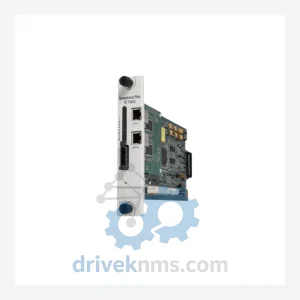
ABB INFI-Net Modules SPIET800 IET800
ABB SPIET800 IET800 is listed for INFI-Net RFQ review. Confirm quantity, condition and destination before quotation.
RFQ-ready industrial model
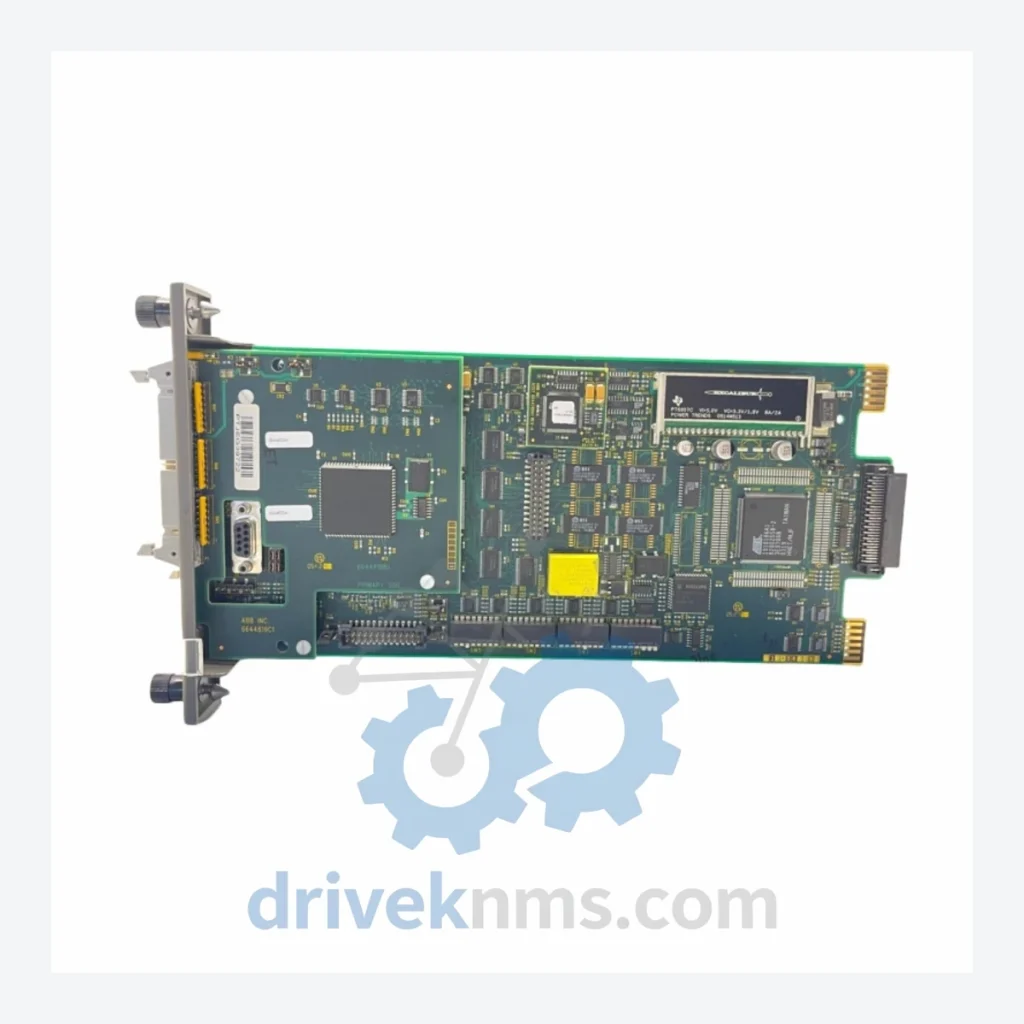
Model: ICT13A INICT13A
Product Overview
Commercial availability is handled through direct RFQ, model verification and export-oriented follow-up rather than public cart checkout.
Datasheet Preview
Use attached product manuals when available. If the manual is not public yet, request the full file directly through RFQ.
Commercial Path
Product pages on DRIVEKNMS are designed to verify model, brand and series first, then move the buyer into one clean quotation path.
Technical Dossier
The ABB INFI-NET (Infi 90) distributed control system is one of the most widely deployed DCS platforms in global heavy industry. Installed across petrochemical complexes, nuclear power stations, oil refineries, pulp and paper mills, and continuous-process manufacturing facilities, the INFI-NET architecture established a benchmark for deterministic, peer-to-peer process control communication during its commercial introduction in the mid-1980s. The platform's modular backplane design, combined with its token-passing network protocol, enabled plant-wide integration of thousands of I/O points across geographically distributed control nodes. Facilities that commissioned INFI-NET systems in the 1980s and 1990s continue to operate this hardware as of 2026, making lifecycle support and spare parts availability a critical operational requirement for maintenance engineers worldwide.
The INFI-NET platform was introduced by Bailey Controls (subsequently acquired by ABB) as the communication backbone of the Infi 90 DCS. The architecture is built around a coaxial token-bus network operating at 1 Mbit/s, connecting Process Control Units (PCUs), Operator Interface Stations (OIS), and Engineering Workstations (EWS) into a unified supervisory and control fabric.
Early-generation modules (circa 1985–1992) used the IMMFP02 and IMMFP03 Multi-Function Processors as the primary control engine, with INFI-NET communication handled by dedicated network interface cards mounted in the NISA (Network Interface and System Architecture) backplane. The ICT (Infi-Net to Computer Transfer) module family, including the ICT13A / INICT13A, was introduced to bridge the INFI-NET token bus with host computer systems, enabling data historian integration, supervisory SCADA connectivity, and DDE/OPC data exchange before standardized OPC-UA existed.
Mid-generation evolution (1993–2002) introduced the IMMFP12 and IMMFP13 processors, expanded memory addressing, and improved diagnostic firmware. Communication modules were updated to support higher-throughput data transfer while maintaining backward compatibility with existing INFI-NET segment wiring. The ICT13A represents this generation, providing a stable, validated interface between the INFI-NET bus and RS-232/RS-422 serial computer links.
The following SKUs represent verified, commonly sourced modules within the ABB INFI-NET / Infi 90 ecosystem. Each entry reflects a distinct functional role within the DCS architecture.
Network Interface & Computer Transfer Modules
Multi-Function Processor (CPU) Modules
Analog Input (AI) Modules
Digital Input (DI) / Digital Output (DO) Modules
Power Supply Modules
Communication & Specialty Modules
INFI-NET modules present specific quality control challenges due to their age, the complexity of the INFI-NET token-bus communication protocol, and the sensitivity of backplane connector interfaces after decades of service. DriveKNMS applies a multi-stage inspection and test procedure to all INFI-NET modules processed through its facility.
Incoming inspection covers physical examination of the PCB for corrosion, capacitor condition, connector pin integrity, and evidence of prior repair or component substitution. Modules with non-OEM component replacements are flagged and subjected to extended burn-in testing. For communication modules including the ICT13A / INICT13A, functional validation requires connection to an active INFI-NET test bench replicating the token-bus environment, verifying that the module correctly acquires the token, transmits and receives data frames without error, and responds to host computer polling commands across both RS-232 and RS-422 interface modes. Processor modules (IMMFP series) are tested under simulated I/O load with diagnostic firmware interrogation to confirm memory integrity and scan cycle performance within OEM specification. Power supply modules are load-tested across the full rated output current range with ripple and regulation measurements recorded. All test results are documented and accompany each shipped unit.
Continue The Model Path
Move from this exact model into the matching system hub, brand archive, model-family archive or lifecycle sourcing route before sending a final RFQ list.
Related Paths
ABB SPIET800 IET800 is listed for INFI-Net RFQ review. Confirm quantity, condition and destination before quotation.
ABB SNAT-7120 SNAZ 7120 J SNAZ7120J is listed for SNAZ7120J Series RFQ review. Confirm quantity, condition and destination before quotation.
ABB PM564-TP-ETH 1SAP121100R0071 is listed for Servo Drives RFQ review. Confirm quantity, condition and destination before quotation.