
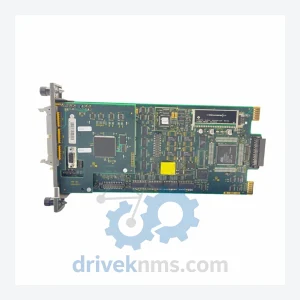
ABB INFI-NET Modules: ICT13A INICT13A
ABB ICT13A INICT13A is listed for INFI-Net RFQ review. Confirm quantity, condition and destination before quotation.
RFQ-ready industrial model
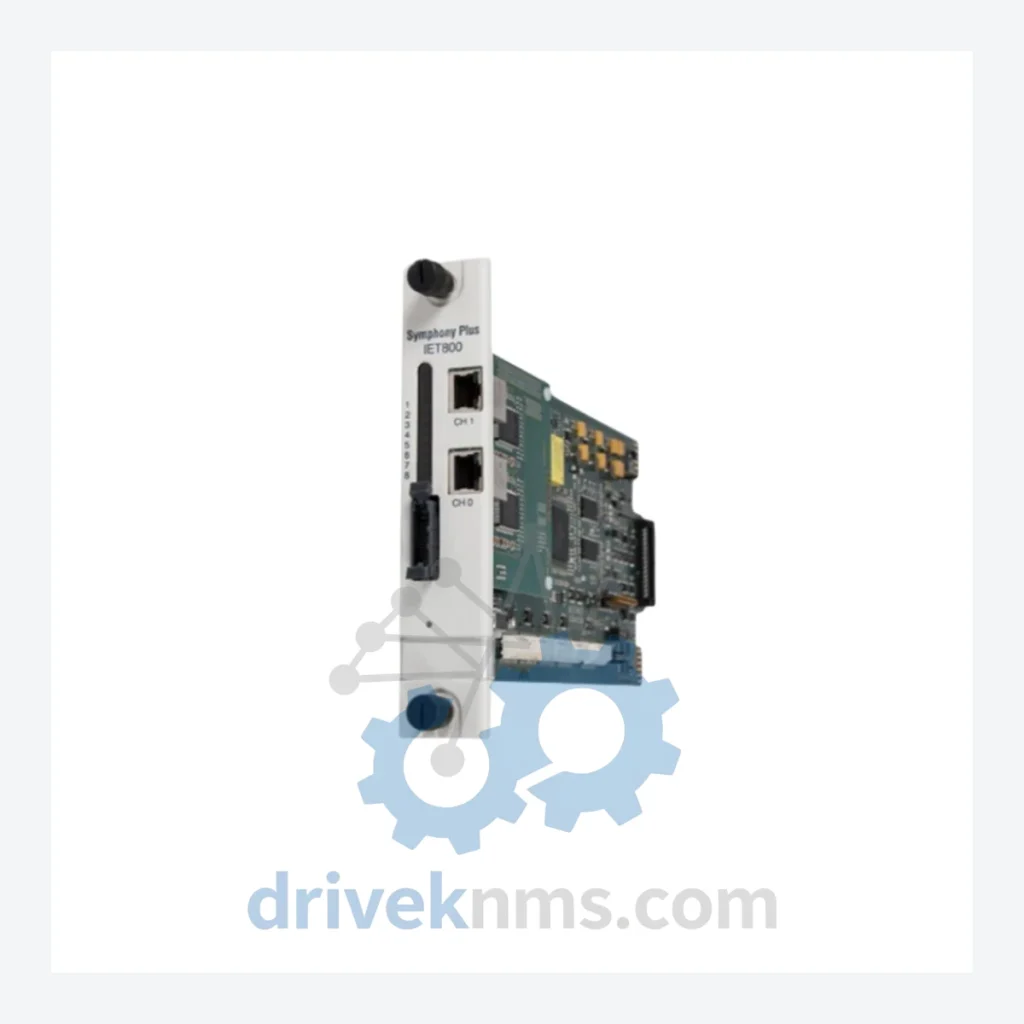
Model: SPIET800 IET800
Product Overview
Commercial availability is handled through direct RFQ, model verification and export-oriented follow-up rather than public cart checkout.
Datasheet Preview
Use attached product manuals when available. If the manual is not public yet, request the full file directly through RFQ.
Commercial Path
Product pages on DRIVEKNMS are designed to verify model, brand and series first, then move the buyer into one clean quotation path.
Technical Dossier
The ABB INFI-Net (Intelligent Network Interface) platform is a core communication backbone within ABB's Network 90 and Harmony DCS architecture. Deployed extensively across global heavy industry — including petrochemical refineries, nuclear power stations, pulp and paper mills, and offshore oil platforms — INFI-Net modules provide deterministic, high-speed token-passing network communication between controllers, I/O subsystems, and operator workstations. The installed base of INFI-Net hardware spans several decades of continuous operation, making lifecycle support and spare parts availability a critical operational requirement for plant engineers and maintenance teams worldwide.
ABB's INFI-Net architecture was introduced as part of the Network 90 DCS platform in the early 1980s, designed to replace proprietary point-to-point wiring with a structured, coaxial-based token bus network operating at 1 Mbps. The original INFI-Net used a dual-redundant coaxial cable topology, with modules such as the INICT03 and INICT13 serving as network interface controllers embedded within the Multi-Function Controller (MFC) and Process Interface Unit (PIU) chassis.
Through the 1990s, ABB extended INFI-Net compatibility into the Harmony series, introducing fiber-optic repeaters and bridge modules to extend network reach across large plant footprints. The SPIET800 IET800 represents a critical evolution point: a dedicated INFI-Net to Ethernet gateway that allows legacy Network 90 / Harmony nodes to communicate with modern Ethernet-based supervisory systems, historians, and OPC servers — without requiring a full DCS migration. This module is essential for plants operating in a hybrid legacy-modern environment, bridging a 1980s token bus architecture with contemporary TCP/IP infrastructure.
The following SKUs represent verified, commonly sourced modules within the ABB INFI-Net / Network 90 / Harmony DCS ecosystem. Each entry reflects a distinct functional role within the system architecture.
SPIET800 / IET800: INFI-Net to Ethernet Transfer Module; bridges legacy token bus to TCP/IP networks.
INICT03: INFI-Net Interface Controller; primary network interface for MFC chassis slots.
INICT13: INFI-Net Interface Controller (enhanced); supports extended node addressing on large networks.
INNIS21: INFI-Net Interface Module; used in PIU and slave controller configurations.
INNIS31: INFI-Net Interface Module (redundant); dual-port configuration for fault-tolerant topologies.
INRPG01: INFI-Net Repeater Module; extends coaxial segment length and regenerates signal integrity.
INRPG11: INFI-Net Fiber Optic Repeater; converts coaxial INFI-Net to fiber for long-distance or electrically noisy runs.
INBRI01: INFI-Net Bridge Module; connects two independent INFI-Net segments for large plant architectures.
INMFC01: Multi-Function Controller; primary process controller node on the INFI-Net backbone.
INMFC11: Multi-Function Controller (enhanced memory); supports larger control strategy databases.
INPCT01: Process Control Terminal Interface; operator interface node on INFI-Net.
INPCT11: Process Control Terminal Interface (enhanced); supports additional display nodes.
INPIU01: Process Interface Unit; I/O expansion chassis interfacing to INFI-Net via INNIS modules.
INPIU21: Process Interface Unit (extended); supports higher-density I/O configurations.
INAI16: 16-Channel Analog Input Module; 4–20 mA process signal acquisition for PIU chassis.
INAO08: 8-Channel Analog Output Module; 4–20 mA control output for final control elements.
INDI16: 16-Channel Digital Input Module; 24 VDC discrete signal acquisition.
INDO16: 16-Channel Digital Output Module; 24 VDC relay-driven discrete outputs.
INRTM01: RTD/Thermocouple Input Module; direct temperature sensor interface for process measurement.
ABB INFI-Net modules — particularly communication-layer components such as the SPIET800 IET800, INICT03, and INNIS series — require specialized test procedures that replicate the token-passing bus environment of a live Network 90 system. Standard bench testing is insufficient for validating network interface functionality.
DriveKNMS employs the following quality control protocol for INFI-Net modules:
Continue The Model Path
Move from this exact model into the matching system hub, brand archive, model-family archive or lifecycle sourcing route before sending a final RFQ list.
Related Paths
ABB ICT13A INICT13A is listed for INFI-Net RFQ review. Confirm quantity, condition and destination before quotation.
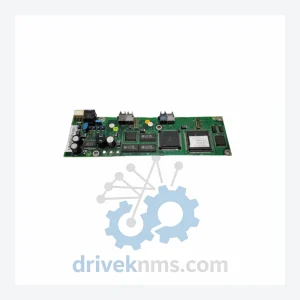
ABB NAMC-11C is listed for Controller Cards RFQ review. Confirm quantity, condition and destination before quotation.
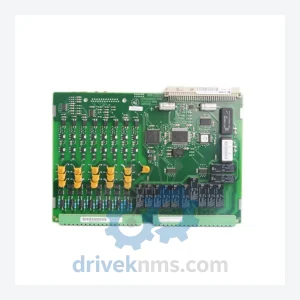
ABB LZ02 is listed for H&B Contronic LZ Series RFQ review. Confirm quantity, condition and destination before quotation.