
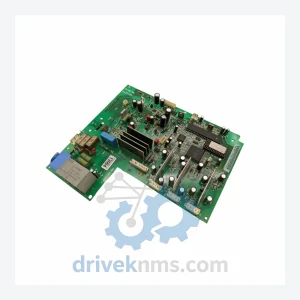
ABB SNAT-7120 Circuit Board – SNAZ7120J Series
ABB SNAT-7120 / SNAZ7120J Circuit Board: Sourcing Strategy & Asset Return Value in a Constrained Global Supply Chain The ABB…
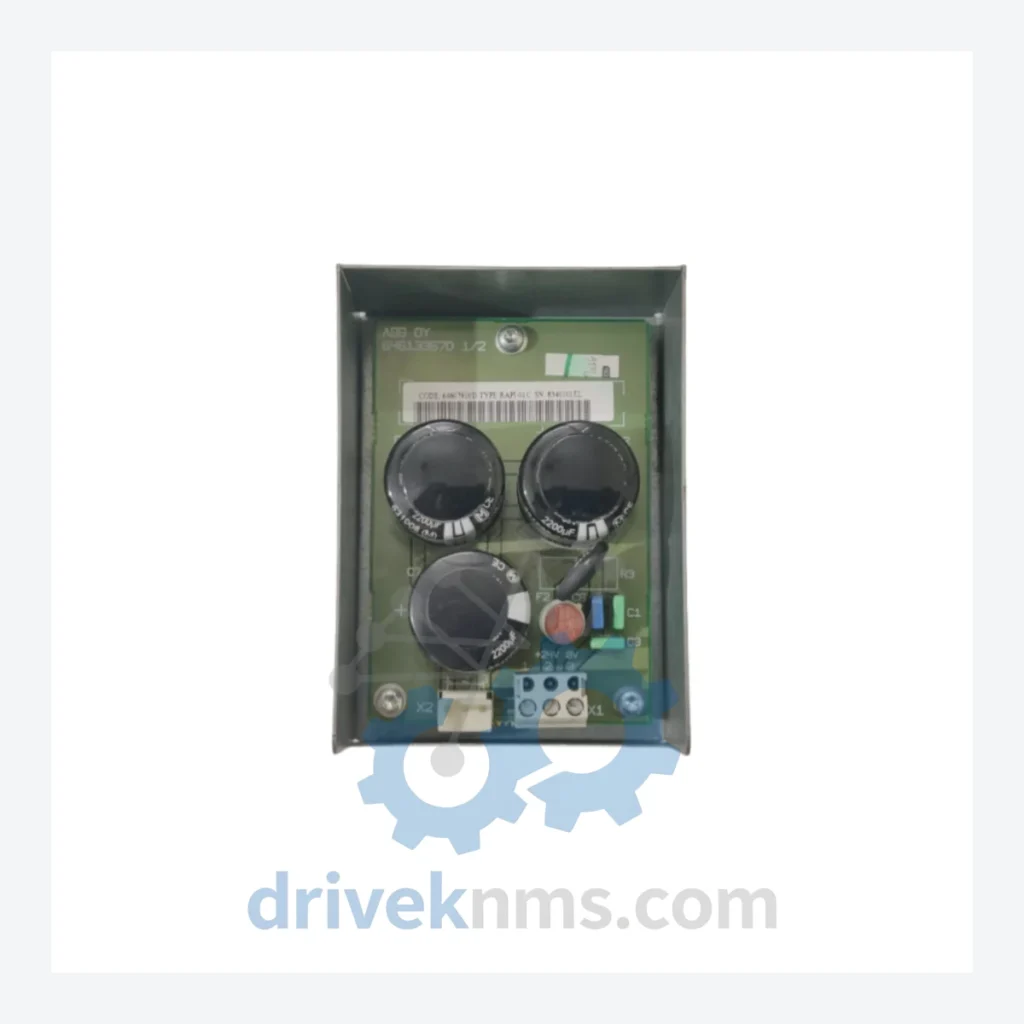
Model: RAPI-01C
Product Overview
Commercial availability is handled through direct RFQ, model verification and export-oriented follow-up rather than public cart checkout.
Datasheet Preview
Use attached product manuals when available. If the manual is not public yet, request the full file directly through RFQ.
Commercial Path
Product pages on DRIVEKNMS are designed to verify model, brand and series first, then move the buyer into one clean quotation path.
Technical Dossier
The ABB RAPI series adapter boards are purpose-engineered interface modules used within ABB's ACS and DCS drive platforms, primarily the ACS800, ACS600, and ACS550 frequency converter families. These boards serve as the communication bridge between the drive's main control board and external fieldbus networks or I/O expansion systems. Installed across heavy industrial sectors — including petrochemical refineries, nuclear power auxiliary systems, offshore platforms, pulp and paper mills, and large-scale water treatment facilities — RAPI series modules are embedded in critical motion control infrastructure worldwide. Their compact DIN-rail and backplane-mount form factors, combined with ABB's DriveAP and DriveWindow compatibility, make them a standard reference in global spare parts inventories for plant maintenance engineers.
The RAPI adapter board lineage traces to ABB's early 1990s drive communication architecture, when fieldbus integration was transitioning from proprietary serial links to standardized industrial protocols. Early RAPI variants were designed exclusively for DDCS (Distributed Drive Control System) fiber-optic ring topologies, enabling multi-drive coordination in large motor control centers. As industrial automation matured through the late 1990s and 2000s, ABB expanded the RAPI family to support Profibus-DP, DeviceNet, CANopen, Modbus RTU, and LONWORKS — each variant designated by a suffix code (e.g., -01, -01C, -02, -03).
The -01C designation specifically indicates a revised hardware revision of the base RAPI-01 module, incorporating improved EMC filtering and updated firmware compatibility for ACS800 series drives running RDCU or RMIO control boards. Compatibility constraints are a known maintenance challenge: RAPI modules are firmware-version sensitive, and substituting a later hardware revision without corresponding firmware alignment can result in communication faults (fault code: PPCC LINK or CH0 LINK). Engineers managing legacy ACS600 installations must verify the RAPI variant against the drive's main board revision table before replacement.
By the 2010s, the RAPI series entered its mature/end-of-active-production phase. ABB's current drive platforms (ACS880, ACS580) use the FDPI, FENA, and FPBA adapter families as functional successors. However, the installed base of ACS800 and ACS600 drives globally remains substantial, sustaining active demand for RAPI spare parts through the 2030s under long-term maintenance contracts.
The following SKUs represent verified, commonly referenced modules within the ABB RAPI and directly associated adapter board ecosystem for ACS-series drives. Each entry reflects its primary functional role:
RAPI-01C: Revised DDCS fiber-optic adapter board for ACS800; improved EMC, RMIO compatible.
RAPI-01: Base DDCS fiber-optic ring adapter; ACS600/ACS800 drive-to-drive communication.
RAPI-02: Profibus-DP adapter interface board for ACS600/ACS800 drive series.
RAPI-03: DeviceNet adapter board; CAN-based fieldbus integration for ACS drives.
RAPI-04: CANopen protocol adapter board for ACS600/ACS800 frequency converters.
RAPI-05: Modbus RTU/ASCII serial communication adapter for ACS-series drives.
RAPI-06: LONWORKS network adapter board; building automation and process control integration.
RAPI-01B: Intermediate hardware revision of RAPI-01; transitional EMC and connector update.
RDCO-01C: DDCS communication option board; fiber-optic CH0/CH1/CH2 for ACS800 RDCU.
RDCO-02C: Dual-channel DDCS option board; master/follower drive topology support.
RDCO-03C: DDCS option board with extended channel configuration for multi-drive systems.
RAIO-01: Analog I/O extension board; 4 AI + 2 AO channels for ACS800 control expansion.
RDIO-01: Digital I/O extension board; 8 DI + 4 DO for ACS800 auxiliary control.
RMIO-02: Main control board for ACS800 standard drives; hosts RAPI adapter slot.
RDCU-02C: Drive control unit for ACS800 cabinet drives; primary RAPI/RDCO host board.
APBU-44C: Branching unit for DDCS fiber-optic ring; connects multiple RAPI-equipped drives.
NPBA-12: Profibus-DP adapter (successor class); referenced alongside RAPI-02 in retrofit projects.
The RAPI series is classified as end-of-active-production by ABB. Standard distribution channels no longer carry new stock for most RAPI variants, and lead times through OEM channels — when available — can exceed 26 weeks. DriveKNMS maintains a dedicated inventory of tested RAPI adapter boards sourced through certified industrial surplus channels, decommissioned plant equipment, and authorized refurbishment pipelines.
RAPI adapter boards present specific test challenges due to their fiber-optic transceiver components and DDCS protocol stack. DriveKNMS applies the following verification procedures to all RAPI units prior to dispatch:
Optical power output test: Each fiber-optic TX port is measured against ABB's specified output range (typically -15 dBm to -10 dBm at 820 nm) using a calibrated optical power meter. Units outside tolerance are rejected.
DDCS protocol handshake verification: Boards are bench-tested in a live ACS800 RDCU environment to confirm CH0 link establishment, dataset read/write cycles, and fault-free communication at 4 Mbit/s.
Firmware compatibility check: Hardware revision is cross-referenced against ABB's RAPI compatibility matrix to confirm alignment with target drive firmware version.
Visual and component inspection: PCB is inspected under magnification for capacitor ESR degradation, solder joint integrity on the DDCS ASIC, and connector pin condition.
Burn-in cycle: Units are powered for a minimum 4-hour thermal soak at operating temperature before final packaging.
Related Paths
ABB SNAT-7120 / SNAZ7120J Circuit Board: Sourcing Strategy & Asset Return Value in a Constrained Global Supply Chain The ABB…
ABB AC500 Series: Comprehensive Module Range and Technical Overview The ABB AC500 is a scalable modular PLC platform deployed across…
ABB SCDCS-CON-4 Control Board – Obsolete DCS Spare Part When a single control board fails in a legacy distributed control…