
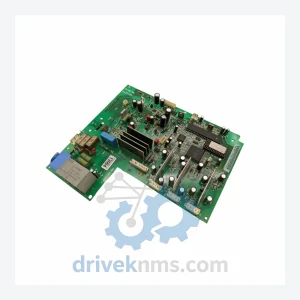
ABB SNAT-7120 Circuit Board – SNAZ7120J Series
ABB SNAT-7120 / SNAZ7120J Circuit Board: Sourcing Strategy & Asset Return Value in a Constrained Global Supply Chain The ABB…
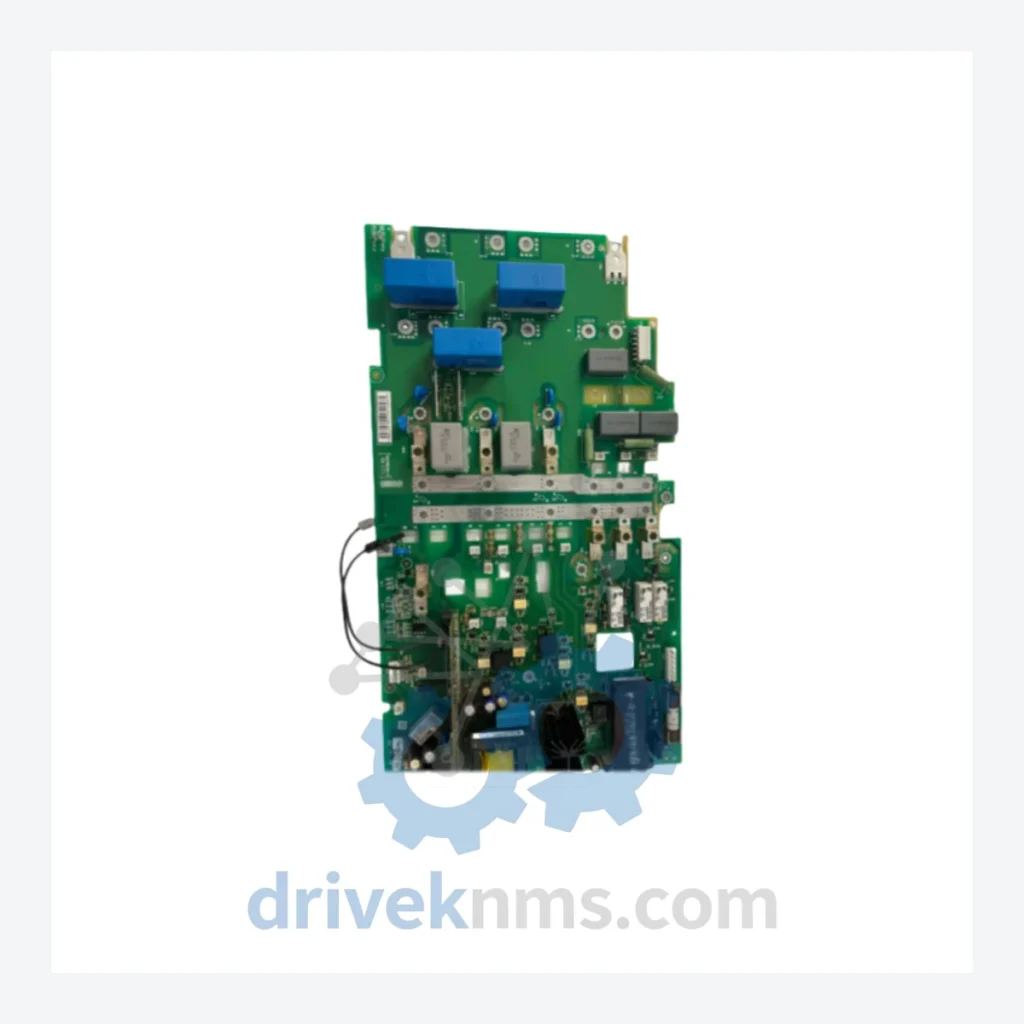
Model: RINT-6512C
Product Overview
Commercial availability is handled through direct RFQ, model verification and export-oriented follow-up rather than public cart checkout.
Datasheet Preview
Use attached product manuals when available. If the manual is not public yet, request the full file directly through RFQ.
Commercial Path
Product pages on DRIVEKNMS are designed to verify model, brand and series first, then move the buyer into one clean quotation path.
Technical Dossier
The ABB RINT series comprises pulse encoder interface boards, circuit interface boards, and I/O extension modules designed for integration into ABB's ACS600, ACS800, and ACS880 variable frequency drive (VFD) platforms. These boards are deployed across global heavy industry sectors including petrochemical refineries, nuclear power auxiliary systems, offshore platforms, pulp and paper mills, and cement production lines. The RINT series occupies a critical position in ABB's drive control architecture: each board interfaces directly with the drive's RMIO or RDCO control unit, handling encoder feedback, digital I/O expansion, and fieldbus communication bridging. Installed base spans several hundred thousand drive units globally, making RINT-series spares among the most consistently demanded components in industrial MRO procurement.
The RINT series was introduced alongside the ACS600 drive platform in the mid-1990s as a modular slot-in board architecture. Early variants such as the RINT-5311C and RINT-5514C provided basic pulse encoder feedback for closed-loop speed control. As ABB transitioned to the ACS800 platform (circa 2000–2005), the RINT series was extended with higher-density I/O boards and dual-channel encoder support, exemplified by the RINT-6511C and RINT-6512C. The ACS880 generation introduced RIMA and RDIO modules as functional successors, but the RINT form factor remained in production to support the massive installed base of ACS600/ACS800 systems. As of 2026, the majority of RINT-series boards are in the mature-to-end-of-life phase. ABB has discontinued active production of several variants; however, demand for replacement units remains high due to 20–30 year operational lifespans typical in heavy process industries. Compatibility between RINT generations is slot-specific and firmware-dependent — substitution requires verification of drive firmware version and RMIO board revision.
The following SKUs represent verified, commonly sourced models within the ABB RINT series. Each entry reflects the board's primary functional role within the ACS drive control stack.
RINT-5311C: Pulse encoder interface board for ACS600; single-channel HTL/TTL input, 24 VDC supply.
RINT-5514C: Extended I/O interface board for ACS600; 6 DI, 3 DO, analog expansion.
RINT-6411C: Encoder interface for ACS800; supports HTL incremental encoders up to 300 kHz.
RINT-6511C: Single-channel pulse encoder interface board for ACS800 standard drives.
RINT-6512C: Dual-channel circuit interface board for ACS800; supports master/follower encoder configurations.
RINT-6513C: Resolver interface board for ACS800; compatible with 2–16 pole resolvers, 7 Vrms excitation.
RINT-6521C: Absolute encoder interface (SSI protocol) for ACS800; 13–25 bit resolution.
RINT-6611C: Digital I/O extension board for ACS800; adds 6 DI and 3 relay DO to RMIO base.
RINT-6612C: Analog I/O extension board for ACS800; 2 AI (±10 V / 0–20 mA), 2 AO channels.
RINT-6711C: Fieldbus adapter interface board; bridges RMIO to RDCO communication module slot.
RINT-6712C: Dual-port communication interface board for ACS800 multi-drive configurations.
RINT-6811C: Brake chopper interface board for ACS800; monitors IGBT gate signals and thermal status.
RINT-6911C: Synchronization interface board for ACS800 multi-drive master/follower synchronization.
RINT-7301C: Encoder interface board for ACS880; backward-compatible HTL/TTL input, updated firmware protocol.
RINT-7501C: High-resolution encoder interface for ACS880; supports SinCos and EnDat 2.1 protocols.
RINT-7611C: I/O extension board for ACS880; 8 DI, 4 DO, compatible with ZCU control unit.
DriveKNMS maintains a dedicated inventory program for discontinued and hard-to-source ABB RINT-series boards. As ABB has progressively phased out ACS600 and early ACS800 spare parts from its standard distribution channels, procurement lead times through OEM channels have extended to 16–52 weeks for certain models. DriveKNMS sources verified surplus, refurbished, and new-old-stock (NOS) RINT boards through a qualified secondary market network. All units are traceable to original ABB manufacturing lots where documentation is available. For plant operators running ACS600 or ACS800 systems beyond their original design life, DriveKNMS provides lifecycle extension support including cross-reference analysis (identifying functional equivalents across RINT sub-generations), firmware compatibility verification, and multi-unit blanket order fulfillment for scheduled maintenance programs.
RINT-series boards present specific test challenges due to their backplane-dependent signal architecture: most boards cannot be fully validated without a live ACS drive chassis providing the RMIO bus interface. DriveKNMS employs a multi-stage verification protocol for all RINT inventory. Stage 1 is visual and component-level inspection: board surface, capacitor condition, solder joint integrity, and connector pin alignment are assessed under magnification. Stage 2 is powered bench test using ABB ACS800 test chassis with RMIO-02 control boards: encoder signal injection, I/O channel response, and communication handshake are verified against ABB factory test parameters. Stage 3 is functional burn-in: boards are operated under simulated load conditions for a minimum of 4 hours to screen for latent component failures. All tested units are issued a DriveKNMS inspection report with test date, technician ID, and pass/fail criteria documentation.
© 2026 DriveKNMS. All trademarks belong to their respective owners. Specifications are for reference only and subject to change without notice. Verify all parameters against official documentation before installation.
Related Paths
ABB SNAT-7120 / SNAZ7120J Circuit Board: Sourcing Strategy & Asset Return Value in a Constrained Global Supply Chain The ABB…
ABB AC500 Series: Comprehensive Module Range and Technical Overview The ABB AC500 is a scalable modular PLC platform deployed across…
ABB SCDCS-CON-4 Control Board – Obsolete DCS Spare Part When a single control board fails in a legacy distributed control…