
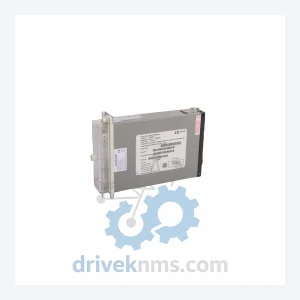
ALSTOM MVAJ105RA0802A Protection Relay – MiCOM Series
ALSTOM MVAJ105RA0802A Protection Relay: Supply Continuity Strategy for a Discontinued Critical Component The ALSTOM MVAJ105RA0802A is a numerical protection relay…
Model: 700.000 151/01 30
Product Overview
Commercial availability is handled through direct RFQ, model verification and export-oriented follow-up rather than public cart checkout.
Datasheet Preview
Use attached product manuals when available. If the manual is not public yet, request the full file directly through RFQ.
Commercial Path
Product pages on DRIVEKNMS are designed to verify model, brand and series first, then move the buyer into one clean quotation path.
Technical Dossier
The Alstom 700.000 series represents a foundational module family deployed across global heavy-industry installations, including coal-fired and nuclear power stations, petrochemical refineries, and large-scale process automation facilities. Originally developed under GEC Alsthom and later consolidated under the Alstom Power brand, these modules form the backbone of legacy Distributed Control Systems (DCS) and relay-based protection panels in plants with operational lifespans exceeding 30 years. Installed base concentrations are documented in European power utilities, Middle Eastern refinery complexes, and South and Southeast Asian grid infrastructure. The 700.000 series is not a single-function product line — it encompasses analog input/output conditioning boards, digital relay interface modules, power supply regulators, and communication bridge cards, all sharing a common backplane form factor and terminal block wiring convention.
The 700.000 series traces its lineage to the GEC Alsthom modular relay and control philosophy of the late 1970s and 1980s, when DIN-rail and 19-inch rack-mounted analog modules were the standard interface between field instrumentation and central control rooms. Early variants used discrete component analog circuitry with passive signal conditioning. By the mid-1990s, the series incorporated hybrid IC-based signal processing, improving noise immunity and reducing calibration drift in high-EMI environments such as turbine halls and switchgear rooms.
The 700.000 architecture uses a passive backplane bus with individual module addressing via hardware DIP switches or jumper configurations — a design that prioritizes deterministic signal routing over software-configurable flexibility. This makes the series highly compatible with older SCADA and DCS host systems (e.g., Alspa P320, Alspa C80, Contronic P) but creates integration challenges when retrofitting into modern Ethernet-based control architectures. Compatibility with successor platforms such as the Alstom Alspa 8000 series requires dedicated protocol converters or signal marshalling panels. As of 2026, the 700.000 series is in the end-of-life (EOL) phase; Alstom (now part of GE Vernova for power assets) no longer manufactures or provides OEM support. Long-term maintenance relies entirely on third-party spare parts suppliers and refurbishment specialists.
Analog Input Modules
Analog Output Modules
Digital Input Modules
Digital Output / Relay Modules
Power Supply Modules
Communication & CPU Modules
With the 700.000 series formally discontinued, procurement of replacement modules requires engagement with specialist industrial spare parts distributors. DriveKNMS maintains a dedicated inventory of tested 700.000 series modules sourced from decommissioned plant equipment, authorized surplus channels, and controlled refurbishment programs. Stock coverage includes both common variants (analog I/O, relay output) and low-volume specialty modules (thermocouple input, PROFIBUS adapters, redundant PSUs).
For plant operators managing aging DCS infrastructure, DriveKNMS provides: (1) direct module replacement with functionally equivalent tested units; (2) cross-reference matching for modules where the original part number has been superseded or relabeled under post-merger Alstom/GE Vernova nomenclature; (3) batch procurement support for scheduled plant turnarounds requiring multiple module types simultaneously. Lead times for standard modules are typically 3–10 business days. Critical or low-stock items are quoted individually. All modules are shipped with test documentation and traceability records.
The 700.000 series presents specific quality verification challenges due to its age profile, passive backplane architecture, and the prevalence of electrolytic capacitor degradation in units manufactured before 2000. DriveKNMS applies a structured multi-stage inspection protocol to all 700.000 series modules prior to dispatch.
Stage 1 — Visual and Mechanical Inspection: Board-level examination for corrosion, burnt components, cracked solder joints, and damaged terminal blocks. Backplane connector pins are inspected under magnification for deformation or oxidation.
Stage 2 — Power-On Functional Test: Each module is energized on a dedicated 700.000-compatible test rack replicating the original backplane bus voltage and addressing scheme. Analog modules are tested across the full signal range (0–20 mA, 0–10 V) with calibrated signal sources and measurement instruments. Digital modules are cycled through all channel states. Relay modules are tested for contact resistance (<100 mΩ) and coil actuation voltage.
Stage 3 — Burn-In and Stability Test: Modules are operated continuously for a minimum of 24 hours under load conditions to screen for latent component failures. Thermal imaging is used to identify abnormal heat dissipation patterns.
Stage 4 — Calibration Verification: Analog modules are calibrated to factory specification tolerances using NIST-traceable reference instruments. Calibration certificates are issued on request.
Related Paths
ALSTOM MVAJ105RA0802A Protection Relay: Supply Continuity Strategy for a Discontinued Critical Component The ALSTOM MVAJ105RA0802A is a numerical protection relay…
ALSTOM 7932-4210 Interface Board – Obsolete ALSTOM Spare Part When the ALSTOM 7932-4210 Interface Board fails, the consequences extend far…
ALSTOM 8143 Series: Comprehensive Module Range and Technical Overview The ALSTOM 8143 Series represents a core family of distributed control…