
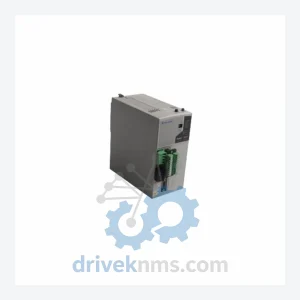
Bosch KM3300 Modules KM 3300-T 054915-103 KM3300
Bosch KM 3300-T 054915-103 KM3300 is listed for 3300 RFQ review. Confirm quantity, condition and destination before quotation.
RFQ-ready industrial model
Model: 84661-12
Product Overview
Commercial availability is handled through direct RFQ, model verification and export-oriented follow-up rather than public cart checkout.
Datasheet Preview
Use attached product manuals when available. If the manual is not public yet, request the full file directly through RFQ.
Commercial Path
Product pages on DRIVEKNMS are designed to verify model, brand and series first, then move the buyer into one clean quotation path.
Technical Dossier
The Bently Nevada 3300 Series proximity transducer system is one of the most widely deployed machinery protection platforms in global heavy industry. Installed across petrochemical complexes, nuclear power stations, offshore platforms, LNG terminals, and refinery turbomachinery trains, the 3300 Series provides continuous, non-contact measurement of shaft radial vibration, axial position, differential expansion, and eccentricity. Its eddy-current sensing principle — requiring no physical contact with the rotating element — makes it the reference standard for API 670-compliant machinery protection on steam turbines, gas turbines, compressors, and pumps operating at speeds from 600 to 120,000 RPM. The system architecture is a three-component loop: a probe, an extension cable, and a proximitor/driver. Each component is factory-calibrated as a matched set to a defined gap voltage range (typically –1 VDC to –24 VDC), and field substitution of any single element requires re-verification of the complete loop sensitivity (nominally 200 mV/mil or 7.87 V/mm). The 3300 Series remains the dominant installed base in facilities built between 1980 and 2010, and Baker Hughes (the current owner of the Bently Nevada brand) continues to manufacture replacement components while also offering migration paths to the newer 3500 Series rack-based monitoring system.
The 3300 Series was introduced by Bently Nevada Corporation in the early 1980s as a successor to the 7200 Series transducer system, addressing the need for higher-temperature tolerance and improved EMI rejection in industrial environments. The original 3300 XL 8mm and 11mm probe families established the mechanical form factors that remain in production today. Key architectural milestones include:
Phase 1 (1980s): Introduction of the 3300 5mm, 8mm, and 11mm probe diameters with integral armored cable. Proximitor drivers were discrete analog circuits housed in field-mount enclosures. Sensitivity was fixed at 200 mV/mil.
Phase 2 (1990s): Introduction of the 3300 XL product line with extended temperature ratings (–50°C to +177°C probe tip) and improved cable jacket materials (ETFE/Teflon) for chemical resistance. The extension cable connector system was standardized to the current bayonet-lock design, enabling field replacement without re-termination.
Phase 3 (2000s): Integration with the 3500 Series rack system via the 3500/42M Proximitor I/O module, allowing 3300 Series probes and cables to interface with the newer digital monitoring platform. This backward compatibility extended the service life of existing probe installations by decades.
The following SKUs represent the core component population of the Bently Nevada 3300 Series proximity transducer system. Each entry reflects a verified, commercially available or historically stocked part number.
Proximity Probes — 8mm Diameter:
330103-00-06-10-02-00: 3300 XL 8mm probe, 6 mm gap, 1.0 m integral cable, standard temperature, AISI 4140 target material compatibility.
330103-00-08-10-02-00: 3300 XL 8mm probe, 8 mm gap, 1.0 m integral cable, standard temperature.
330103-00-06-10-02-CN: 3300 XL 8mm probe, 6 mm gap, 1.0 m integral cable, CNPT conduit entry.
330104-00-06-10-02-00: 3300 XL 8mm probe, 6 mm gap, 1.0 m integral cable, high-temperature rating to +177°C.
Proximity Probes — 11mm Diameter:
330105-02-12-10-02-00: 3300 XL 11mm probe, 12 mm gap, 1.0 m integral cable, standard temperature, extended sensing range for large shaft diameters.
330105-02-12-10-02-CN: 3300 XL 11mm probe, 12 mm gap, 1.0 m integral cable, CNPT conduit entry variant.
330106-05-30-10-02-00: 3300 XL 11mm probe, 5 mm gap, 3.0 m integral cable, high-temperature, for hot-section turbine applications.
Extension Cables:
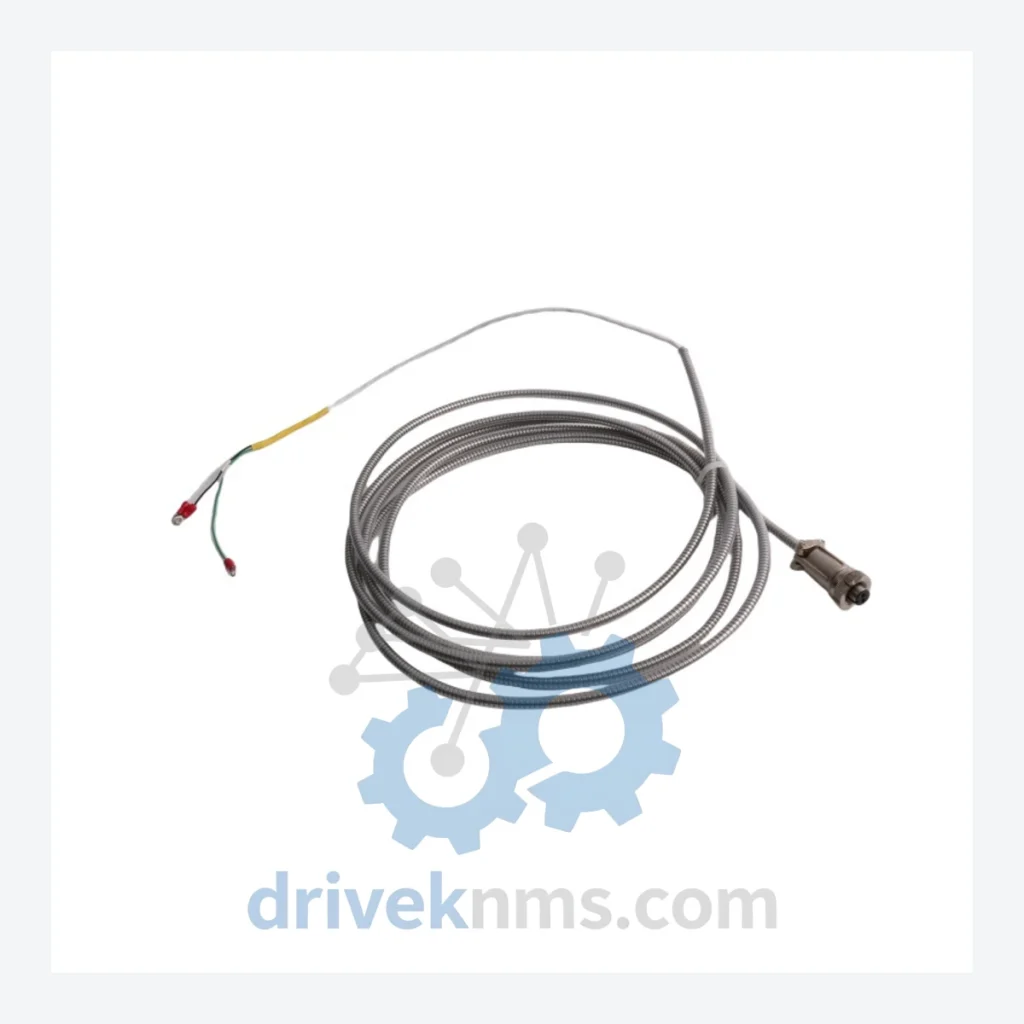
84661-12: 3300 Series extension cable, 12-foot (3.66 m) length, standard armored jacket, bayonet-lock connectors both ends, 200 mV/mil system calibration.
84661-24: 3300 Series extension cable, 24-foot (7.32 m) length, armored, for installations requiring greater probe-to-proximitor separation.
84661-36: 3300 Series extension cable, 36-foot (10.97 m) length, armored, maximum standard length for 200 mV/mil calibrated loop.
84661-50: 3300 Series extension cable, 50-foot (15.24 m) length, requires loop sensitivity verification at installation.
84668-12: 3300 Series high-temperature extension cable, 12-foot, ETFE jacket rated to +150°C ambient, for furnace or hot-box routing.
Proximitor Sensors / Drivers:
3300-16-01-01-00: 3300 Series proximitor, field-mount, 8mm probe compatible, –24 VDC supply, 200 mV/mil output, SPDT relay output.
3300-16-02-01-00: 3300 Series proximitor, field-mount, 11mm probe compatible, –24 VDC supply, 200 mV/mil output.
3300-16-03-01-00: 3300 Series proximitor, DIN-rail mount, 8mm probe compatible, compact enclosure for panel integration.
3300-16-05-01-00: 3300 Series proximitor, field-mount, 5mm probe compatible, –24 VDC supply, for small-diameter shaft applications.
Accessories & Mounting Hardware:
02-262066-01: Standard probe holder, 8mm, stainless steel, adjustable bracket for radial vibration mounting.
02-262067-01: Probe holder, 11mm, stainless steel, for thrust position probe installations.
Q: How are RFQ terms confirmed?
A: Quantity, required condition, documentation needs, destination and sourcing route are confirmed during RFQ review before quotation.
Extension cables such as the 84661-12 are among the highest-attrition components in any 3300 Series installation due to mechanical damage from vibration, chemical exposure, and repeated maintenance access. DriveKNMS stocks multiple length variants of the 84661 family to support urgent RFQ handling for critical plant shutdowns.
All 3300 Series components processed by DriveKNMS undergo a structured verification protocol before dispatch. The protocol is specific to the eddy-current transducer architecture and addresses the three primary failure modes: open-circuit probe coil, degraded cable insulation resistance, and proximitor oscillator drift.
Extension Cable Testing (84661 Series): Each cable is subjected to a DC insulation resistance test at 500 VDC between the center conductor and shield, with a minimum acceptance threshold of 100 MΩ. Connector bayonet-lock engagement force is verified against the OEM specification. Cable continuity is confirmed end-to-end on both the signal conductor and the shield drain wire.
Probe Verification: Probe coil DC resistance is measured and compared against the OEM nominal value (±10% tolerance). The probe is mounted in a calibration fixture at the nominal gap distance and the output voltage is recorded against a reference proximitor to confirm sensitivity within ±1% of 200 mV/mil.
System Loop Calibration: Where a matched probe-cable-proximitor set is ordered, the complete loop is calibrated together and the calibration data (gap voltage vs. displacement) is documented on a single certificate, consistent with API 670 documentation requirements.
Continue The Model Path
Move from this exact model into the matching system hub, brand archive, model-family archive or lifecycle sourcing route before sending a final RFQ list.
Related Paths
Bosch KM 3300-T 054915-103 KM3300 is listed for 3300 RFQ review. Confirm quantity, condition and destination before quotation.
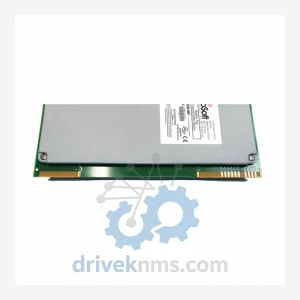
ProSoft Technology 3300-MBP is listed for 3300 RFQ review. Confirm quantity, condition and destination before quotation.
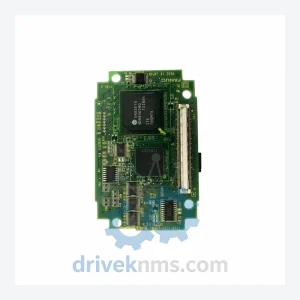
Fanuc A06B-6400-H102 A20B-3300-0381 is listed for 3300 RFQ review. Confirm quantity, condition and destination before quotation.