
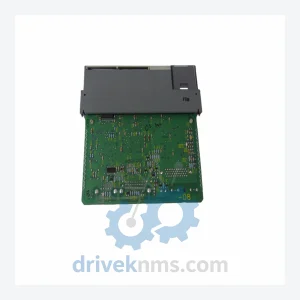
Compressor Controls Corp MCP-1004 Compressor Controller – Anti-Surge Series
CCC MCP-1004 Compressor Controller: Global Sourcing Strategy & Asset Return Value The Compressor Controls Corp (CCC) MCP-1004 is a dedicated…
Model: CPCI AC-6U-500 PSMU-350-3
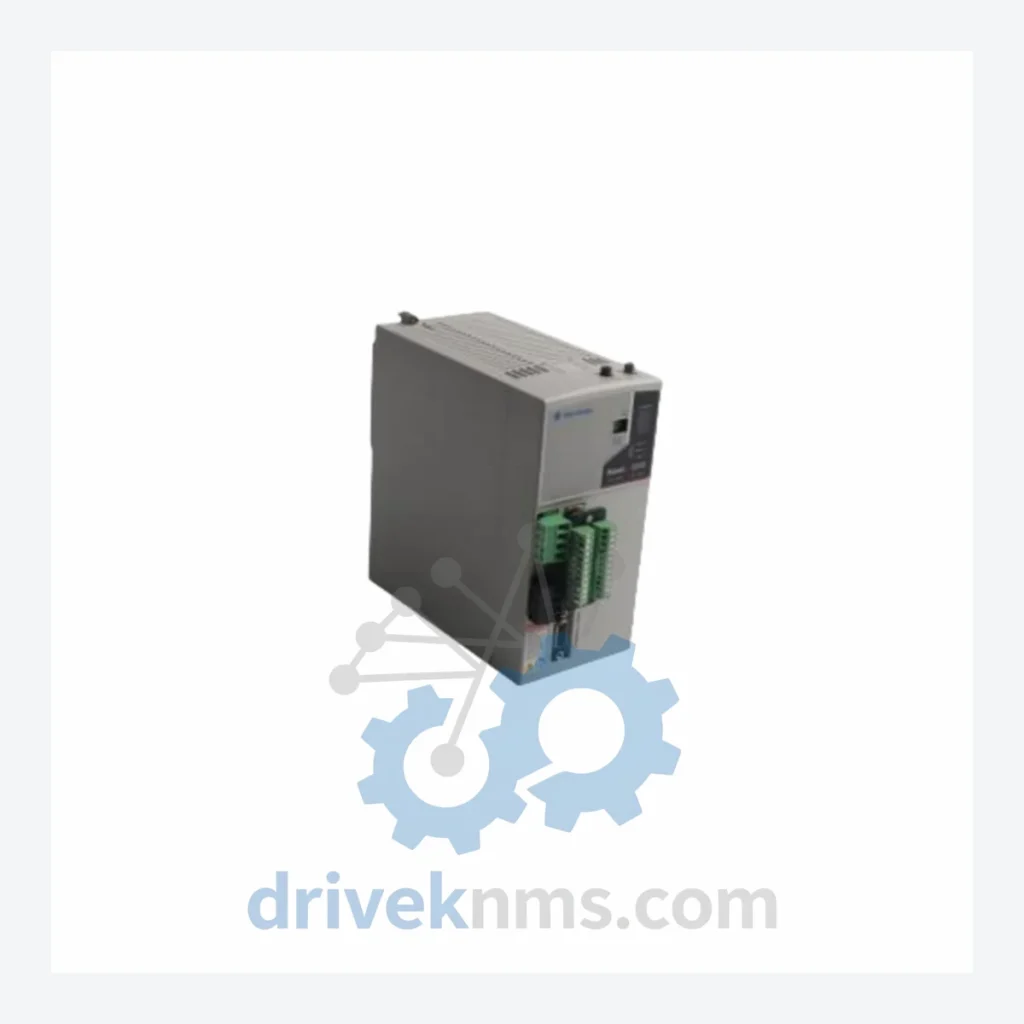
Product Overview
Commercial availability is handled through direct RFQ, model verification and export-oriented follow-up rather than public cart checkout.
Datasheet Preview
Use attached product manuals when available. If the manual is not public yet, request the full file directly through RFQ.
Commercial Path
Product pages on DRIVEKNMS are designed to verify model, brand and series first, then move the buyer into one clean quotation path.
Technical Dossier
The Compressor Controls Corp (CCC) CPCI platform is a CompactPCI-based control architecture deployed across heavy industrial sectors including natural gas compression stations, petrochemical refineries, offshore platforms, and nuclear-adjacent utility facilities. The CPCI chassis architecture supports hot-swap modular cards conforming to the PICMG 2.0 CompactPCI standard, enabling field replacement without full system shutdown — a critical requirement in continuous-process industries where unplanned downtime carries significant operational cost. CCC CPCI systems are found in installations across North America, the Middle East, and Southeast Asia, frequently integrated with turbine control, anti-surge control, and performance control loops. The platform's longevity in the field — spanning installations from the late 1990s through the 2010s — means a substantial installed base continues to require spare parts, firmware-compatible replacements, and lifecycle extension support.
CCC's CPCI platform evolved from earlier proprietary backplane architectures used in the Micro-II and Micro-IIe controller generations. The transition to CompactPCI in the mid-1990s allowed CCC to leverage commercial off-the-shelf (COTS) hardware standards while maintaining proprietary firmware and application layers specific to rotating equipment control. Early CPCI deployments used 3U card formats with passive backplanes; later revisions introduced 6U form factors (as in the AC-6U-500 chassis) to accommodate higher I/O density and more capable processor modules such as the PSMU-350 series.
The PSMU (Processor and System Management Unit) line progressed through several iterations: early PSMU-100 and PSMU-200 variants provided basic CPU and watchdog functions, while the PSMU-350 introduced enhanced memory capacity, faster scan rates, and improved redundancy handshake protocols. Compatibility between PSMU generations is not guaranteed — backplane pinout differences and firmware version dependencies mean that substituting a PSMU-350-3 with an earlier variant requires engineering validation. As the CPCI platform has entered its end-of-life phase with CCC's transition toward the Compressor Controls Corp 5000 Series and later digital platforms, the installed CPCI base is now fully dependent on secondary market sourcing for hardware continuity.
The following SKUs represent verified components within the CCC CPCI ecosystem, organized by functional category. Each module is a discrete field-replaceable unit (FRU) within the CPCI chassis.
Processor & System Management
Analog Input (AI) Modules
Analog Output (AO) Modules
Digital Input (DI) Modules
Digital Output (DO) Modules
Communication & Network Adapters
Power Supply Modules
Chassis
The CCC CPCI platform is no longer in active production. Compressor Controls Corp has transitioned its product line to newer digital control platforms, and factory support for CPCI hardware — including PSMU-350-3 units — is limited or discontinued. For operators maintaining CPCI-based systems, the only viable path to hardware continuity is the secondary market.
DriveKNMS maintains a dedicated inventory of CCC CPCI modules sourced from decommissioned systems, controlled-environment warehouses, and verified industrial surplus channels. Stock includes processor modules (PSMU series), I/O cards, communication adapters, and chassis components. All units are catalogued by revision level and firmware compatibility where documentation is available. For operators facing extended lead times or factory end-of-life notices, DriveKNMS provides lifecycle extension support including cross-reference analysis, compatible substitute identification, and multi-unit lot sourcing for planned maintenance programs.
CCC CPCI modules present specific test challenges due to their CompactPCI backplane interface, proprietary firmware dependencies, and mixed analog/digital signal paths. DriveKNMS applies a structured inspection and functional verification protocol to all CPCI units prior to dispatch.
Physical inspection covers connector pin integrity on the J1/J2 CompactPCI edge connectors, capacitor condition on power regulation circuits, and conformal coating integrity on I/O signal conditioning stages. For PSMU processor modules, BIOS/firmware version is read and recorded; units with corrupted or mismatched firmware images are flagged and not shipped without disclosure. Analog I/O modules are bench-tested against known reference signals: AI modules are verified for channel-to-channel isolation and input accuracy across the full 4–20 mA range; AO modules are loaded with calibrated resistive loads and output linearity is confirmed. Digital I/O modules are cycled through all channels under simulated field voltage conditions. Communication modules are tested for protocol handshake and data integrity using protocol analyzers. All test results are documented and available upon request.
Related Paths
CCC MCP-1004 Compressor Controller: Global Sourcing Strategy & Asset Return Value The Compressor Controls Corp (CCC) MCP-1004 is a dedicated…
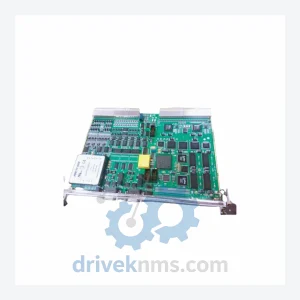
Compressor Controls Corp IOC-555 Series: Comprehensive Module Range and Technical Overview The Compressor Controls Corp (CCC) IOC-555 series represents a…
Compressor Controls Corp TIOC-555HD Transition Module – Obsolete CCC Spare Part The Compressor Controls Corp TIOC-555HD is a Transition I/O…