
GE PACSystems RX3i Modules
GE PACSystems RX3i Series: Comprehensive Module Range and Technical Overview The GE PACSystems RX3i platform is one of the most…
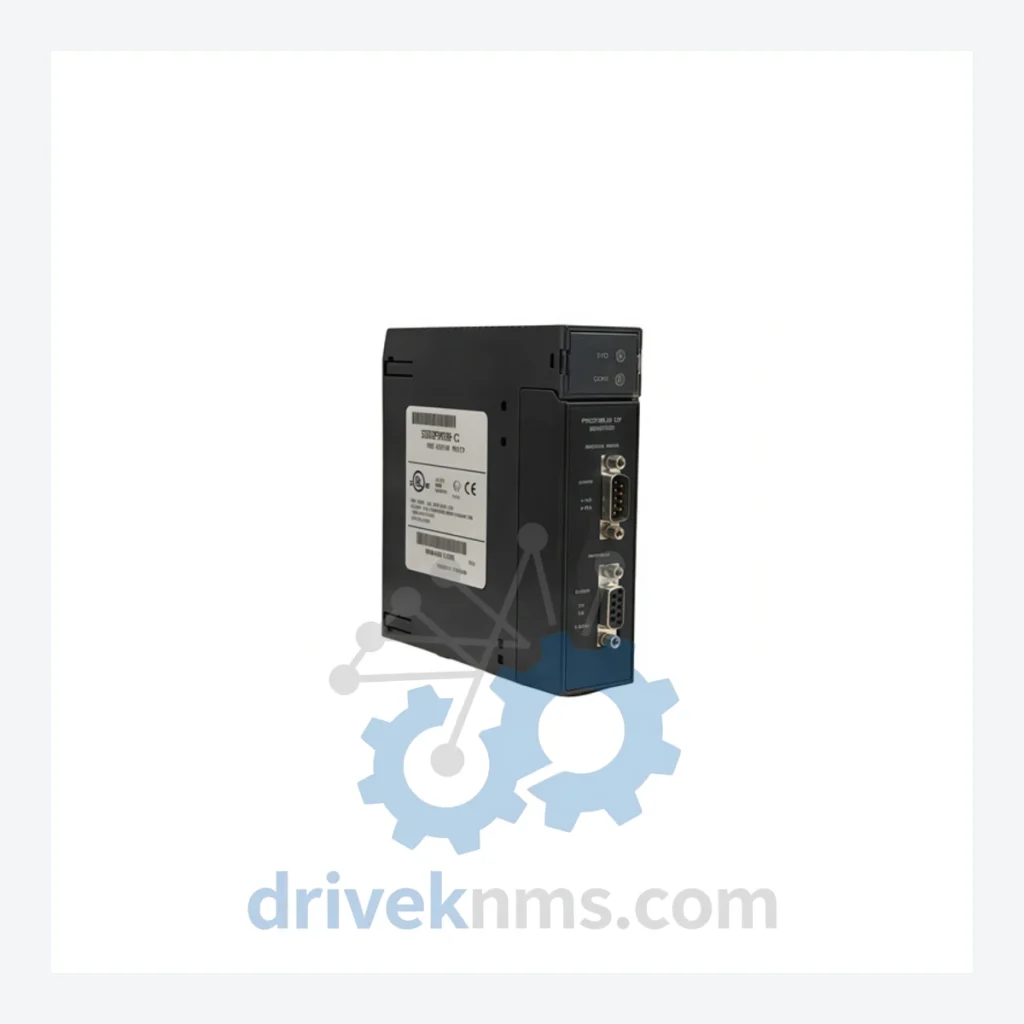
Model: IC693PBS201
Product Overview
Commercial availability is handled through direct RFQ, model verification and export-oriented follow-up rather than public cart checkout.
Datasheet Preview
Use attached product manuals when available. If the manual is not public yet, request the full file directly through RFQ.
Commercial Path
Product pages on DRIVEKNMS are designed to verify model, brand and series first, then move the buyer into one clean quotation path.
Technical Dossier
The GE IC693 series — commercially designated as the Series 90-30 PLC — is a rack-based programmable logic controller platform developed by General Electric Automation & Controls (subsequently Emerson Automation Solutions post-acquisition). It has accumulated one of the largest installed bases in global heavy industry, with documented deployments in petrochemical refineries, nuclear power auxiliary systems, offshore oil & gas platforms, pulp and paper mills, and municipal water treatment facilities. The platform's modular backplane architecture (5-slot, 10-slot, and expandable configurations) and broad I/O density made it the default choice for mid-range process automation from the early 1990s through the 2010s. The IC693PBS201 specifically addresses PROFIBUS-DP slave communication, enabling the Series 90-30 rack to operate as a field device node on PROFIBUS networks — a critical integration requirement in mixed-vendor DCS environments common in European and Asian heavy industry installations.
The IC693 platform was introduced in the early 1990s as GE Fanuc Automation's mid-range successor to the Series Six and Series Five PLC lines. The original architecture centered on the IC693CPU311 and IC693CPU313 processors, which used a proprietary backplane bus operating at 5V TTL logic levels. These early CPUs supported ladder logic exclusively and communicated via RS-232/RS-485 serial ports using GE's SNP (Serial Network Protocol) and SNPX protocols.
The mid-generation refresh introduced the IC693CPU340 and IC693CPU350 processors with expanded memory (up to 240KB user program), floating-point math coprocessors, and Ethernet TCP/IP capability via the IC693CMM321 Ethernet Interface Module. This generation also introduced the IC693BEM331 Genius Bus Controller, enabling integration with GE's proprietary Genius I/O field bus — a token-passing network widely deployed in automotive and chemical plant applications.
The mature generation, represented by the IC693CPU374 and IC693CPU375, added support for IEC 61131-3 programming languages (Function Block Diagram, Structured Text, Sequential Function Chart) alongside legacy ladder logic. The IC693PBS201 was introduced during this period to address the growing prevalence of PROFIBUS-DP in European process industries, allowing Series 90-30 racks to participate as slave nodes in PROFIBUS networks managed by third-party DCS masters (Siemens, ABB, Honeywell). Compatibility constraints are significant: the IC693PBS201 requires firmware revision 1.10 or higher on the host CPU and is not compatible with the original IC693CPU311/313 processors without a firmware upgrade path. Backplane slot assignment follows standard IC693 rules — the module occupies one I/O slot and maps to a configurable GSD file for PROFIBUS master configuration.
The IC693 series entered the mature/end-of-life phase circa 2015–2018, with GE (and subsequently Emerson) formally discontinuing new production of most modules. The platform is now supported exclusively through third-party spare parts suppliers and authorized repair centers. Long-term maintenance support — including board-level repair, firmware restoration, and functional testing — is the primary procurement mode for existing installations.
CPU Modules
Discrete Input Modules
Discrete Output Modules
Analog I/O Modules
Communication & Network Modules
Power Supply Modules
The IC693 series is formally discontinued by the OEM. New production units are no longer available through authorized GE/Emerson distribution channels. For facilities operating Series 90-30 systems beyond the OEM support window, DriveKNMS maintains a dedicated inventory of pulled, refurbished, and new-surplus IC693 modules sourced from decommissioned plant equipment, authorized liquidations, and long-term storage stock.
DriveKNMS provides lifecycle extension support for the IC693 platform including: identification and cross-referencing of obsolete part numbers to current equivalents where applicable; sourcing of specific firmware revisions required for legacy CPU compatibility; and procurement of complete rack assemblies for facilities requiring like-for-like replacement without system redesign. The IC693PBS201 and other communication modules are among the highest-demand obsolete items due to the difficulty of retrofitting PROFIBUS integration into replacement platforms without significant engineering cost. Inquiries for bulk quantities, long-term supply agreements, or emergency replacement sourcing are handled directly by the DriveKNMS technical sales team.
IC693 modules present specific test challenges due to the proprietary backplane bus protocol and the age-related failure modes common in 20–30 year old industrial electronics. DriveKNMS applies a structured test protocol to all IC693 inventory prior to shipment.
Each module undergoes visual inspection for capacitor bulge, PCB trace corrosion, and connector pin integrity — failure modes prevalent in modules stored in high-humidity environments. CPU modules are bench-tested using a dedicated Series 90-30 test rack with a known-good backplane, verifying program load/execute cycles, serial port communication at all supported baud rates, and memory retention across power cycles. Communication modules including the IC693PBS201 are tested for PROFIBUS-DP slave enumeration using a PROFIBUS master simulator, verifying correct GSD parameter exchange, I/O data mapping, and bus termination behavior at 1.5Mbps and 12Mbps. Analog I/O modules are calibrated against NIST-traceable reference standards with full-range linearity verification. All modules are powered for a minimum 24-hour burn-in period before final packaging. Test records are retained and available upon request for quality-critical procurement.
Related Paths
GE PACSystems RX3i Series: Comprehensive Module Range and Technical Overview The GE PACSystems RX3i platform is one of the most…
GE IC660 Genius I/O Series: Comprehensive Module Range and Technical Overview The GE IC660 series, commercially designated as the Genius…
GE IC697CMM711 Communications Coprocessor Module – Obsolete Series 90-70 Spare Part When a GE IC697CMM711 fails in an active production…