
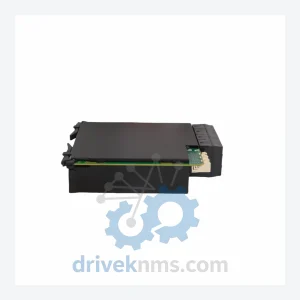
GE UR Series Modules: UR6AV Digital I/O Module —
GE UR Series: Comprehensive Module Range and Technical Overview The GE Grid Solutions UR Series (Universal Relay) platform is one…
Model: UR9AH
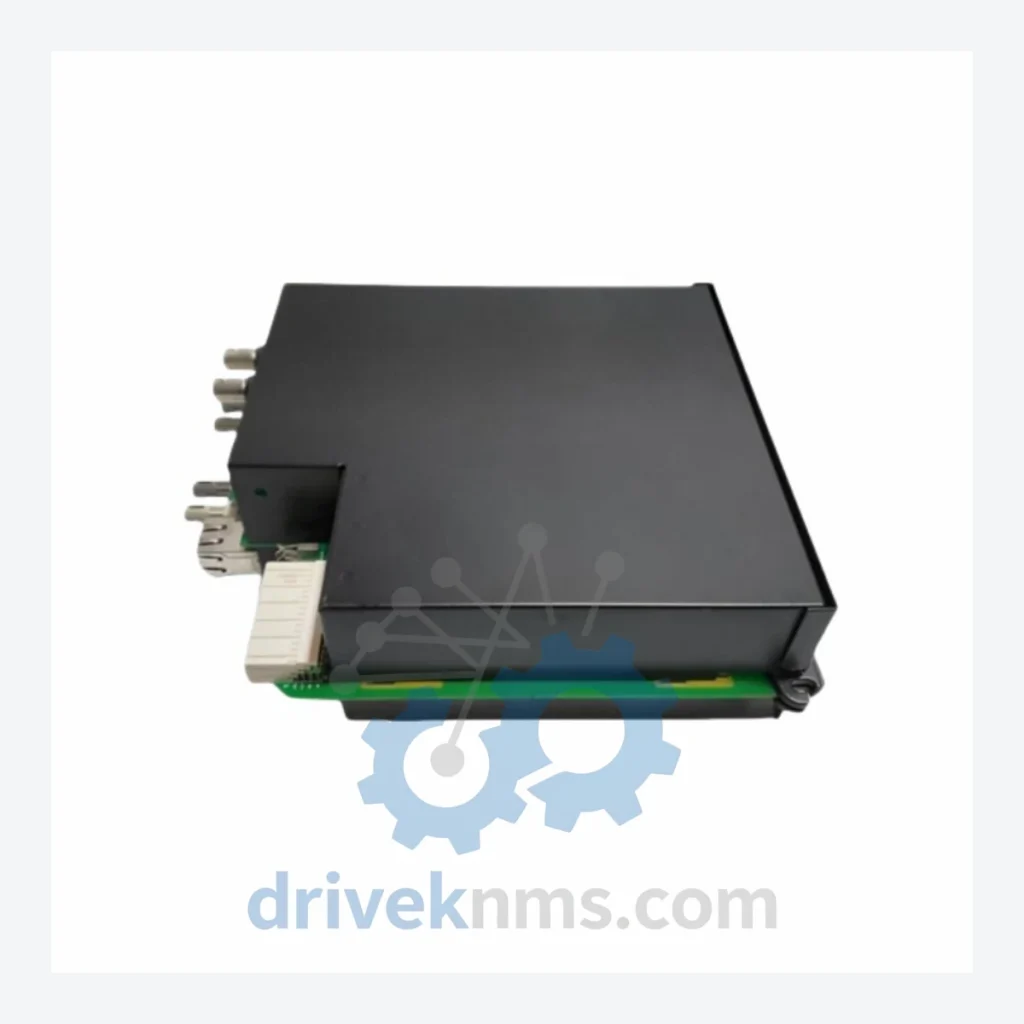
Product Overview
Commercial availability is handled through direct RFQ, model verification and export-oriented follow-up rather than public cart checkout.
Datasheet Preview
Use attached product manuals when available. If the manual is not public yet, request the full file directly through RFQ.
Commercial Path
Product pages on DRIVEKNMS are designed to verify model, brand and series first, then move the buyer into one clean quotation path.
Technical Dossier
When a protection relay module fails in a live substation or industrial power distribution system, the consequences extend far beyond a single line stoppage. For facilities running GE's UR Series platform, the UR9AH module occupies a role that cannot be substituted with off-the-shelf alternatives. A forced migration away from the UR architecture — driven solely by one unavailable spare — routinely carries engineering, commissioning, and downtime costs measured in the hundreds of thousands of dollars. DriveKNMS maintains verified stock of the GE UR9AH precisely to prevent that scenario.
| Parameter | Detail |
|---|---|
| Manufacturer | GE Grid Solutions (formerly GE Multilin) |
| Part Number | UR9AH |
| Product Series | UR Series (Universal Relay) |
| Module Function | Relay / Protection I/O Module |
| Compatible Platform | GE UR Series chassis (C30, C60, C70, D30, D60, F35, F60, G30, G60, L30, L60, L90, M60, N60, T35, T60) |
| Country of Origin | United States |
| Discontinuation Status | Obsolete – No longer manufactured; replacement sourcing required |
| Condition Available | New surplus / Professionally refurbished |
Note: Electrical parameters specific to this module variant are not published here to prevent misapplication. Contact our technical team for confirmation against your chassis configuration before ordering.
GE's UR Series became the backbone of protection relay infrastructure across utilities, mining operations, oil and gas facilities, and heavy industrial plants throughout the 1990s and 2000s. The platform's modular architecture was its strength — and today, that same modularity creates a procurement problem. Individual I/O and communication modules like the UR9AH reach end-of-life while the host chassis and firmware remain fully operational and deeply embedded in site-specific protection schemes.
Replacing a UR Series installation is not a plug-and-play exercise. Protection engineers must re-engineer relay coordination studies, rewrite and re-test all protection logic, reconfigure SCADA integration points, and satisfy utility interconnection requirements — a process that typically spans 12 to 24 months and requires specialized engineering resources. For a single failed module, that cost-benefit calculation rarely justifies full system replacement.
The operationally sound decision is to source the exact module, restore the system to its validated state, and extend the asset's productive life by 5 to 10 years. That window provides time for a planned, budgeted migration on the facility's schedule — not a crisis-driven one dictated by a parts failure.
Every UR9AH unit processed by DriveKNMS passes a structured 5-stage quality protocol before it is offered for sale:
The pressure to retire legacy protection relay systems is real — but the timeline is rarely as urgent as vendors suggest. For plant managers and reliability engineers operating UR Series installations, a structured asset extension strategy can defer capital expenditure by 5 to 10 years without compromising system integrity.
Audit your installed base. Identify every UR Series chassis on site, document the module population of each, and cross-reference against known obsolete part numbers. This creates a risk-ranked spare parts list before a failure forces the issue.
Prioritize by criticality. Not every relay protects an equally critical asset. Focus initial spare procurement on modules protecting primary transformers, generator interconnects, and bus protection schemes where a failure has the broadest operational impact.
Establish a controlled storage protocol. Obsolete electronic modules stored correctly — in anti-static packaging, at stable temperature and humidity, away from magnetic fields — retain their functional integrity for years. A properly stored UR9AH purchased today remains a viable spare a decade from now.
Document firmware dependencies. As UR chassis firmware is updated over time, module compatibility windows narrow. Record the firmware revision of every chassis on site now, and source spares that are confirmed compatible with those specific revisions.
Budget for planned replacement, not emergency replacement. The cost difference between a sourced spare purchased through a planned procurement cycle and one acquired under emergency conditions — with expedited freight, engineering overtime, and production losses — is substantial. The spare purchased today is the cheapest version of this problem.
Q: What warranty applies to an obsolete module like the UR9AH?
A: DriveKNMS provides a 90-day functional warranty on all refurbished units and a 180-day warranty on new surplus stock. Warranty covers functional failure under normal operating conditions.
Q: How do I confirm the unit is new surplus versus refurbished?
A: Each unit ships with a condition report documenting its classification (new surplus or refurbished), the specific QA stages completed, and the technician sign-off. This documentation is available on request prior to purchase.
Q: Can you confirm firmware compatibility with my specific chassis?
A: Yes. Provide your chassis model and current firmware revision when inquiring, and our technical team will confirm compatibility before the order is placed.
Q: Do you offer long-term spare parts reservation?
A: For facilities requiring multiple units or forward inventory planning, contact us to discuss reserved stock arrangements. Given the scarcity of UR9AH units in the secondary market, early reservation is advisable.
Q: What is the lead time?
A: In-stock units ship within 3–5 business days. Lead time for sourced units varies; contact us for current availability.
© 2026 DriveKNMS. All trademarks belong to their respective owners. Specifications are for reference only and subject to change without notice. Verify all parameters against official documentation before installation.
Related Paths
GE UR Series: Comprehensive Module Range and Technical Overview The GE Grid Solutions UR Series (Universal Relay) platform is one…
GE URSHB Power Supply Module – Obsolete UR Series Spare Part When a power supply module fails inside a GE…
GE UR8LV CT/VT Module – Obsolete UR Series Spare Part When a CT/VT input module fails inside a GE UR…