
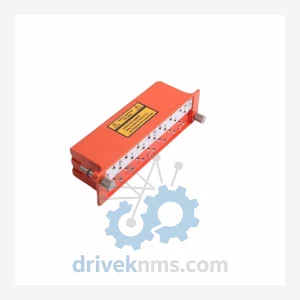
Kollmorgen ServoDisc Motors: 00-S0613-038 / ASML SVG 859-0399-002
Kollmorgen ServoDisc Series: Comprehensive Module Range and Technical Overview The Kollmorgen ServoDisc series is a family of permanent-magnet DC servo…
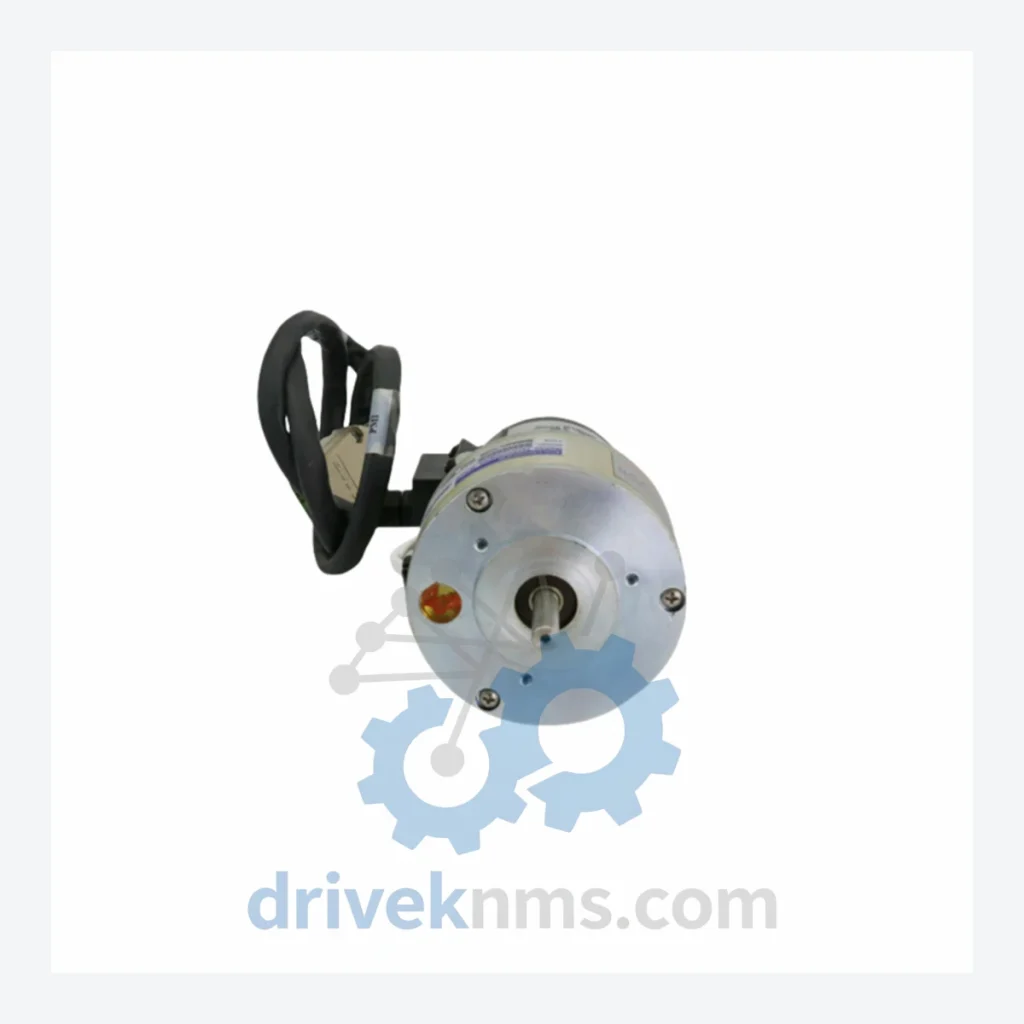
Model: S6M4H
Product Overview
Commercial availability is handled through direct RFQ, model verification and export-oriented follow-up rather than public cart checkout.
Datasheet Preview
Use attached product manuals when available. If the manual is not public yet, request the full file directly through RFQ.
Commercial Path
Product pages on DRIVEKNMS are designed to verify model, brand and series first, then move the buyer into one clean quotation path.
Technical Dossier
The Kollmorgen S-Series (also referenced as the S/H-Series or Goldline S-Series) represents one of the most widely deployed families of brush-type and brushless servo DC motors in global heavy industry. Installed across petrochemical refineries, nuclear power auxiliary systems, offshore drilling platforms, and continuous-process paper mills, the S-Series established Kollmorgen's position as a tier-one motion control supplier throughout the 1980s and 1990s. Units such as the S6M4H remain embedded in legacy machine tool controllers, winding systems, and coordinated multi-axis positioning stages where replacement with a modern frameless motor is cost-prohibitive. The series covers continuous stall torque ratings from approximately 0.5 N·m to over 40 N·m, with frame sizes designated by the numeric prefix (S2, S4, S6, S8, S10) and winding codes appended as alphanumeric suffixes.
The S-Series lineage originates from Kollmorgen's acquisition of Inland Motor in the 1970s, which brought high-energy-density rare-earth magnet technology into the product line. Early S-Series motors used Alnico or ceramic magnets with conventional wound armatures and were paired with analog SCR drive systems. By the mid-1980s, the series transitioned to samarium-cobalt and later neodymium-iron-boron magnets, enabling higher peak torque-to-inertia ratios in the same frame envelope.
The winding suffix system (e.g., M4H, M2D, M6F) encodes the number of poles, winding resistance class, and thermal insulation grade. H-suffix windings indicate Class H insulation (180°C), making them suitable for high-ambient or enclosed-cabinet installations. Compatibility between early and late production S-Series units is generally maintained at the mechanical interface (NEMA or metric flange, keyed shaft), but drive tuning parameters must be re-verified when substituting winding variants, as back-EMF constants and armature inductance differ between suffix codes.
The S-Series entered its end-of-active-production phase in the early 2000s as Kollmorgen consolidated around the AKM (synchronous) and TBM (frameless brushless) platforms. However, the installed base remains substantial, and OEM machine builders continue to specify S-Series replacements for field service through authorized distributors and specialist aftermarket suppliers.
The following models represent verified, commonly referenced SKUs within the Kollmorgen S-Series. Each unit is a permanent-magnet DC servo motor; functional distinctions are noted per model.
S2M2D: Frame 2, low-inertia winding, Class D insulation, for high-bandwidth positioning axes.
S2M4H: Frame 2, 4-pole winding, Class H insulation, compact servo for light-duty CNC auxiliaries.
S4M2D: Frame 4, medium torque, low-resistance winding, standard machine tool feed axis.
S4M4H: Frame 4, 4-pole, Class H, general-purpose servo for enclosed drive cabinets.
S4M6F: Frame 4, 6-pole winding, Class F insulation, balanced speed-torque for winding applications.
S6M2D: Frame 6, medium-high torque, low-inertia winding, high-speed spindle assist.
S6M4H: Frame 6, 4-pole, Class H insulation — the subject unit; widely used in coordinated multi-axis and tension-control systems.
S6M6F: Frame 6, 6-pole, Class F, optimized for continuous-duty web-handling lines.
S8M2D: Frame 8, high-torque, low-resistance winding, heavy-duty rotary table and indexing drives.
S8M4H: Frame 8, 4-pole, Class H, large-format machine tool main axis replacement.
S8M6F: Frame 8, 6-pole, Class F, process line master drive with extended thermal margin.
S10M2D: Frame 10, maximum frame size, low-inertia winding, high-speed extruder and calendar roll drives.
S10M4H: Frame 10, 4-pole, Class H, high-torque continuous-duty servo for steel mill auxiliary axes.
S10M6F: Frame 10, 6-pole, Class F, long-run process applications with elevated ambient temperature.
S6M8H: Frame 6, 8-pole high-density winding, Class H, used in precision grinding and honing machine retrofits.
S4M8H: Frame 4, 8-pole, Class H, compact high-pole-count variant for low-speed high-torque positioning.
S8M8H: Frame 8, 8-pole, Class H, heavy-duty variant for coordinated multi-axis press and forging equipment.
DriveKNMS maintains a dedicated inventory program for end-of-life Kollmorgen S-Series motors. Because Kollmorgen ceased active production of brush-type S-Series units, field replacements depend entirely on new-old-stock (NOS), reconditioned, or remanufactured units. DriveKNMS sources S-Series motors through a global network of decommissioned plant auctions, OEM surplus channels, and authorized repair facilities.
Kollmorgen S-Series motors present specific inspection challenges due to their brush-commutator architecture and legacy encoder interfaces. DriveKNMS applies the following test protocol to all S-Series units processed through its facility:
Armature resistance balance test: Each commutator segment is measured for inter-segment resistance symmetry. Variance exceeding 5% indicates worn or open armature windings.
Insulation resistance (IR) test: Winding-to-frame IR is measured at 500 VDC. Minimum acceptable value is 1 MΩ for units in service; remanufactured units are tested to 100 MΩ minimum.
Back-EMF constant verification: Motor is driven at a reference speed on a calibrated test stand; output voltage is compared against the published Ke specification for the winding suffix.
Brush and commutator surface inspection: Contact surface is examined for grooving, pitting, and film condition. Brushes below 50% of new length are replaced as standard.
Bearing noise and runout check: Shaft runout is measured with a dial indicator; radial and axial play is compared against OEM tolerance tables.
Thermal cycling: Remanufactured units are run at rated load for a minimum of 2 hours to verify thermal stability before shipment.
Related Paths
Kollmorgen ServoDisc Series: Comprehensive Module Range and Technical Overview The Kollmorgen ServoDisc series is a family of permanent-magnet DC servo…
KOLLMORGEN 64WKS-M240/50-RLG Servo Drive – Obsolete BDS Series Spare Part When a KOLLMORGEN 64WKS-M240/50-RLG servo drive fails on an active…
Kollmorgen DIGIFAS 7202 Servo Drive: Global Sourcing Strategy & Asset Return Value The Kollmorgen DIGIFAS 7202 is a high-performance servo…