
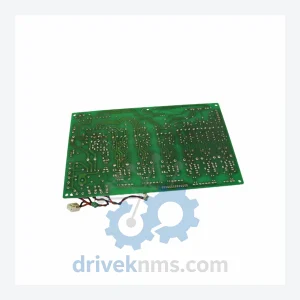
Sanken DK14256A Circuit Board: Specifications, Compatible Models & Availability
Sanken DK14256A Series: Comprehensive Module Range and Technical Overview The Sanken DK14256A is a purpose-built circuit board module deployed across…
Model: 810-068158-014
Product Overview
Commercial availability is handled through direct RFQ, model verification and export-oriented follow-up rather than public cart checkout.
Datasheet Preview
Use attached product manuals when available. If the manual is not public yet, request the full file directly through RFQ.
Commercial Path
Product pages on DRIVEKNMS are designed to verify model, brand and series first, then move the buyer into one clean quotation path.
Technical Dossier
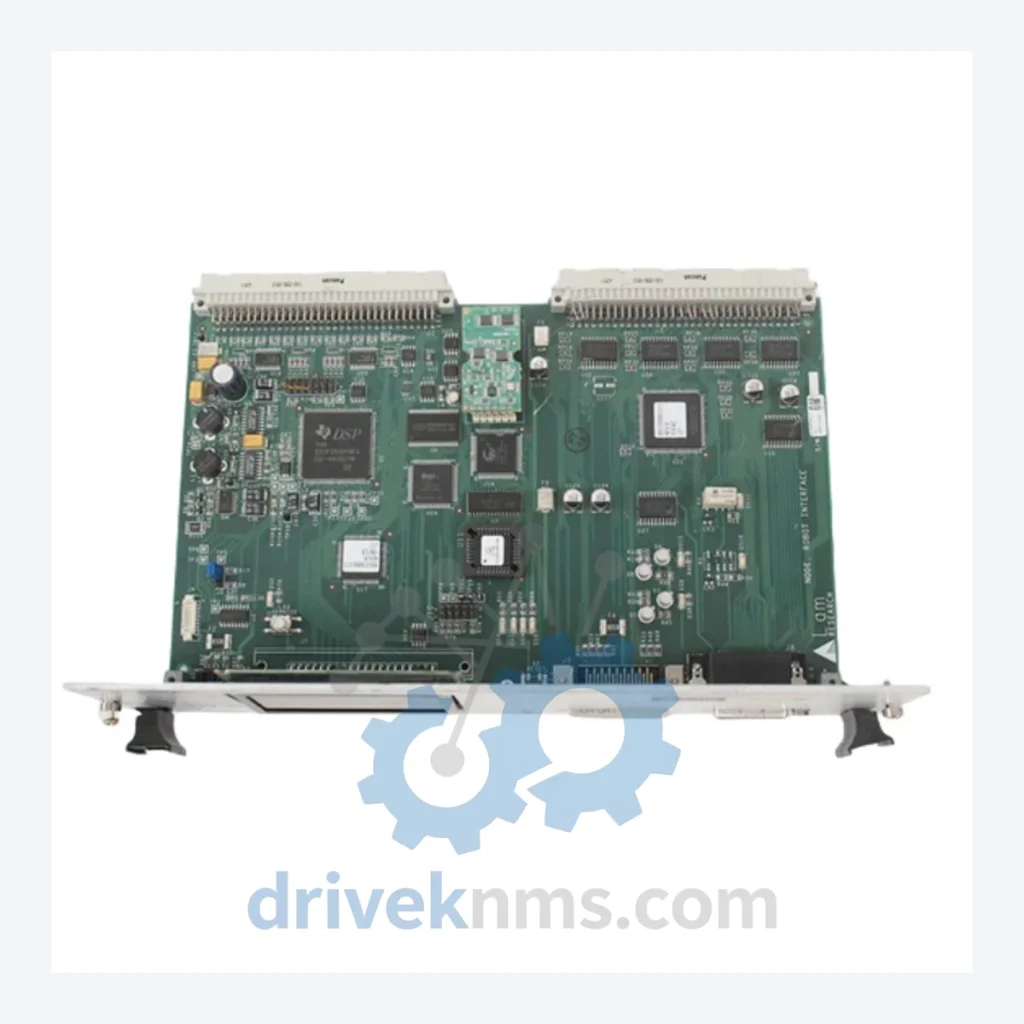
The Lam Research Node Robot Interface Board series represents a critical subsystem within Lam Research's etch and deposition capital equipment platforms, including the Versys, Kiyo, Flex, and 2300 series process chambers. These boards are deployed globally in semiconductor fabs, flat-panel display manufacturers, and advanced packaging facilities operating under ISO Class 1–5 cleanroom conditions. The 810-068158-014 specifically functions as the primary communication and motion-control interface between the system's central controller and the wafer-handling robot node, governing positional feedback, end-effector actuation signals, and real-time fault reporting. Installed base spans high-volume production environments across TSMC, Samsung, SK Hynix, and Micron Technology facilities, where mean-time-between-failure (MTBF) requirements exceed 50,000 hours of continuous operation.
Lam Research's robot interface board architecture has undergone three distinct generations since the early 2000s. The first generation, deployed on the Rainbow and TCP 9600 platforms, used parallel TTL-level I/O buses with discrete optocoupler isolation, limiting communication bandwidth to sub-1 MHz rates and requiring manual calibration of encoder offsets at each preventive maintenance interval. The second generation, introduced with the Versys Metal and 2300 Kiyo platforms circa 2008–2012, transitioned to a serialized LVDS backplane architecture, integrating FPGA-based motion controllers that enabled deterministic sub-millisecond servo loop closure. The 810-068158-014 belongs to this second-generation family, characterized by its dual-port fiber-optic node interface, onboard DSP for trajectory interpolation, and compatibility with Lam's proprietary SPARC-based system controller running VxWorks RTOS. The third generation, associated with the Flex G and Sense.i platforms, migrated to EtherCAT-based distributed motion control, rendering second-generation boards non-interchangeable without a full controller upgrade. Backward compatibility between generations is not supported at the firmware level; substitution requires matching the board revision suffix (e.g., -014 vs. -016) to the installed system software version.
The following SKUs represent verified Lam Research robot interface and associated node control boards used across compatible platforms. Each entry reflects a distinct hardware revision or functional variant within the Node Robot Interface subsystem:
810-068158-014: Node Robot Interface Board, dual-port fiber-optic, DSP motion control, Versys/Kiyo compatible.
810-068158-016: Revised Node Robot Interface Board with updated FPGA firmware, enhanced EMI shielding.
810-068158-010: Earlier revision Node Robot Interface Board, single-port fiber-optic, limited trajectory buffer.
810-068158-008: Legacy Node Robot Interface Board, TTL-level I/O, Rainbow/TCP 9600 platform only.
810-049832-001: Robot Node Controller Board, primary axis servo amplifier interface, 2300 series.
810-049832-003: Robot Node Controller Board, revised power stage, improved thermal management.
810-057741-001: End-Effector Sensor Interface Board, capacitive wafer-presence detection, cleanroom-rated.
810-057741-003: End-Effector Sensor Interface Board, updated ADC resolution, Flex G compatible.
810-061234-001: Robot Axis Encoder Interface Board, quadrature decode, 4-axis simultaneous.
810-061234-005: Robot Axis Encoder Interface Board, differential input, high-speed index pulse capture.
810-072345-001: Node Communication Adapter Board, LVDS-to-fiber bridge, backplane slot 3 assignment.
810-072345-004: Node Communication Adapter Board, dual-redundant fiber path, fault-tolerant configuration.
810-055678-002: Robot Power Distribution Board, 24 VDC/48 VDC regulated outputs, overcurrent protection.
810-055678-006: Robot Power Distribution Board, revised fuse topology, CE/UL dual-certified.
810-063901-001: Wafer Mapping Interface Board, optical sensor array interface, 200 mm/300 mm selectable.
810-063901-003: Wafer Mapping Interface Board, updated signal conditioning, reduced false-positive rate.
810-079012-001: Robot Safety Interlock Board, dual-channel E-stop monitoring, SIL-2 rated logic.
810-079012-002: Robot Safety Interlock Board, expanded I/O, compatible with Lam Guardian safety controller.
The 810-068158-014 and its associated second-generation Node Robot Interface Board family entered end-of-life (EOL) status with Lam Research's OEM support organization as the installed base of Versys and 2300 Kiyo platforms transitioned to third-generation Flex G and Sense.i tools. OEM new-unit availability is no longer guaranteed through standard channels, and lead times for factory-refurbished units have extended to 16–26 weeks where available. DriveKNMS maintains a dedicated inventory program for lifecycle-extended support of this board family, sourcing units from decommissioned tool lots, certified refurbishment pipelines, and authenticated surplus channels. All units are serialized, and provenance documentation is available upon request. DriveKNMS supports cross-referencing between revision suffixes (-008 through -016) to identify functionally equivalent substitutes where direct replacements are unavailable, and provides firmware version matching guidance to ensure compatibility with the customer's installed system software baseline.
Node Robot Interface Boards present specific test challenges due to their integration of high-speed fiber-optic transceivers, FPGA-based motion control logic, and mixed-signal analog servo interfaces on a single substrate. DriveKNMS applies a multi-stage verification protocol to all units in this family. Stage 1 involves visual and dimensional inspection per IPC-A-610 Class 3 criteria, including solder joint integrity on BGA-packaged DSP and FPGA devices. Stage 2 performs powered functional verification using a Lam-compatible node simulator that replicates the LVDS backplane signaling environment, confirming fiber-optic transceiver link margin, encoder decode accuracy across all four axes, and servo loop closure latency within OEM specification (≤500 µs). Stage 3 executes a 72-hour burn-in at elevated ambient temperature (55°C) to screen for infant-mortality failures in electrolytic capacitors and voltage regulator modules. Stage 4 validates firmware revision and FPGA bitstream integrity against the customer-specified system software version. A calibration certificate and test report are issued with each unit shipped.
© 2026 DriveKNMS. All trademarks belong to their respective owners. Specifications are for reference only and subject to change without notice. Verify all parameters against official documentation before installation.
Related Paths
Sanken DK14256A Series: Comprehensive Module Range and Technical Overview The Sanken DK14256A is a purpose-built circuit board module deployed across…
Lam Research VME-LTNI-S4 B105-0102 Network Interface Board: Supply Continuity Strategy for Semiconductor Fab Procurement Teams The Lam Research VME-LTNI-S4 B105-0102…
Lam Research 810-099175-103 Assembly – Obsolete Spare Part When a critical assembly on a Lam Research etch or CVD system…