
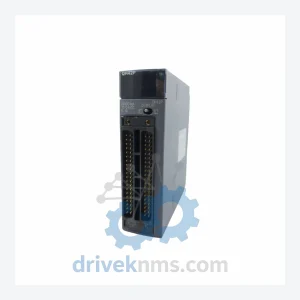
Mitsubishi QX48Y57 BD627B662G51 Combination Unit – PLC Module
Mitsubishi QX48Y57 BD627B662G51 PLC Combination Unit: Supply Continuity Strategy for Mission-Critical Operations The Mitsubishi QX48Y57 BD627B662G51 is a combination I/O…
Model: EXEA2-1100A00-03
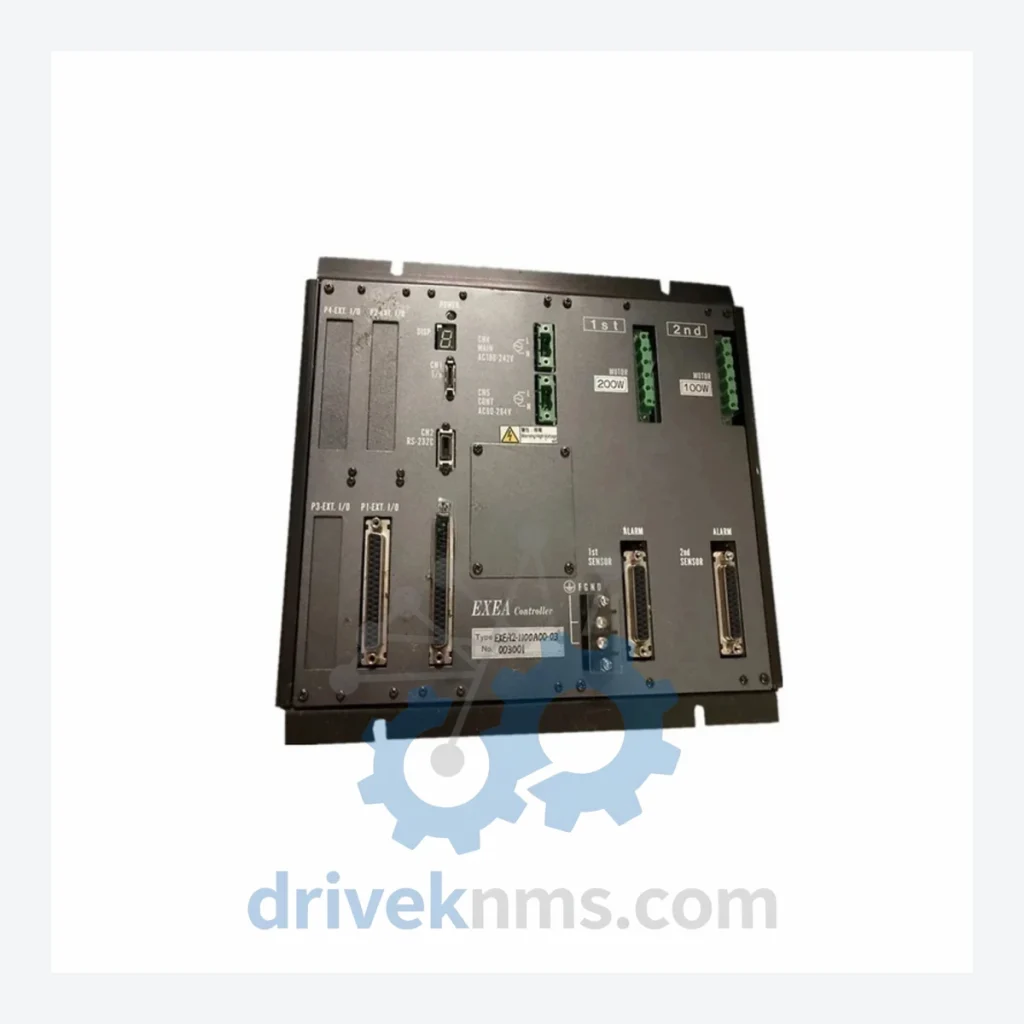
Product Overview
Commercial availability is handled through direct RFQ, model verification and export-oriented follow-up rather than public cart checkout.
Datasheet Preview
Use attached product manuals when available. If the manual is not public yet, request the full file directly through RFQ.
Commercial Path
Product pages on DRIVEKNMS are designed to verify model, brand and series first, then move the buyer into one clean quotation path.
Technical Dossier
The Mitsubishi Electric EXEA2 series is a distributed control system (DCS) platform deployed across global heavy industry sectors including petrochemical complexes, nuclear power facilities, oil refineries, and large-scale manufacturing plants. Engineered for high-availability process control environments, the EXEA2 architecture supports redundant CPU configurations, high-density I/O expansion, and deterministic bus communication — characteristics that have sustained its installed base across facilities with 20+ year operational lifecycles. The series occupies a critical position in Mitsubishi Electric's industrial automation portfolio, bridging legacy MELSEC-based control logic with modern fieldbus integration requirements. Its modular backplane design allows incremental expansion without full system replacement, a key factor in its continued specification by engineering contractors in brownfield projects.
The EXEA2 series emerged from Mitsubishi Electric's earlier EXE and EXEA platforms, inheriting the backplane bus topology while introducing enhanced processor throughput and expanded I/O addressing capacity. Early EXEA2 deployments (circa late 1990s to early 2000s) relied on proprietary optical fiber communication between controller nodes, a design choice that maximized noise immunity in high-EMI refinery environments. Subsequent hardware revisions introduced compatibility with PROFIBUS-DP and CC-Link fieldbus standards, enabling integration with third-party instrumentation without gateway hardware.
The transition from EXEA to EXEA2 introduced a revised backplane connector standard, making the two generations mechanically incompatible at the module level — a critical consideration for maintenance engineers sourcing replacement parts. Later EXEA2 revisions added Ethernet-based engineering station connectivity, replacing the earlier RS-232C serial programming interface. As of 2026, the EXEA2 series is classified as a mature/end-of-life platform by Mitsubishi Electric, with no new hardware development announced. Facilities operating EXEA2 systems are advised to maintain strategic spare parts inventories, as OEM production of select modules has been discontinued. Modern migration paths include the MELSEC iQ-R series and Yokogawa CENTUM VP for full DCS replacement scenarios.
The following SKUs represent verified components within the Mitsubishi Electric EXEA2 series, classified by functional category:
Main Controller Units
CPU & Processor Modules
Analog Input (AI) Modules
Analog Output (AO) Modules
Digital Input (DI) Modules
Digital Output (DO) Modules
Communication & Network Modules
Power Supply Modules
EXEA2 modules present specific test challenges due to their proprietary backplane bus protocol and multi-layer PCB construction. DriveKNMS applies a structured test protocol for all EXEA2 inventory prior to shipment. CPU modules undergo full power-on self-test (POST) verification, memory integrity check, and communication bus loopback testing using EXEA2-compatible backplane fixtures. Analog I/O modules are calibrated against NIST-traceable reference standards, with channel-by-channel linearity and offset verification recorded in the accompanying test report. Digital I/O modules are tested for contact integrity (relay modules) and switching response time (transistor output modules). Communication modules — including EXEA2-NET01 and EXEA2-PB01 — are validated for protocol handshake and data throughput under simulated load conditions. All tested units are assigned a unique test record number traceable to the shipment documentation.
Related Paths
Mitsubishi QX48Y57 BD627B662G51 PLC Combination Unit: Supply Continuity Strategy for Mission-Critical Operations The Mitsubishi QX48Y57 BD627B662G51 is a combination I/O…
Mitsubishi MW400 Series: Comprehensive Module Range and Technical Overview The Mitsubishi Electric MW400 series represents a generation of industrial circuit…
Mitsubishi PD21 PD21B Series: Comprehensive Module Range and Technical Overview The Mitsubishi PD21 and PD21B are DC power supply modules…