
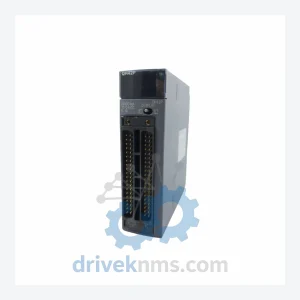
Mitsubishi QX48Y57 BD627B662G51 Combination Unit – PLC Module
Mitsubishi QX48Y57 BD627B662G51 PLC Combination Unit: Supply Continuity Strategy for Mission-Critical Operations The Mitsubishi QX48Y57 BD627B662G51 is a combination I/O…
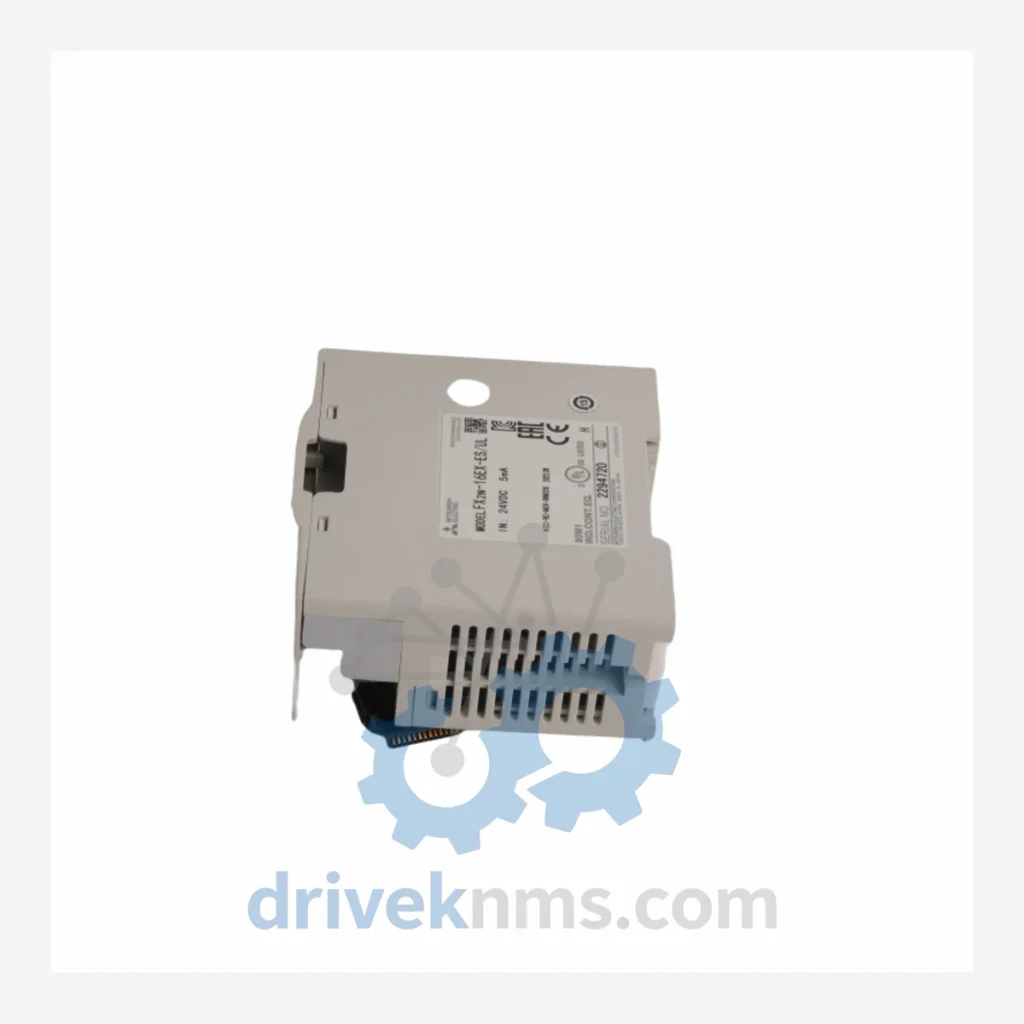
Model: FX2N-16EX-ES/UL
Product Overview
Commercial availability is handled through direct RFQ, model verification and export-oriented follow-up rather than public cart checkout.
Datasheet Preview
Use attached product manuals when available. If the manual is not public yet, request the full file directly through RFQ.
Commercial Path
Product pages on DRIVEKNMS are designed to verify model, brand and series first, then move the buyer into one clean quotation path.
Technical Dossier
The Mitsubishi Electric FX2N series represents the second-generation flagship of the MELSEC FX programmable logic controller family. Introduced in the mid-1990s and produced through the 2010s, the FX2N platform achieved widespread deployment across global heavy industry sectors including petrochemical refining, nuclear auxiliary systems, automotive assembly, water treatment, and continuous-process manufacturing. Its compact DIN-rail form factor, deterministic scan-cycle performance, and an extensive catalog of plug-in expansion modules made it the dominant micro-PLC architecture in Asian and European industrial installations for over two decades. The FX2N-16EX-ES/UL is a 16-point DC input expansion module rated for 24 VDC sink/source operation, UL-listed, and designed for direct bus connection to the FX2N main unit via the right-side expansion connector.
The FX2N succeeded the FX2 and FX0N lines, introducing a 32-bit RISC-based CPU, expanded program memory (up to 16,000 steps), and a high-speed pulse output capability of 100 kHz. The expansion bus architecture uses a proprietary parallel backplane connector that supports up to eight expansion units and up to 256 additional I/O points beyond the base unit's onboard I/O. This bus is electrically and mechanically incompatible with the later FX3U/FX3UC series, which migrated to a serial high-speed bus (HSBUS) and introduced built-in USB programming ports. Installations running FX2N hardware that require modernization must account for this bus incompatibility: FX3U expansion modules cannot be mixed onto an FX2N backplane without a dedicated adapter unit (FX2N-CNV-BC). The FX2N series entered end-of-life status in most markets between 2015 and 2020, with Mitsubishi Electric formally recommending migration to the FX5U/FX5UC platform for new designs. However, the installed base remains substantial, and replacement modules continue to be sourced through authorized distributors and specialist spare-parts suppliers.
The following SKUs represent verified, commonly stocked modules within the FX2N expansion ecosystem. Each entry reflects the module's primary functional classification and I/O specification.
Digital Input Expansion Modules
Digital Output Expansion Modules
Analog I/O Modules
Communication & Special Function Modules
High-Speed Counter & Positioning Modules
With the FX2N series formally discontinued, procurement of replacement modules has shifted from authorized distribution channels to specialist lifecycle-support suppliers. DriveKNMS maintains a dedicated inventory of FX2N expansion modules, including low-volume and hard-to-find variants such as the FX2N-16EX-ES/UL, FX2N-4AD-TC, and FX2N-16CCL-M. Stock is sourced from decommissioned plant equipment, verified OEM overstock, and controlled secondary-market channels. All units are subject to pre-shipment inspection before dispatch. For facilities operating FX2N-based control systems beyond the manufacturer's support window, DriveKNMS provides a documented spare-parts reservation service: clients may pre-allocate critical module quantities against projected maintenance schedules, reducing unplanned downtime risk in environments where a full migration to FX5U is not operationally feasible in the near term.
FX2N expansion modules interface with the main CPU unit via a parallel expansion bus that carries both power and data signals. Failure modes specific to this architecture include bus connector pin corrosion, degraded optocoupler isolation on input channels, and relay contact wear on EYR-type output modules. DriveKNMS applies a structured inspection protocol to all FX2N units: visual inspection of the expansion connector and PCB for corrosion or mechanical damage; functional I/O point verification using a dedicated FX2N test fixture that simulates main-unit bus signals; relay contact resistance measurement on output modules; and insulation resistance testing between I/O terminals and chassis ground. Analog modules (4AD, 4DA, 4AD-PT, 4AD-TC) undergo additional calibration verification against traceable reference standards. Units that do not meet specification thresholds are quarantined and not offered for sale.
Related Paths
Mitsubishi QX48Y57 BD627B662G51 PLC Combination Unit: Supply Continuity Strategy for Mission-Critical Operations The Mitsubishi QX48Y57 BD627B662G51 is a combination I/O…
Mitsubishi MW400 Series: Comprehensive Module Range and Technical Overview The Mitsubishi Electric MW400 series represents a generation of industrial circuit…
Mitsubishi MC062A BN624B816G51A Circuit Board – Obsolete MELDAS Spare Part When a Mitsubishi MC062A BN624B816G51A circuit board fails inside a…