
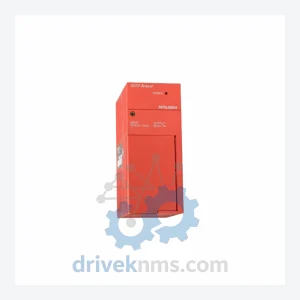
Mitsubishi A1S63P Power Supply Unit – Obsolete MELSEC-A Series Spare Part
Mitsubishi Electric A1S63P is listed for MELSEC-A RFQ review. Confirm quantity, condition and destination before quotation.
RFQ-ready industrial model
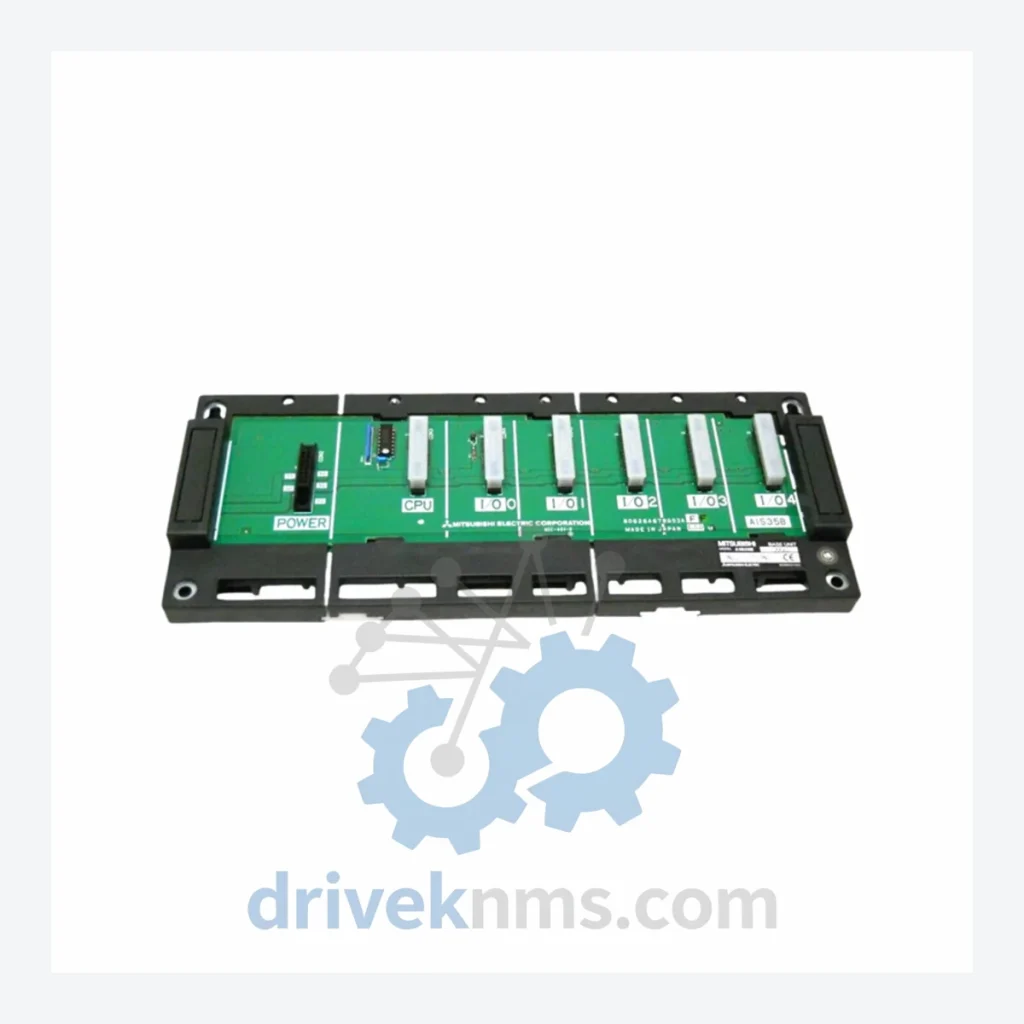
Model: A1S35B
Product Overview
Commercial availability is handled through direct RFQ, model verification and export-oriented follow-up rather than public cart checkout.
Datasheet Preview
Use attached product manuals when available. If the manual is not public yet, request the full file directly through RFQ.
Commercial Path
Product pages on DRIVEKNMS are designed to verify model, brand and series first, then move the buyer into one clean quotation path.
Technical Dossier
The Mitsubishi Electric MELSEC-A Series — encompassing the full-size AnA/AnU and the compact AnS/A1S sub-families — represents one of the most widely deployed programmable logic controller platforms in global heavy industry. Installed across petrochemical complexes, nuclear power auxiliary systems, steel rolling mills, automotive body-in-white lines, and offshore platform control rooms, the MELSEC-A architecture established the foundational I/O bus topology that Mitsubishi Electric carried forward into the Q Series. Installed base estimates place active MELSEC-A deployments in the tens of thousands of nodes worldwide, with the majority concentrated in facilities commissioned between 1985 and 2005. The A1S35B is a 5-slot extension base unit within the compact A1S (AnS) sub-series, designed to expand I/O capacity beyond the main base unit in space-constrained panel environments.
The MELSEC-A Series was introduced in the early 1980s as Mitsubishi Electric's response to the demand for modular, rack-based PLC systems capable of handling complex sequential and analog control tasks. The architecture evolved through three distinct generations:
Generation 1 (AnA/AnN, ~1982–1990): Large-format base units (A38B, A35B, A32B) with parallel backplane bus. CPU modules such as the A2ACPU and A3NCPU operated at relatively low scan speeds but offered robust instruction sets for the era. I/O addressing was fixed at 256–2048 points depending on CPU class.
Generation 2 (AnU/AnS, ~1990–2000): Introduction of the compact A1S sub-series (A1SCPU, A1SHCPU) alongside the high-performance AnU line (A2UCPU, A3UCPU). The AnS backplane (A1S32B, A1S35B, A1S38B) used a miniaturized bus connector incompatible with full-size AnA racks, requiring careful attention during system expansion. MELSECNET/B and MELSECNET/10 network modules were introduced in this period.
Compatibility note: A1S-series modules are not interchangeable with full-size AnA/AnU base units due to differing backplane connector pitch and bus voltage profiles. Cross-series mixing requires dedicated interface modules and is generally not recommended for production environments.
Base Units & Rack Extensions
A1S32B: 2-slot compact extension base unit, AnS series, panel-mount.
A1S35B: 5-slot compact extension base unit, AnS series; expands main base I/O capacity.
A1S38B: 8-slot compact extension base unit, AnS series, maximum I/O density per rack.
A35B: 5-slot full-size base unit, AnA/AnU series, standard rack format.
A38B: 8-slot full-size base unit, AnA/AnU series, high-density I/O configuration.
CPU Modules
A1SCPU: Compact AnS CPU, 256 I/O points, 8K step program memory, basic instruction set.
A1SHCPU: Enhanced AnS CPU, 512 I/O points, 14K step memory, floating-point support.
A1SJHCPU: High-speed AnS CPU variant with extended data register capacity.
A2UCPU: Full-size AnU CPU, 1024 I/O points, 28K step memory, multi-program support.
A3UCPU: High-end AnU CPU, 2048 I/O points, 60K step memory, redundancy-capable.
Digital Input (DI) Modules
A1SX40: 16-point DC input module, 24VDC, sink/source compatible, AnS format.
A1SX80: 32-point DC input module, 24VDC, high-density I/O for AnS racks.
AX40S: 16-point DC input, full-size format, 24VDC, standard response time.
Digital Output (DO) Modules
A1SY10: 16-point relay output module, 2A per point, AnS format, AC/DC load.
A1SY40P: 16-point transistor output, 0.5A per point, source type, AnS format.
AY40: 16-point transistor output, full-size format, sink type.
Analog I/O (AI/AO) Modules
A1S62DA: 2-channel analog output, 12-bit resolution, 0–10V / 4–20mA selectable.
A1S64AD: 4-channel analog input, 12-bit resolution, voltage/current input, AnS format.
Communication & Network Modules
A1SJ71UC24-R2: RS-232C serial communication module, AnS format, MELSEC protocol.
A1SJ71AP23Q: MELSECNET/10 optical loop master/local module, AnS format.
Power Supply Modules
A1S61PN: 5VDC/3A power supply for AnS base units, 100–240VAC input.
A1S62PN: 5VDC/5A power supply for AnS base units, higher current capacity for dense I/O racks.
MELSEC-A Series modules present specific test challenges due to their parallel backplane bus architecture and the age-related degradation patterns common in equipment manufactured between 1985 and 2005. DriveKNMS applies the following verification protocol to all A Series units processed through our facility:
Visual & Physical Inspection: PCB examination for capacitor bulge, electrolyte leakage, cold solder joints, and connector pin corrosion. Backplane connector pins on base units such as the A1S35B are inspected under magnification for deformation and oxidation.
Power-On Functional Test: Each module is installed in a reference A1S rack with a known-good A1SHCPU and power supply. CPU modules are tested against a standardized ladder program covering all basic and special instructions. I/O modules are cycled through all points using a dedicated test fixture.
Bus Communication Verification: For network modules (MELSECNET/B, MELSECNET/10), loopback tests confirm data link integrity at rated baud rates. Serial communication modules are tested against a PC-based MELSEC protocol analyzer.
Burn-In & Thermal Cycling: High-value modules (CPUs, analog cards) undergo a minimum 24-hour powered burn-in at ambient temperature to screen for early-life failures in aged components.
Continue The Model Path
Move from this exact model into the matching system hub, brand archive, model-family archive or lifecycle sourcing route before sending a final RFQ list.
Related Paths
Mitsubishi Electric A1S63P is listed for MELSEC-A RFQ review. Confirm quantity, condition and destination before quotation.
Mitsubishi Electric A8GT-PWTF is listed for MELSEC-A RFQ review. Confirm quantity, condition and destination before quotation.
Mitsubishi Electric A1S61PN is listed for MELSEC-A RFQ review. Confirm quantity, condition and destination before quotation.