
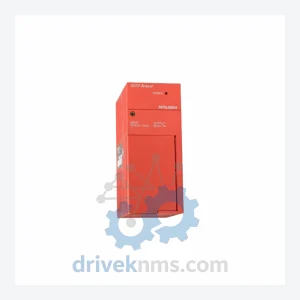
Mitsubishi A1S63P Power Supply Unit – Obsolete MELSEC-A Series Spare Part
Mitsubishi Electric A1S63P is listed for MELSEC-A RFQ review. Confirm quantity, condition and destination before quotation.
RFQ-ready industrial model
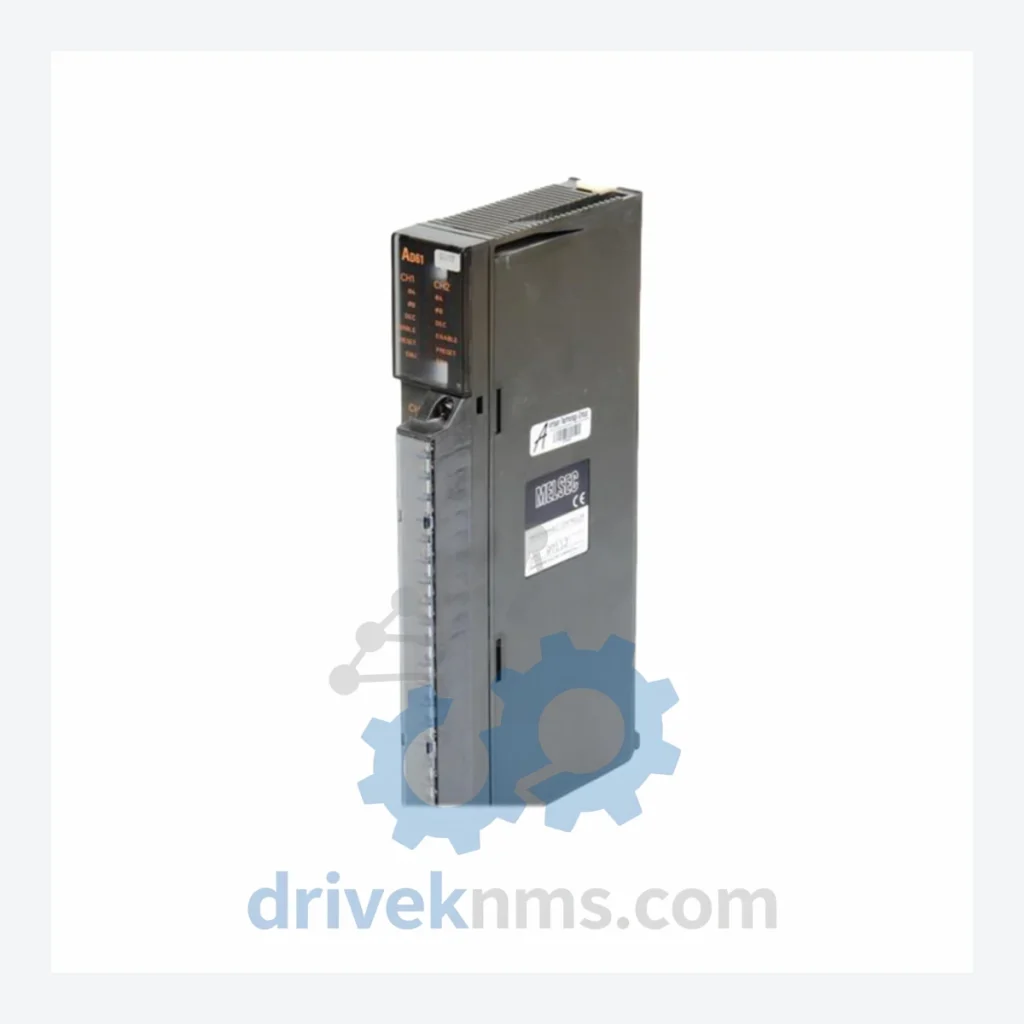
Model: AD61
Product Overview
Commercial availability is handled through direct RFQ, model verification and export-oriented follow-up rather than public cart checkout.
Datasheet Preview
Use attached product manuals when available. If the manual is not public yet, request the full file directly through RFQ.
Commercial Path
Product pages on DRIVEKNMS are designed to verify model, brand and series first, then move the buyer into one clean quotation path.
Technical Dossier
The Mitsubishi MELSEC-A Series (also referenced as the A-Series or AnS/AnU family) represents one of the most widely deployed programmable logic controller platforms in global heavy industry. Installed across petrochemical complexes, nuclear power auxiliary systems, crude oil refineries, steel rolling mills, and large-scale water treatment infrastructure, the MELSEC-A architecture established the foundational I/O bus topology that Mitsubishi Electric carried forward into the Q Series. Facilities commissioned between the mid-1980s and early 2000s frequently retain A-Series backplanes as the primary control layer, making spare part availability a critical operational concern for maintenance engineers worldwide. The AD61 high-speed counter local unit module is a representative component of this platform, designed for pulse-train input counting applications requiring hardware-level speed independent of CPU scan cycle.
The MELSEC-A Series was introduced in the early 1980s as Mitsubishi Electric's response to the demand for modular, rack-based industrial control in discrete and process manufacturing. The original A-Series used a parallel I/O bus with fixed-slot addressing, supporting CPU modules such as the A3CPU and A2CPU alongside dedicated special function modules. The AnS sub-family introduced a compact form factor for space-constrained panels, while the AnU line extended memory capacity and instruction throughput for more complex ladder logic programs.
By the mid-1990s, the A2USCPU and A3UCPU variants added floating-point arithmetic and expanded program capacity, bridging the gap toward the Q Series transition. Compatibility between sub-families is constrained by backplane bus voltage and slot pitch: AnS modules are not physically interchangeable with standard A-Series racks without adapter hardware. The MELSEC-A Series reached end-of-production announcement in the early 2010s, with Mitsubishi Electric designating the Q Series and later the iQ-R Series as the recommended migration path. However, the installed base remains extensive, and direct replacement modules continue to be sourced through specialist distributors.
The following SKUs represent verified components within the MELSEC-A and AnS/AnU product families, classified by functional category. Each entry reflects a distinct hardware module with a defined role within the A-Series system architecture.
CPU Modules
Digital Input / Output Modules
Analog Modules
High-Speed Counter & Positioning Modules
Communication & Network Adapter Modules
Power Supply Modules
For facilities operating A-Series systems beyond the OEM support window, DriveKNMS provides: direct module replacement without system migration, cross-reference identification for AnS-to-A-Series compatibility queries, and long-lead procurement for low-volume specialty modules such as positioning and high-speed counter units. Customers requiring multiple line items from a single plant shutdown or maintenance overhaul are encouraged to submit a consolidated parts list for batch quotation.
MELSEC-A Series modules present specific verification challenges due to their age profile and the complexity of their backplane bus communication. DriveKNMS applies a structured test protocol to all A-Series units prior to dispatch. CPU modules are bench-tested under live program execution with verified ladder logic, confirming instruction processing, memory integrity, and I/O refresh timing. Special function modules such as the AD61 are tested under simulated pulse-train input at rated frequency to confirm counter register accuracy, coincidence output response, and parameter retention across power cycles.
Continue The Model Path
Move from this exact model into the matching system hub, brand archive, model-family archive or lifecycle sourcing route before sending a final RFQ list.
Related Paths
Mitsubishi Electric A1S63P is listed for MELSEC-A RFQ review. Confirm quantity, condition and destination before quotation.
Mitsubishi Electric A8GT-PWTF is listed for MELSEC-A RFQ review. Confirm quantity, condition and destination before quotation.
Mitsubishi Electric A1S61PN is listed for MELSEC-A RFQ review. Confirm quantity, condition and destination before quotation.