
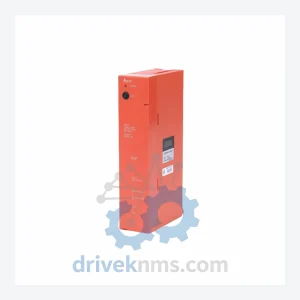
Mitsubishi MELSEC A-Series Power Supply Modules: A61P
Mitsubishi Electric A61P is listed for MELSEC A RFQ review. Confirm quantity, condition and destination before quotation.
RFQ-ready industrial model
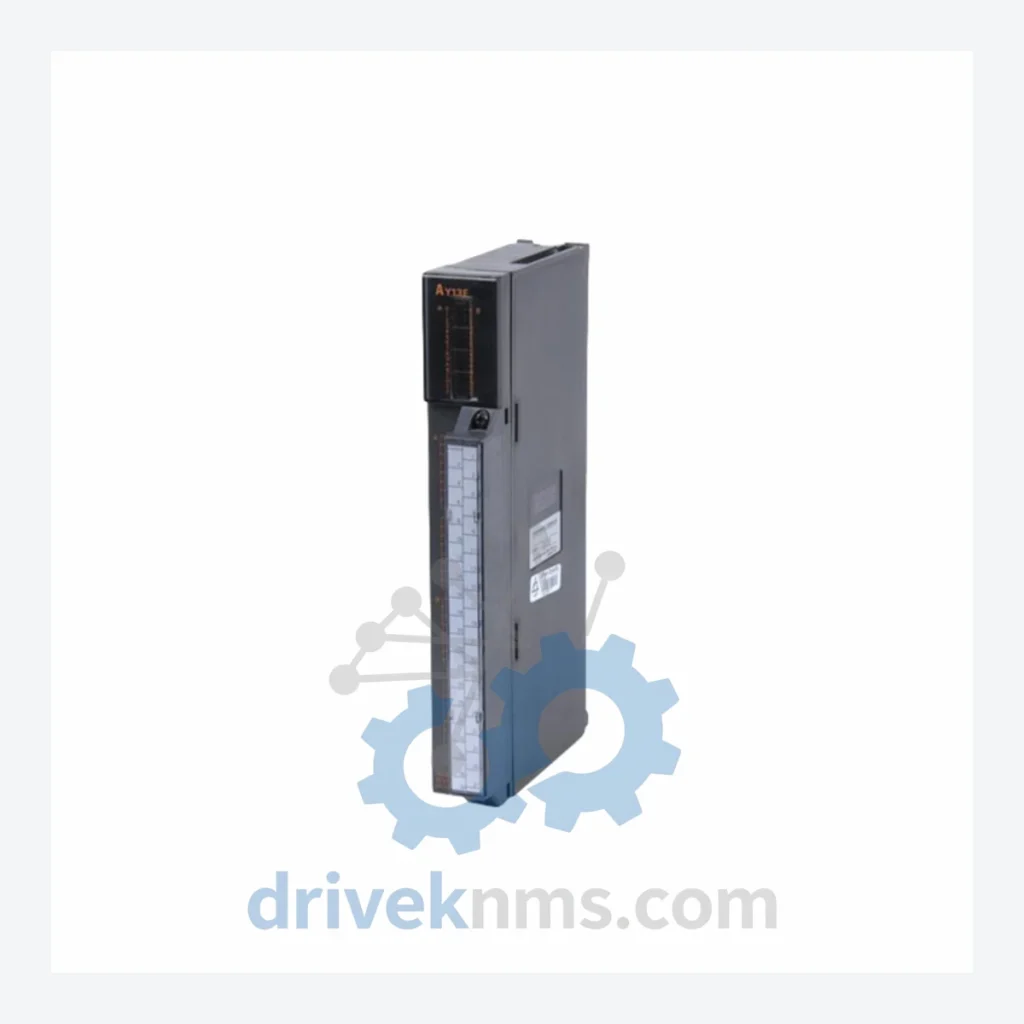
Model: AY13
Product Overview
Commercial availability is handled through direct RFQ, model verification and export-oriented follow-up rather than public cart checkout.
Datasheet Preview
Use attached product manuals when available. If the manual is not public yet, request the full file directly through RFQ.
Commercial Path
Product pages on DRIVEKNMS are designed to verify model, brand and series first, then move the buyer into one clean quotation path.
Technical Dossier
The Mitsubishi MELSEC A-Series programmable logic controller platform has been a foundational control architecture in global heavy industry since its commercial introduction in the early 1980s. Deployed across petrochemical complexes, nuclear power auxiliary systems, steel rolling mills, automotive body-in-white lines, and large-scale water treatment facilities, the A-Series established Mitsubishi Electric's position as a tier-one PLC supplier in process-critical environments. Its modular backplane architecture — supporting CPU, I/O, communication, and power supply modules on a common base unit — allowed system integrators to configure controllers from small standalone units to multi-rack distributed systems exceeding 2,048 I/O points. The platform's 24 VDC and relay output variants, combined with its deterministic scan-cycle execution, made it the preferred choice for interlock-heavy applications where output reliability is a safety requirement. Installed base estimates across Asia-Pacific, Europe, and the Americas remain in the hundreds of thousands of racks, the majority of which are now in the maintenance and life-extension phase of their operational lifecycle.
The MELSEC A-Series underwent three distinct architectural generations. The first generation (A0J2, A1, A2) introduced the proprietary MELSEC bus backplane and established the module form factor still used across the entire series. CPU modules in this generation used mask ROM for ladder program storage and offered scan times in the 10–80 ms range depending on program size. The second generation (A2A, A2N, A3N, A3A) introduced RAM-based program storage with battery backup, expanded I/O addressing to 2,048 points, and added the MELSECNET/B network adapter for multi-PLC communication. The third generation (A2US, A2USH, A3U, A4U) introduced high-speed processing, floating-point arithmetic, and compatibility with MELSECNET/10 — a token-ring industrial network capable of 10 Mbps data transfer. Compatibility between generations is constrained: first-generation I/O modules are electrically compatible with second-generation base units but require address remapping; third-generation CPUs do not support first-generation special function modules without adapter hardware. As of 2026, Mitsubishi Electric has formally discontinued all A-Series hardware, with the iQ-R Series and iQ-F Series designated as the recommended migration platforms. However, the installed base volume ensures continued demand for spare modules through specialist distributors for the foreseeable maintenance horizon.
The following SKUs represent verified, commonly sourced modules within the MELSEC A-Series platform, classified by functional category:
Digital Output Modules
AY13: 16-point transistor sink output module, 12–24 VDC, 0.1 A/point, local unit type.
AY22: 16-point relay output module, 240 VAC / 24 VDC, 2 A/point, local unit type.
AY40: 32-point transistor source output module, 12–24 VDC, 0.1 A/point.
AY50: 32-point relay output module, 240 VAC / 24 VDC, 2 A/point.
AY80: 64-point transistor sink output module, 12–24 VDC, 0.1 A/point, high-density.
Digital Input Modules
AX10: 16-point DC input module, 12–24 VDC, sink/source compatible.
AX40: 32-point DC input module, 24 VDC, sink type.
AX80: 64-point DC input module, 24 VDC, high-density, sink type.
AX20: 16-point AC input module, 100–120 VAC, 50/60 Hz.
CPU Modules
A2NCPU: Standard A2N CPU, 14K step program capacity, 256 I/O points, MELSECNET/B compatible.
A3NCPU: Extended A3N CPU, 30K step program capacity, 2,048 I/O points, floating-point support.
A2USCPU: High-speed A2US CPU, 0.2 µs/step processing, 2,048 I/O points, MELSECNET/10 ready.
A3UCPU: Large-scale A3U CPU, 60K step capacity, 4,096 I/O points, multi-CPU configuration support.
Analog I/O Modules
A68AD: 8-channel analog input module, 12-bit resolution, voltage/current selectable per channel.
A62DA: 2-channel analog output module, 12-bit resolution, ±10 VDC or 4–20 mA output.
A616AD: 16-channel analog input module, high-channel-count process monitoring applications.
Communication & Network Modules
A1SJ71AP23Q: MELSECNET/10 optical loop master/local module, 10 Mbps, up to 64 stations.
A1SJ71UC24-R4: RS-422/485 serial communication module, MODBUS RTU master/slave capable.
Power Supply Modules
A61P: 100–240 VAC input power supply, 5 VDC / 6 A output, standard base unit supply.
A62P: 100–240 VAC input power supply, 5 VDC / 8 A output, extended capacity for high-density racks.
All A-Series modules processed by DriveKNMS undergo a structured inspection and functional verification protocol before dispatch. Visual inspection covers PCB condition, capacitor integrity (electrolytic capacitor bulge and leakage being the primary age-related failure mode in this platform), connector pin condition, and label legibility. Functional testing for digital output modules including the AY13 is performed on a dedicated A-Series test rack using a known-good A2NCPU, with each output point individually energized and verified against a resistive load at rated voltage. Analog modules are tested for channel-to-channel isolation, zero-offset calibration, and full-scale linearity. Communication modules are tested for network participation and data exchange using a loopback configuration. CPU modules are tested for program load, scan execution, and I/O map integrity. Modules that pass all test stages are issued a DriveKNMS inspection record and dispatched with anti-static packaging and desiccant. Modules that fail any stage are quarantined and not offered for sale.
Continue The Model Path
Move from this exact model into the matching system hub, brand archive, model-family archive or lifecycle sourcing route before sending a final RFQ list.
Related Paths
Mitsubishi Electric A61P is listed for MELSEC A RFQ review. Confirm quantity, condition and destination before quotation.
Mitsubishi Electric AJ71UC24 is listed for MELSEC A RFQ review. Confirm quantity, condition and destination before quotation.
Mitsubishi Electric A2SHCPU is listed for MELSEC A RFQ review. Confirm quantity, condition and destination before quotation.