
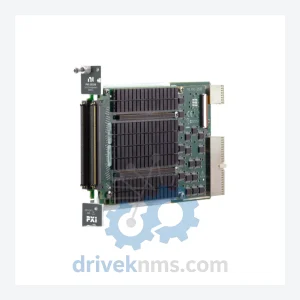
NI PXIe-2532B Switch Module – Obsolete PXI Series Spare Part
NI PXIe-2532B Switch Module – Obsolete PXI Series Spare Part When a PXIe-2532B matrix switch module fails inside a production…
Model: PCI-6224
Product Overview
Commercial availability is handled through direct RFQ, model verification and export-oriented follow-up rather than public cart checkout.
Datasheet Preview
Use attached product manuals when available. If the manual is not public yet, request the full file directly through RFQ.
Commercial Path
Product pages on DRIVEKNMS are designed to verify model, brand and series first, then move the buyer into one clean quotation path.
Technical Dossier
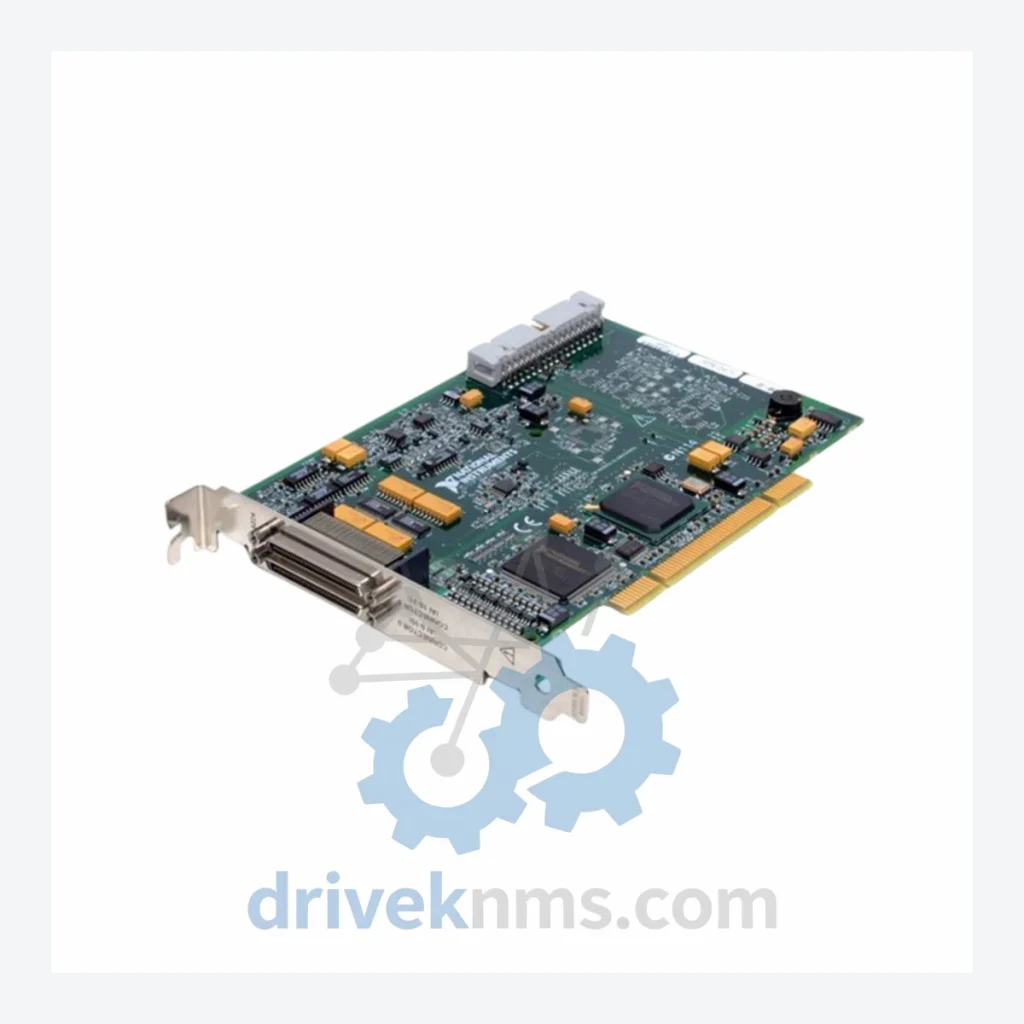
The NI PCI-6224 is a multifunction data acquisition (DAQ) card from National Instruments (now NI, a subsidiary of Emerson), designed for deployment in PCI-bus industrial and laboratory measurement systems. With 32 analog input channels at 16-bit resolution, 250 kS/s aggregate sampling rate, 48 digital I/O lines, and two 32-bit counters/timers, the PCI-6224 occupies a well-defined position in the M Series DAQ platform. It is installed across chemical processing plants, nuclear instrumentation systems, oil refineries, power generation facilities, and continuous manufacturing lines where deterministic, high-channel-count analog acquisition is required. The card interfaces directly with NI-DAQmx driver software and is compatible with LabVIEW, LabWindows/CVI, Measurement Studio, and ANSI C/C++ environments.
The PCI-6224 belongs to NI's M Series generation, introduced in the mid-2000s as a successor to the E Series platform (e.g., PCI-6023E, PCI-6024E, PCI-6025E). The architectural transition from E Series to M Series brought several structural changes: the NI-STC2 timing and synchronization ASIC replaced the original NI-STC, enabling per-channel gain and coupling configuration, improved FIFO buffering, and tighter multi-device synchronization via RTSI bus. M Series cards introduced the NI-MCal calibration architecture, allowing onboard self-calibration without external references.
Within the M Series, the 622x sub-family targets high-channel-density applications. The PCI-6224 provides 32 differential or 64 single-ended AI channels — double the channel count of the PCI-6221 — while sharing the same 250 kS/s throughput ceiling. This makes it the preferred selection for multiplexed sensor arrays in process control environments where per-channel sampling rate is secondary to channel count.
As the PCI bus standard has been superseded by PCIe in modern industrial PCs, NI transitioned equivalent functionality to the PCIe-6321, PCIe-6341, and PCIe-6363 platforms. The PCI-6224 itself reached end-of-active-production status, though NI continued to provide driver support through NI-DAQmx 19.x and later versions. Systems built on PCI-6224 hardware that cannot migrate to PCIe require sustained access to tested, verified spare units — a supply chain gap that DriveKNMS addresses directly.
The following SKUs represent the verified M Series and adjacent DAQ module inventory relevant to PCI-6224-based system maintenance and expansion. Each entry reflects a distinct functional role within NI DAQ architectures.
PCI-6224: 32 AI (16-bit, 250 kS/s), 48 DIO, 2 counters, PCI bus multifunction DAQ.
PCI-6221: 16 AI (16-bit, 250 kS/s), 24 DIO, 2 counters — reduced-channel M Series variant.
PCI-6229: 32 AI (16-bit, 250 kS/s), 4 AO, 48 DIO — adds analog output to 6224 channel count.
PCI-6250: 16 AI (16-bit, 1.25 MS/s), 24 DIO — high-speed M Series for fast transient capture.
PCI-6251: 16 AI (16-bit, 1.25 MS/s), 2 AO, 24 DIO — high-speed with analog output.
PCI-6255: 80 AI (16-bit, 1.25 MS/s), 24 DIO — maximum channel density in M Series PCI.
PCI-6259: 32 AI (16-bit, 1.25 MS/s), 4 AO, 48 DIO — high-speed, high-channel, full I/O.
PCI-6280: 16 AI (18-bit, 625 kS/s) — precision M Series for high-resolution measurement.
PCI-6281: 16 AI (18-bit, 625 kS/s), 2 AO — 18-bit precision with analog output.
PCI-6289: 32 AI (18-bit, 625 kS/s), 4 AO, 48 DIO — highest-resolution full-featured M Series.
PCIe-6321: PCIe successor to PCI-6221; 16 AI (16-bit, 250 kS/s), 24 DIO.
PCIe-6341: PCIe successor to PCI-6229; 16 AI (16-bit, 500 kS/s), 4 AO, 24 DIO.
PCIe-6363: PCIe successor to PCI-6259; 32 AI (16-bit, 2 MS/s), 4 AO, 48 DIO.
USB-6212: USB M Series; 16 AI (16-bit, 400 kS/s) — portable field-deployable equivalent.
USB-6225: USB M Series; 80 AI (16-bit, 250 kS/s) — high-channel USB DAQ for portable systems.
USB-6229: USB M Series; 32 AI (16-bit, 250 kS/s), 4 AO, 48 DIO — USB equivalent of PCI-6229.
NI-9205: cDAQ/cRIO analog input module; 32 AI (16-bit, 250 kS/s) — CompactDAQ platform equivalent.
SCC-68: 68-pin screw terminal connectivity block for M Series DAQ cards including PCI-6224.
BNC-2110: BNC connector accessory block for M Series analog and digital signal conditioning.
SHC68-68-EPM: Shielded 68-pin cable for PCI-6224 to terminal block or signal conditioning connection.
The PCI-6224 is no longer manufactured as an active catalog item. Industrial facilities operating legacy PCI-bus measurement systems — particularly those running LabVIEW Real-Time or LabWindows/CVI applications with fixed hardware abstraction layers — cannot substitute a PCIe-based replacement without hardware and software reconfiguration. For these installations, the only viable maintenance path is sourcing verified surplus or refurbished PCI-6224 units.
Verification of PCI-6224 functionality requires NI-DAQmx driver installation and execution of the NI Measurement & Automation Explorer (MAX) self-test and self-calibration routines. DriveKNMS testing protocol covers the following checkpoints: analog input channel continuity across all 32 differential channels; offset and gain error verification against NI published specifications (±0.012% of reading typical); digital I/O line state verification across all 48 lines; counter/timer pulse generation and edge counting at rated frequency; PCI bus enumeration and IRQ assignment stability under load; and onboard temperature sensor readback for thermal baseline confirmation. Cards that fail any checkpoint are quarantined and not dispatched. Units passing all checkpoints are issued a test report available upon request.
Related Paths
NI PXIe-2532B Switch Module – Obsolete PXI Series Spare Part When a PXIe-2532B matrix switch module fails inside a production…
NI PCI-6033E Multifunction DAQ Card – Obsolete E-Series Spare Part When a PCI-6033E fails in a production environment, the consequences…
NI PXI-1045 PXI Interface Chassis: Global Sourcing Strategy & Asset Return Value The National Instruments PXI-1045 is an 18-slot 3U…