
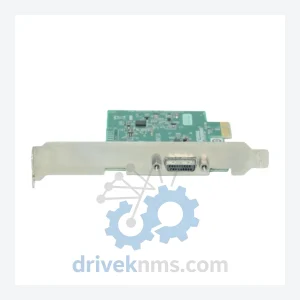
NI MXI-Express (MXIe) Modules - PCIE-8361
National Instruments PCIE-8361 is listed for Servo Drives RFQ review. Confirm quantity, condition and destination before quotation.
RFQ-ready industrial model
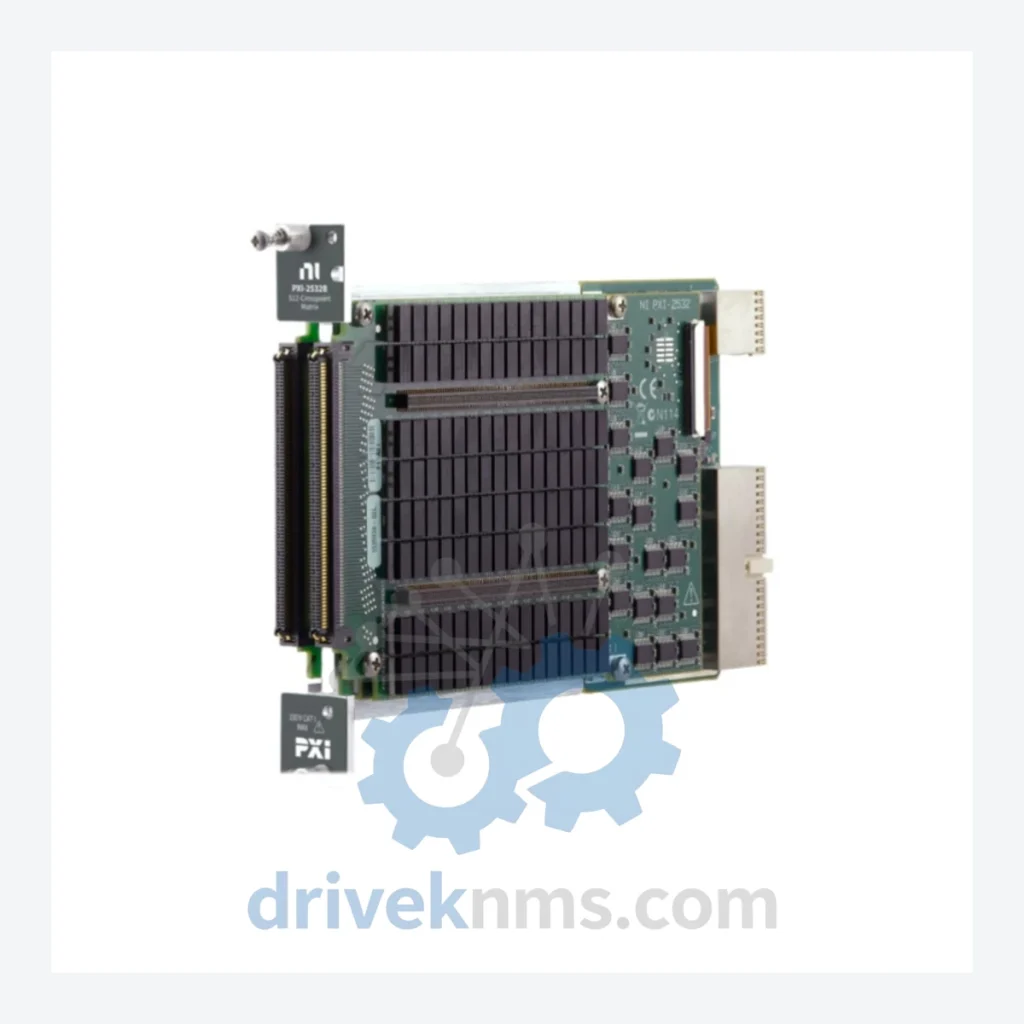
Model: PXIe-2532B
Product Overview
Commercial availability is handled through direct RFQ, model verification and export-oriented follow-up rather than public cart checkout.
Datasheet Preview
Use attached product manuals when available. If the manual is not public yet, request the full file directly through RFQ.
Commercial Path
Product pages on DRIVEKNMS are designed to verify model, brand and series first, then move the buyer into one clean quotation path.
Technical Dossier
RFQ support for obsolete parts: Send the model number, required quantity and destination so DriveKNMS can confirm sourcing options before quotation.
| Parameter | Value |
|---|---|
| Part Number | PXIe-2532B |
| Manufacturer | National Instruments (NI) |
| Form Factor | PXI Express (PXIe), 1-Slot |
| Module Type | Matrix Switch (1-Wire, 128×1 or 8×16 configurable) |
| Switch Topology | High-density matrix, software-configurable |
| Max Voltage (DC) | 60 V DC |
| Max Current per Channel | 1 A |
| Max Power per Channel | 10 W |
| Bandwidth | Up to 1 GHz (1-wire mode) |
| Relay Type | Reed relay |
| Software Compatibility | NI-SWITCH driver, LabVIEW, LabWindows/CVI, TestStand |
| Discontinuation Status | Discontinued by National Instruments; no direct OEM replacement available without system re-architecture |
| Country of Origin | United States |
The PXIe-2532B was a cornerstone module in NI-based automated test systems deployed across semiconductor, aerospace, defense, and automotive manufacturing environments. Its high-density matrix topology — capable of routing signals across 128 channels in a single slot — made it the default choice for engineers who needed to consolidate switching hardware without sacrificing throughput or signal integrity.
Every PXIe-2532B unit processed by DriveKNMS passes a structured 5-step inspection protocol before it is offered for sale. This protocol is designed specifically for discontinued hardware, where the risk profile differs from current-production parts.
Step 1 – Visual and Mechanical Inspection: Full examination of the front panel, connector pins, and PCB edge connector for physical damage, corrosion, or evidence of prior field repair.
Step 2 – Electrolytic Capacitor Assessment: Discontinued modules that have been in storage or field service for extended periods are evaluated for electrolytic capacitor aging — a primary failure mode in older switching hardware. Units showing signs of capacitor degradation are quarantined.
Step 3 – Firmware Version Verification: The module's embedded firmware is checked against known NI-SWITCH driver compatibility matrices. Units with outdated or corrupted firmware are flagged and not offered as functional spares.
Step 4 – Pin and Contact Integrity Check: All I/O connector pins are inspected for oxidation, bending, and contact resistance anomalies. Reed relay contact resistance is spot-checked where test access permits.
Step 5 – Functional Power-On Test: Where test infrastructure permits, units are powered on and enumerated within a PXIe chassis to confirm basic hardware recognition and NI-SWITCH driver communication.
Units that pass all five steps are classified as Verified Functional. Units with cosmetic issues but confirmed electrical function are classified as Refurbished – Tested and described accordingly in the listing. No unit is sold without a documented inspection record.
Drop-in replacement: The PXIe-2532B installs into any PXIe-compatible chassis slot and is recognized by the NI-SWITCH driver without modification to the host system configuration. No re-programming of the chassis controller is required.
No re-engineering of test sequences: Because the module presents the same NI-SWITCH API interface as the original installed unit, existing TestStand sequences, LabVIEW VIs, and LabWindows/CVI programs continue to operate without code changes. The cost of integration is effectively zero.
Avoids forced system upgrade: Replacing a failed PXIe-2532B with a verified spare eliminates the trigger condition for a full ATE platform migration. Facilities can continue operating on their validated test architecture for the remainder of its planned service life.
Supports long-term spare inventory strategy: For facilities with multiple PXI systems sharing this module type, purchasing two or three units now — while sourcing is still possible — is a lower-risk posture than single-unit reactive procurement. DriveKNMS can discuss volume availability on request.
Q: How do I confirm the unit is genuine NI hardware and not a counterfeit?
A: All units are inspected for NI part markings, PCB silkscreen identifiers, and chassis enumeration behavior consistent with genuine NI hardware. We do not source from unverified secondary markets. Provenance documentation is available on request for units where chain-of-custody records exist.
Q: Should I buy more than one unit as a long-term reserve?
A: For any facility running more than two PXI systems that depend on this module, holding at least one cold spare per system is the standard recommendation. Reed relay modules have finite cycle lives, and sourcing availability for discontinued NI hardware will only decrease over time. The cost of a spare today is predictable; the cost of emergency sourcing in three years is not.
Q: Can you source other discontinued NI PXI modules?
A: Yes. DriveKNMS specializes in hard-to-find and discontinued test and measurement hardware across multiple manufacturers. Contact us with your full part number list for availability assessment.
Continue The Model Path
Move from this exact model into the matching system hub, brand archive, model-family archive or lifecycle sourcing route before sending a final RFQ list.
Related Paths
National Instruments PCIE-8361 is listed for Servo Drives RFQ review. Confirm quantity, condition and destination before quotation.
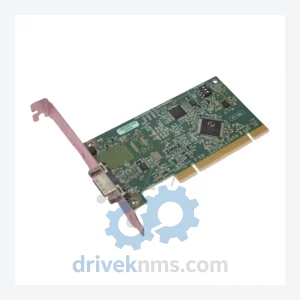
National Instruments PCI-8361 is listed for MXI-4 Series RFQ review. Confirm quantity, condition and destination before quotation.
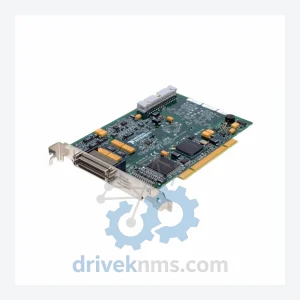
National Instruments PCI-6224 is listed for Monitoring Systems RFQ review. Confirm quantity, condition and destination before quotation.