
GE UR Series Modules: UR6AV Digital I/O Module —
GE UR Series: Comprehensive Module Range and Technical Overview The GE Grid Solutions UR Series (Universal Relay) platform is one…
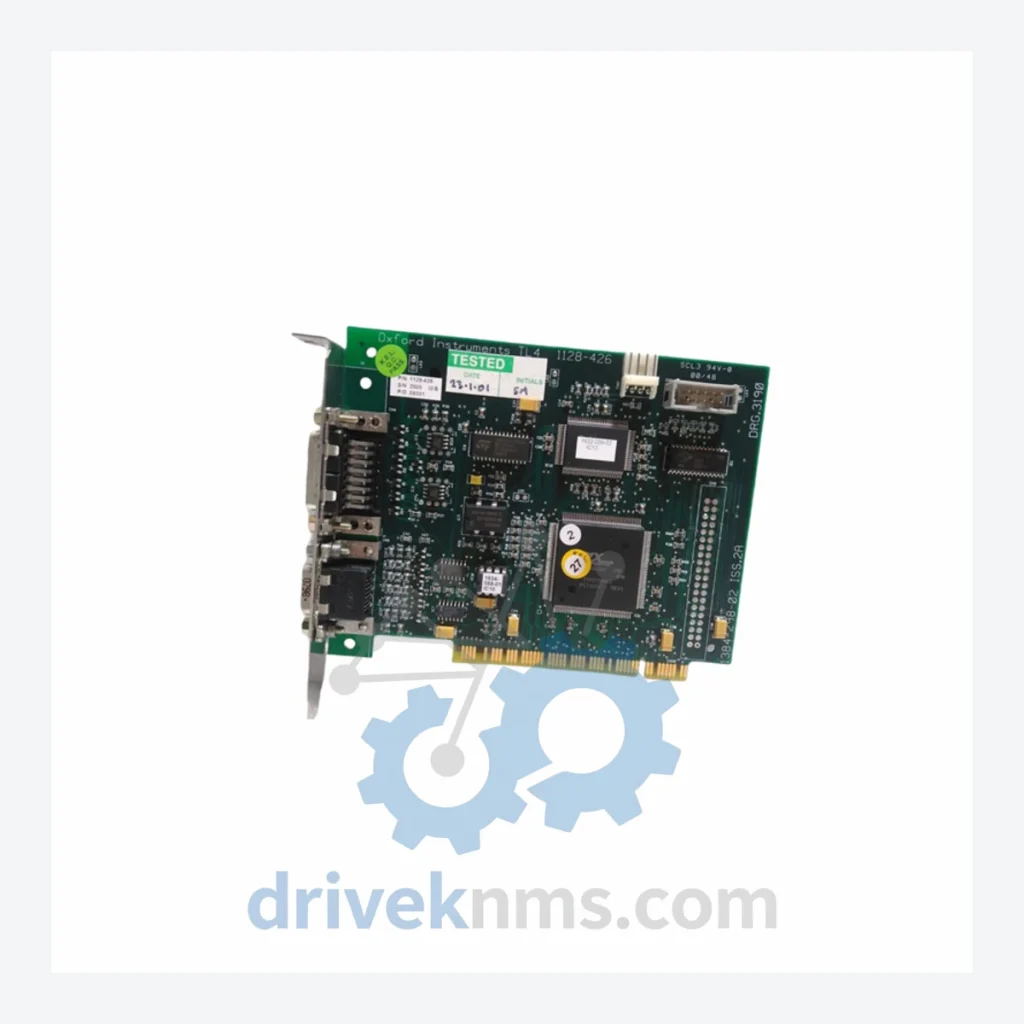
Model: TL4 1128-426
Product Overview
Commercial availability is handled through direct RFQ, model verification and export-oriented follow-up rather than public cart checkout.
Datasheet Preview
Use attached product manuals when available. If the manual is not public yet, request the full file directly through RFQ.
Commercial Path
Product pages on DRIVEKNMS are designed to verify model, brand and series first, then move the buyer into one clean quotation path.
Technical Dossier
The OXFORD TL4 series represents a family of PCI-bus interface and communication cards engineered for deterministic, high-reliability data transfer in heavy industrial environments. Deployed extensively across chemical processing plants, petroleum refineries, nuclear power generation facilities, and large-scale distributed control system (DCS) architectures, TL4-series cards serve as the physical-layer backbone connecting host processors to field instrumentation networks. Their PCI form factor and onboard FPGA logic made them a standard specification in control room upgrades throughout the late 1990s and 2000s, and a significant installed base remains operational in brownfield facilities where full system replacement is cost-prohibitive.
The TL4 platform was introduced as a PCI-native successor to ISA-bus Oxford communication cards, addressing the bandwidth limitations of earlier parallel-port and ISA-based field bus interfaces. Early TL4 revisions (circa 1998–2002) implemented single-channel UART and multi-protocol serial communication at 3.3 V/5 V universal PCI signaling. Mid-generation revisions introduced expanded channel counts (4-, 8-, and 16-port variants) and onboard clock synthesis for baud-rate independence from host oscillators. Later production runs incorporated hardware flow control, ESD protection to IEC 61000-4-2 Level 4, and extended operating temperature ranges suitable for non-air-conditioned relay rooms.
Compatibility considerations are significant for TL4 integrators: early single-channel cards require 32-bit PCI slots and are incompatible with PCIe-only backplanes without a bridge adapter. Mid- and late-generation multi-channel variants retain 32-bit PCI electrical compatibility but may require legacy driver stacks (WDM/KMDF for Windows Server 2003–2012, kernel module patches for RHEL 5/6) that are no longer maintained by the OEM. DriveKNMS maintains a driver archive and can supply tested replacement units pre-configured for target operating environments.
The following SKUs represent verified, commonly sourced models within the OXFORD TL4 series. Units are classified by channel count, interface type, and functional role:
TL4 1128-426: PCI serial interface card, multi-channel UART, industrial-grade.
TL4 1128-401: Single-channel PCI UART card, 3.3 V/5 V universal PCI, RS-232.
TL4 1128-402: Dual-channel PCI serial card, RS-232/RS-422 selectable per port.
TL4 1128-403: Quad-channel PCI UART, hardware flow control, 128-byte FIFO per channel.
TL4 1128-404: 8-port PCI serial card, RS-232, onboard clock synthesis, DCS integration.
TL4 1128-405: 8-port PCI serial card, RS-422/RS-485 half-duplex, field bus termination.
TL4 1128-406: 16-port PCI UART card, RS-232, high-density DB-78 connector, rack mount.
TL4 1128-407: 16-port PCI serial, RS-485 full-duplex, isolated ground plane, refinery-rated.
TL4 1128-408: PCI synchronous serial card, HDLC/SDLC protocol, SCADA gateway use.
TL4 1128-410: PCI multi-protocol card, RS-232/422/485 software-selectable, 4-channel.
TL4 1128-412: PCI serial card with optical isolation, 2.5 kV isolation per channel, 4-port.
TL4 1128-414: PCI 8-port isolated serial, RS-485, extended temp –40 °C to +85 °C.
TL4 1128-418: PCI 4-port card, RS-232, low-profile bracket, compact chassis compatible.
TL4 1128-420: PCI 8-port card, RS-422 balanced differential, 1 Mbps max baud rate.
TL4 1128-422: PCI 16-port RS-232 card, software flow control, Windows/Linux driver support.
TL4 1128-424: PCI 4-port RS-485 card, auto-direction control, Modbus RTU optimized.
TL4 1128-426: PCI interface card, multi-protocol serial, industrial DCS/SCADA backbone role.
TL4 1128-428: PCI 8-port RS-232/422 combo card, per-port protocol selection, FIFO buffered.
TL4 1128-430: PCI 16-port RS-485 card, full-duplex, surge protection, substation-rated.
The OXFORD TL4 series has entered the mature-to-end-of-life phase of its product lifecycle. Oxford Semiconductor (subsequently acquired by PLX Technology, then Avago/Broadcom) has discontinued active production of TL4-series PCI cards. OEM spare parts channels are closed, and authorized distributor stock has been exhausted in most regions.
DriveKNMS operates as a specialist lifecycle extension supplier for the TL4 range. Our inventory sourcing covers decommissioned control system teardowns, tested surplus from refinery and power plant maintenance programs, and cross-border procurement from verified industrial surplus networks in North America, Europe, and Asia-Pacific. All TL4 units are individually tested before dispatch. We maintain stock of the most frequently requested models including TL4 1128-426, TL4 1128-404, TL4 1128-406, and TL4 1128-412, with lead times typically under 10 business days for in-stock units. For obsolete or low-volume SKUs, we provide sourcing confirmation within 48 hours of inquiry.
PCI interface cards present specific failure modes that require targeted test procedures beyond standard power-on verification. DriveKNMS applies the following protocol to all TL4 units processed through our facility:
PCI Bus Enumeration Test: Each card is seated in a validated PCI test bench and enumerated under both 3.3 V and 5 V signaling to confirm correct Vendor ID (0x1415 for Oxford Semiconductor) and Device ID registration without bus errors.
Per-Channel UART Loopback: All serial channels are tested at multiple baud rates (9600, 115200, 921600 bps) using hardware loopback connectors. FIFO integrity, framing error rate, and flow control handshake are verified against OEM specification.
Protocol Compliance Verification: For multi-protocol variants (RS-232/422/485), each port is tested in each configured mode. RS-485 units are tested for correct auto-direction switching latency (<1 character time at target baud).
Thermal Stress Screening: Units are cycled through operational temperature range (0 °C to 70 °C standard; –40 °C to +85 °C for extended-temp variants) with active bus traffic to screen for cold-solder and thermal-expansion defects.
Visual and Component Inspection: PCB is inspected under 10× magnification for capacitor ESR degradation, UART IC date code verification, and connector pin integrity prior to packaging.
Related Paths
GE UR Series: Comprehensive Module Range and Technical Overview The GE Grid Solutions UR Series (Universal Relay) platform is one…
GE Multilin UR Series: Comprehensive Module Range and Technical Overview The GE Multilin Universal Relay (UR) Series represents one of…
GE UR Series: Comprehensive Module Range and Technical Overview The GE UR (Universal Relay) Series, developed by GE Grid Solutions…