
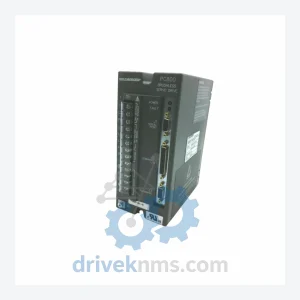
Pacific Scientific PC832-001-T Servo Drive – Obsolete PC800 Series Spare Part
Pacific Scientific PC832-001-T Servo Drive – Obsolete PC800 Series Spare Part A single failed servo drive does not just stop…
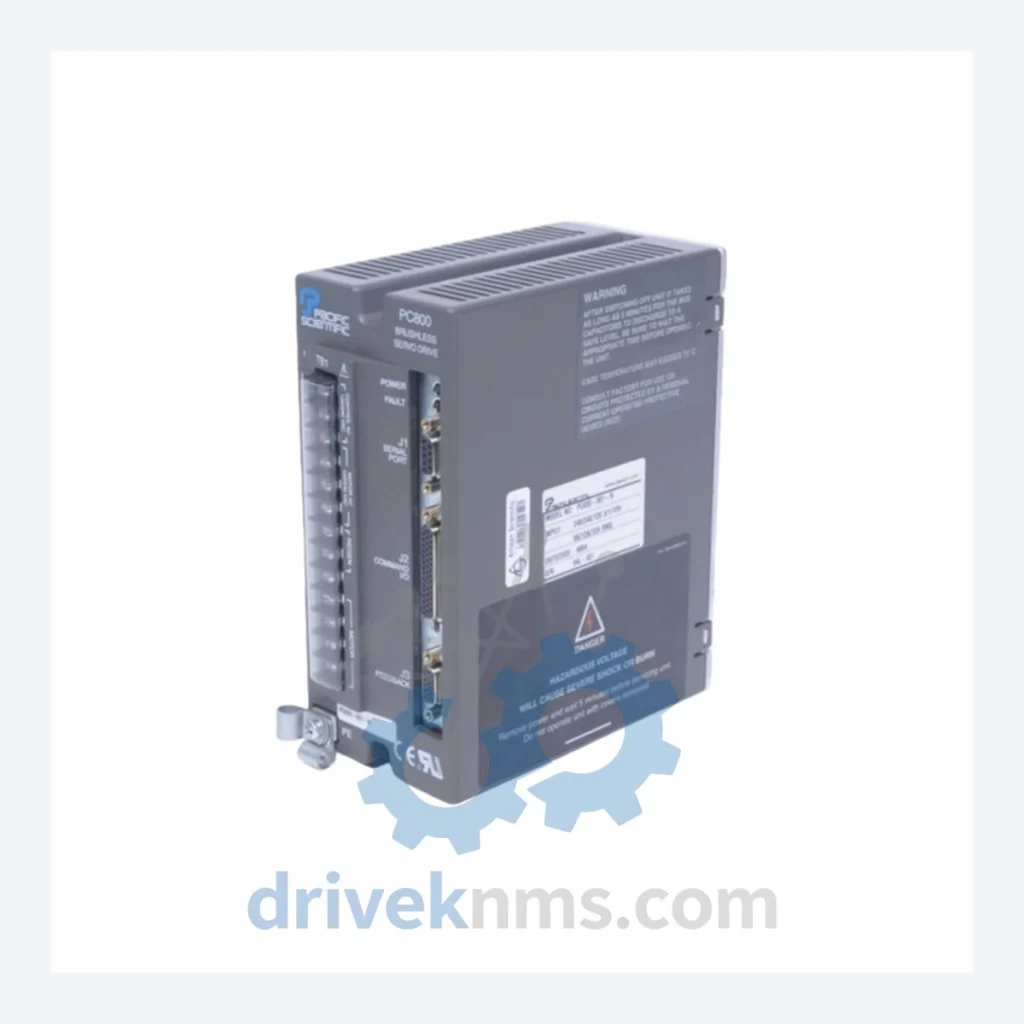
Model: PC833-001-N
Product Overview
Commercial availability is handled through direct RFQ, model verification and export-oriented follow-up rather than public cart checkout.
Datasheet Preview
Use attached product manuals when available. If the manual is not public yet, request the full file directly through RFQ.
Commercial Path
Product pages on DRIVEKNMS are designed to verify model, brand and series first, then move the buyer into one clean quotation path.
Technical Dossier
The Pacific Scientific PC833 series represents a line of brushless AC servo drives engineered for precision motion control in continuous-duty industrial environments. Deployed extensively across chemical processing plants, oil refineries, nuclear facility auxiliary systems, and heavy manufacturing lines, the PC833 platform has accumulated a substantial installed base in applications where axis-level torque accuracy and deterministic velocity response are non-negotiable. The series interfaces with Pacific Scientific's R-series and SC-series brushless servo motors, forming a closed-loop motion subsystem that remains in active service at facilities with multi-decade equipment lifecycles. Its compact panel-mount form factor and standardized connector pinout made it a preferred OEM choice for machine builders throughout the 1990s and 2000s, resulting in a large global population of units still requiring spare parts and repair support.
The PC833 series was developed as part of Pacific Scientific's second-generation digital servo drive platform, succeeding the earlier analog-controlled SC-series drives. The architecture is built around a DSP-based current loop with PWM output stages, replacing the earlier analog PI controllers with fully digital gain scheduling. Early PC833 variants used RS-232 serial configuration via a front-panel port; later revisions introduced RS-485 multi-drop capability for integration into distributed motion networks. The drive accepts incremental encoder feedback (typically 1000–2500 line quadrature) and supports both velocity and torque control modes selectable via parameter configuration.
Compatibility across PC833 sub-variants is largely maintained at the motor connector and feedback connector level, but firmware versions differ between early (-N suffix) and later (-P suffix) builds, affecting parameter map addresses used by host controllers. Facilities migrating from PC833 to modern equivalents typically evaluate the Kollmorgen AKD series or Parker Hannifin Compax3 as functional replacements, though direct drop-in substitution requires motor re-tuning and PLC program modification. For sites committed to maintaining existing machinery without re-engineering, sourcing genuine PC833 units remains the lowest-risk path.
The following SKUs represent the documented PC833 series product range. Each entry reflects a distinct hardware configuration defined by continuous current rating, supply voltage, and option codes.
PC833-001-N: 3A continuous / 9A peak, 120/240VAC single-phase input, standard RS-232 config port, velocity mode.
PC833-002-N: 6A continuous / 18A peak, 120/240VAC single-phase input, velocity and torque mode selectable.
PC833-003-N: 10A continuous / 30A peak, 240VAC single/three-phase input, extended current range for mid-frame motors.
PC833-004-N: 15A continuous / 45A peak, 240VAC three-phase input, high-inertia load compensation firmware.
PC833-005-N: 20A continuous / 60A peak, 240VAC three-phase input, regenerative braking resistor interface.
PC833-001-P: 3A continuous, revised DSP firmware, RS-485 multi-drop network support, updated parameter map.
PC833-002-P: 6A continuous, RS-485 support, compatible with Pacific Scientific Motion Architect software v3.x.
PC833-003-P: 10A continuous, RS-485, enhanced fault logging with 16-event buffer.
PC833-004-P: 15A continuous, RS-485, STO (Safe Torque Off) hardware input on later production runs.
PC833-005-P: 20A continuous, RS-485, full regenerative clamp circuit, CE-marked variant available.
PC833-001-N-CE: CE-compliant version of PC833-001-N for European machinery directive compliance.
PC833-002-N-CE: CE-compliant 6A variant, EMC filter integrated, for EU OEM machine builders.
PC833-003-N-CE: CE-compliant 10A variant with integrated line filter and shielded feedback cable requirement.
PC833-004-N-CE: CE-compliant 15A variant, three-phase input, full EMC documentation package.
PC833-005-N-CE: CE-compliant 20A variant, highest current rating in CE sub-series, regenerative capable.
PC833-001-N-R: Repair/remanufactured designation used by authorized service centers; functionally equivalent to PC833-001-N with updated capacitor bank.
The PC833 series has entered the mature/end-of-life phase of its product lifecycle. Pacific Scientific (now a Danaher Motion / Kollmorgen brand) no longer manufactures new PC833 units, and factory repair services have been discontinued. This creates a sourcing dependency on the secondary market and specialist distributors for facilities that cannot justify a full drive replacement project.
PC833 drives present specific test challenges due to their DSP-based architecture and the age-related degradation patterns common in units that have been in storage or removed from service. DriveKNMS applies the following test protocol to all PC833 units prior to shipment:
Power Stage Verification: Full IGBT/transistor switching test under resistive load at rated bus voltage. Shoot-through and dead-time integrity confirmed.
Current Loop Calibration: Phase current sensors verified against calibrated reference. Offset and gain errors corrected where within specification.
Encoder Interface Test: Differential line receiver inputs tested with simulated 1000-line quadrature signal. Fault detection thresholds verified.
Communication Port Test: RS-232 and RS-485 ports tested for correct framing, baud rate tolerance, and isolation integrity.
Thermal Cycling: Units cycled through operating temperature range (0–50°C) to identify latent solder joint or capacitor failures.
Parameter Retention Test: EEPROM write/read cycle performed to confirm non-volatile parameter storage integrity.
Final Functional Run: Drive operated under closed-loop velocity control with a matched Pacific Scientific motor for minimum 30-minute burn-in.
Related Paths
Pacific Scientific PC832-001-T Servo Drive – Obsolete PC800 Series Spare Part A single failed servo drive does not just stop…
Pacific Scientific SC752A-001-01 Servo Drive – Obsolete SC750 Series Spare Part When a Pacific Scientific SC752A-001-01 servo drive fails on…
Pacific Scientific PC834-107-N Servo Drive: Supply Continuity Strategy for a Discontinued Legacy Component The Pacific Scientific PC834-107-N is a legacy…