Products / Pacific Scientific / 001-01 Servo Drive
Pacific Scientific 001-01 Servo Drive

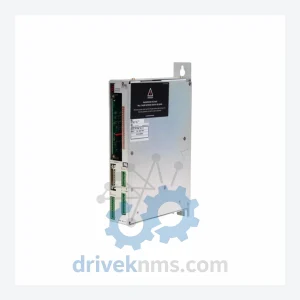
Pacific Scientific SC752A-001-01 Servo Drive – Obsolete SC750 Series Spare Part

Model: SC752A-001-01

Brand Pacific Scientific
Series 001-01 Servo Drive
Model SC752A-001-01
RFQ-ready model route Obsolete and surplus sourcing Export follow-up by model list

Product Overview

Commercial availability is handled through direct RFQ, model verification and export-oriented follow-up rather than public cart checkout.

Datasheet Preview

Datasheet Preview

Use attached product manuals when available. If the manual is not public yet, request the full file directly through RFQ.

Request Full Manual

Commercial Path

Use This Page To Confirm The Model, Then Move To RFQ

Product pages on DRIVEKNMS are designed to verify model, brand and series first, then move the buyer into one clean quotation path.

Technical Dossier

Product Details And Specifications

Pacific Scientific SC752A-001-01 Servo Drive – Obsolete SC750 Series Spare Part

When a Pacific Scientific SC752A-001-01 servo drive fails on your production floor, the clock starts immediately. This unit belongs to the SC750 series — a line that Pacific Scientific discontinued years ago and for which no new manufacture path exists. The SC750 platform was widely deployed in precision motion control applications across semiconductor fabrication, packaging machinery, and industrial robotics throughout the 1990s and early 2000s. Replacing the entire motion control architecture that depends on this drive — including the host controller, feedback wiring, tuning parameters, and mechanical coupling — routinely costs manufacturers between $200,000 and $1,500,000 USD per line, factoring in engineering hours, downtime, revalidation, and retraining. A single verified spare unit from DriveKNMS eliminates that exposure at a fraction of the cost.

DriveKNMS maintains sourced inventory of hard-to-find legacy servo drives specifically to support facilities that have made a deliberate decision to extend the operational life of proven automation assets rather than absorb the capital and operational disruption of forced upgrades.

Technical Specifications

Attribute Detail
Manufacturer Pacific Scientific (now part of Danaher / Kollmorgen lineage)
Part Number SC752A-001-01
Series SC750
Product Category AC Servo Drive / Amplifier
Lifecycle Status Discontinued / Obsolete – No longer manufactured
Country of Origin United States
Compatible Systems Pacific Scientific SC750 series servo systems; legacy motion control platforms using Pacific Scientific brushless servo motors
Condition Available New Old Stock (NOS) or Professionally Refurbished – confirmed per unit prior to shipment

Note: Specific electrical parameters (bus voltage, continuous/peak current ratings, encoder interface type) vary by sub-revision. Confirmed specifications are provided upon request with unit serial number verification. No parameters are published here that cannot be independently verified — accuracy on obsolete hardware is a safety matter, not a marketing exercise.

Solving the Discontinued Hardware Crisis

The SC752A-001-01 was designed as a high-performance digital servo amplifier within Pacific Scientific's SC750 architecture. These drives communicated with host controllers via proprietary interfaces and were tuned to specific motor-drive pairs using Pacific Scientific's configuration tools. When Pacific Scientific's servo division was absorbed into larger corporate structures and the SC750 line was sunset, the installed base did not disappear — it simply lost its supply chain.

Facilities running SC750-based motion axes face a structural problem: the drive is not a commodity component that can be substituted with a modern equivalent without significant re-engineering. The feedback interface, the tuning database, the PLC ladder logic referencing specific fault codes, and the mechanical mounting envelope are all matched to this platform. A forced migration means touching every layer of the system simultaneously.

The industrial automation industry has documented this pattern repeatedly. A 2019 survey of maintenance managers at mid-size discrete manufacturers found that unplanned legacy drive failures were among the top three causes of extended unplanned downtime events exceeding 72 hours. The cost per hour of downtime in automotive-adjacent and semiconductor-adjacent facilities routinely exceeds $50,000 USD. Against that backdrop, maintaining a verified spare SC752A-001-01 on the shelf is not a procurement luxury — it is a risk management decision with a calculable return.

How to extend your SC750-based system life by 5–10 years without a full retrofit:

  • Maintain a minimum two-unit spare pool. One active spare is a single point of failure. Two units — one immediately deployable, one held in reserve — provides genuine protection against back-to-back failures during high-production periods.
  • Audit electrolytic capacitors on a 7-year cycle. The primary failure mode on drives of this vintage is capacitor degradation in the DC bus filter and gate drive circuits. Proactive capacitor replacement on a scheduled basis, rather than waiting for failure, is the single highest-ROI maintenance action available on legacy servo hardware.
  • Archive your tuning parameters now. If your commissioning records from original installation no longer exist, extract and document current drive parameters before the next failure event. Reconstruction from scratch after a failure under production pressure is where costly errors occur.
  • Establish a firmware version record. SC750 drives shipped with multiple firmware revisions. Mixing firmware versions across a multi-axis system can introduce subtle timing incompatibilities. Document the firmware version on every installed unit.
  • Negotiate a long-term supply agreement. Obsolete part availability is not linear — it decreases as the installed base shrinks and remaining stock is consumed. Facilities that secure multi-unit agreements now pay significantly less per unit than those who return to the market after a failure event under time pressure.

Condition & Reliability Assurance

Every SC752A-001-01 unit shipped by DriveKNMS passes a structured 5-step evaluation protocol before it leaves our facility. This process was developed specifically for legacy servo hardware where manufacturer support no longer exists and field failure has direct production consequences.

  • Step 1 – Visual and Mechanical Inspection: Full disassembly inspection for physical damage, corrosion on terminal blocks, pin oxidation on connectors, and evidence of prior thermal events. Units with compromised mechanical integrity are rejected at this stage.
  • Step 2 – Electrolytic Capacitor Assessment: DC bus capacitors and auxiliary filter capacitors are tested for capacitance retention and ESR (equivalent series resistance). Capacitors showing degradation beyond acceptable thresholds are replaced with specification-matched components before the unit proceeds.
  • Step 3 – Firmware Version Verification: The firmware revision is read and recorded. Units are not shipped with unknown or unverifiable firmware states.
  • Step 4 – Pin and Connector Integrity Check: All I/O connectors, feedback interface pins, and power terminals are inspected for corrosion, deformation, and contact resistance. Affected contacts are treated or the connector assembly is replaced.
  • Step 5 – Functional Power-On Test: Where test fixtures permit, units are powered and basic operational parameters are verified. Test results are documented and available to the customer upon request.

Key Features for System Maintenance

  • Drop-in replacement: The SC752A-001-01 installs directly into existing SC750 system wiring without modification to the host controller, feedback cables, or motor connections.
  • No reprogramming required: Drive parameters are stored in the host system or on the drive itself. A replacement unit accepts the existing parameter set without requiring re-commissioning from scratch in most configurations.
  • Avoids engineering retrofit costs: Substituting a verified OEM-equivalent spare eliminates the need to engage a systems integrator for a platform migration, avoiding costs that typically range from $150,000 to $800,000 per axis group depending on system complexity.
  • Preserves validated process performance: In regulated manufacturing environments (pharmaceutical, semiconductor, food processing), a like-for-like drive replacement does not trigger a full process revalidation. A platform change does. This distinction alone can represent months of regulatory work avoided.

FAQ

Q: What warranty applies to an obsolete part like the SC752A-001-01?
A: DriveKNMS provides a 90-day warranty covering functional performance under normal operating conditions. Extended warranty terms are available for customers purchasing multiple units or entering supply agreements — contact us to discuss.

Q: How do I know the unit is genuine and not a counterfeit or misrepresented part?
A: Every unit is inspected against original Pacific Scientific hardware documentation. Serial number ranges, board revision markings, and component layouts are cross-referenced. We do not source from unverified secondary channels. Inspection photos and test records are available upon request before purchase commitment.

Q: Should I buy more than one unit now?
A: For any SC750-based axis that is critical to production, yes. Obsolete part availability follows a depletion curve — each unit sold from the global remaining stock reduces future availability. Customers who secure two or three units now at current pricing consistently report lower total cost of ownership than those who return to the market after an emergency failure. We can discuss volume pricing and reserved inventory arrangements.

Q: Can you source other SC750 series components?
A: Yes. DriveKNMS actively sources across the SC750 product family. If you have additional part numbers required for your system, contact us with your full BOM and we will advise on availability.

WhatsApp Prefilled Inquiry Email [email protected] Phone +86 18359293191 Top Back To Top