
GE UR Series Modules: UR6AV Digital I/O Module —
GE UR Series: Comprehensive Module Range and Technical Overview The GE Grid Solutions UR Series (Universal Relay) platform is one…
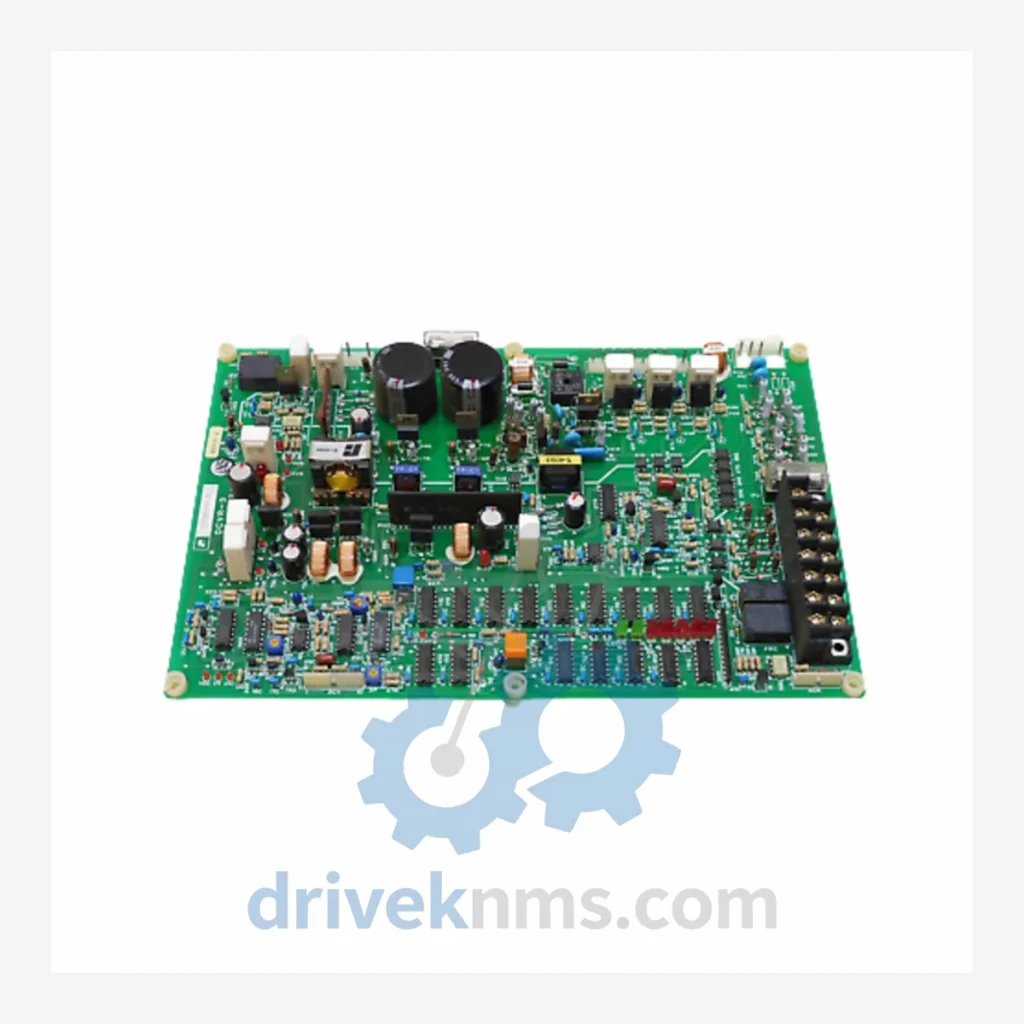
Model: DCVR-3 SC-68224
Product Overview
Commercial availability is handled through direct RFQ, model verification and export-oriented follow-up rather than public cart checkout.
Datasheet Preview
Use attached product manuals when available. If the manual is not public yet, request the full file directly through RFQ.
Commercial Path
Product pages on DRIVEKNMS are designed to verify model, brand and series first, then move the buyer into one clean quotation path.
Technical Dossier
The Reliance Electric DCVR-3 series represents a generation of DC variable-speed drive control boards deployed extensively across global heavy industry. Installations span petrochemical refineries, nuclear power auxiliary systems, pulp and paper mills, steel rolling mills, and offshore platform motor control centers. The DCVR-3 platform was engineered to regulate armature current and field excitation in DC motors ranging from fractional horsepower to several hundred horsepower, providing closed-loop speed regulation in environments where process continuity is non-negotiable. Its modular backplane architecture allowed plant engineers to replace individual function boards without disturbing the main drive chassis, a design philosophy that extended service life well beyond the product's commercial production window. Installed base counts in North American and European heavy industry remain significant, making reliable spare parts sourcing a critical operational requirement for maintenance teams managing aging drive infrastructure.
The DCVR-3 control architecture emerged from Reliance Electric's broader DC drive product line, which included the earlier DCVR and DCVR-2 platforms. The DCVR-3 introduced a more modular signal conditioning layer, separating the regulator board, firing circuit board, and feedback interface into discrete plug-in assemblies. This allowed field technicians to isolate faults to a specific board rather than replacing the entire drive assembly. The series used analog control loops with discrete op-amp circuitry, making it compatible with motor control centers designed before the widespread adoption of digital fieldbus protocols such as PROFIBUS or DeviceNet. Compatibility with legacy 4–20 mA speed reference signals and hardwired interlock logic means DCVR-3 boards can remain in service within DCS architectures that have been partially modernized. As the series entered its end-of-life phase, Reliance Electric (subsequently acquired by Rockwell Automation) ceased active production, transitioning customers toward the PowerFlex DC and FlexPak 3000 platforms. However, the installed base of DCVR-3 drives in long-lifecycle industries such as nuclear and chemical processing has sustained demand for original replacement boards, particularly for facilities operating under regulatory frameworks that restrict mid-life drive replacements without full requalification.
The following SKUs represent verified components within the Reliance Electric DCVR-3 drive control ecosystem, organized by functional category. Each entry reflects a discrete board or assembly with a defined role within the drive chassis.
Regulator & Control Boards
Firing Circuit & Power Interface Boards
I/O & Signal Interface Boards
Power Supply & Auxiliary Boards
DCVR-3 boards present specific testing challenges due to their analog control architecture and the age-related degradation patterns common to long-stored or field-removed units. DriveKNMS applies a structured inspection and functional test protocol to all DCVR-3 inventory prior to dispatch. Visual inspection covers PCB trace integrity, electrolytic capacitor condition (swelling, leakage, date code assessment), op-amp IC package condition, and connector pin integrity. Electrical testing is performed on a dedicated DCVR-3 test chassis that replicates the original drive backplane power and signal environment. Each regulator board is tested under simulated load conditions to verify speed loop gain, current limit response, and fault relay operation. Firing circuit boards are tested for gate pulse timing accuracy and isolation resistance between logic and power sections. Boards that pass all test criteria are issued a test record and shipped with original or equivalent connector hardware. Units with repairable defects are reconditioned using original-specification components where available. Boards that fail functional testing are quarantined and not offered for sale.
Related Paths
GE UR Series: Comprehensive Module Range and Technical Overview The GE Grid Solutions UR Series (Universal Relay) platform is one…
GE UR Series: Comprehensive Module Range and Technical Overview The GE UR (Universal Relay) Series, developed by GE Grid Solutions…
GE Multilin UR Series: Comprehensive Module Range and Technical Overview The GE Multilin Universal Relay (UR) Series represents one of…