
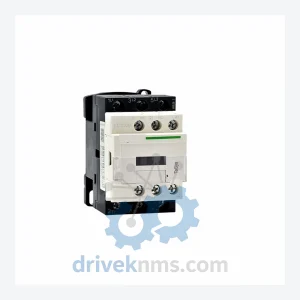
Schneider Electric TeSys D Series Contactors: LC1D09M7C
Schneider Electric LC1D09M7C is listed for TeSys D RFQ review. Confirm quantity, condition and destination before quotation.
RFQ-ready industrial model
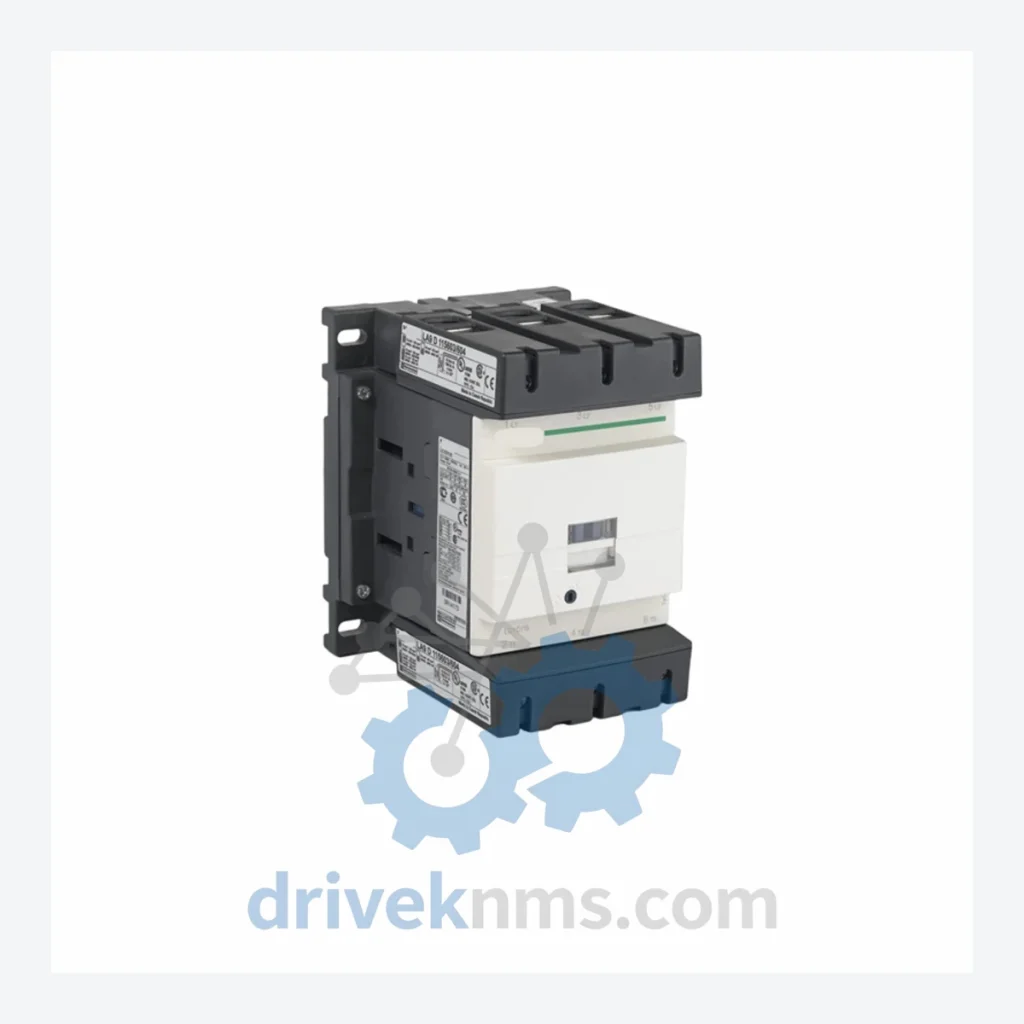
Model: LC1D150M7C
Product Overview
Commercial availability is handled through direct RFQ, model verification and export-oriented follow-up rather than public cart checkout.
Datasheet Preview
Use attached product manuals when available. If the manual is not public yet, request the full file directly through RFQ.
Commercial Path
Product pages on DRIVEKNMS are designed to verify model, brand and series first, then move the buyer into one clean quotation path.
Technical Dossier
The Schneider Electric TeSys D series — designated under the LC1D product family — is one of the most widely deployed AC contactor platforms in global heavy industry. Installed across petrochemical refineries, nuclear auxiliary systems, offshore platforms, pulp and paper mills, and large-scale water treatment facilities, the LC1D range covers motor control applications from 9 A to 800 A (AC-3 duty). Its IEC 60947-4-1 compliance, broad coil voltage availability (24 V DC to 600 V AC), and standardized 45 mm DIN rail footprint have made it the default specification in MCC (Motor Control Center) panels across Europe, Asia-Pacific, and the Middle East for over three decades. The series supports direct-on-line (DOL), star-delta, reversing, and soft-start configurations, and is mechanically and electrically interchangeable within defined frame size groups, simplifying panel retrofits without rewiring.
The TeSys D platform was introduced by Telemecanique (subsequently acquired by Schneider Electric) in the early 1990s as a successor to the LC1-D and CA2 relay families. The original architecture used a single-piece magnet assembly with a fixed contact bridge geometry. By the mid-1990s, Schneider introduced the integrated auxiliary contact block system (LA1D / LA1DN series), allowing field-configurable NO/NC auxiliary arrangements without replacing the base contactor body.
The second-generation TeSys D (circa 2000–2008) introduced reinforced silver-alloy contact tips rated for AC-3 and AC-4 duty cycles, extended the coil voltage range to include 24 V DC electronic coils (LC1D…BD), and added the LAD7 suppressor module for coil transient suppression. Frame sizes were standardized into B (9–18 A), C (25–38 A), D (40–95 A), E (115–150 A), and F (185–800 A) categories.
From 2010 onward, the TeSys D platform was progressively integrated with the TeSys Giga and TeSys F families for high-current applications, while the core LC1D range remained in production for standard motor control. As of 2024, Schneider Electric has introduced the TeSys LE (next-generation) platform as the long-term successor, but the LC1D series remains in active production and full spare parts support. Older sub-variants (e.g., LC1D09–LC1D38 with B6 coil codes) have entered the mature/maintenance phase; cross-reference to current coil codes is required when sourcing replacements.
The following SKUs represent verified, commonly stocked models within the Schneider Electric TeSys D contactor family. Each entry includes the primary functional descriptor for rapid identification in MRO and panel-build contexts.
LC1D09M7C: 9 A AC-3 contactor, 220 V AC coil, 3P, screw terminals, frame B.
LC1D12M7C: 12 A AC-3 contactor, 220 V AC coil, 3P, screw terminals, frame B.
LC1D18M7C: 18 A AC-3 contactor, 220 V AC coil, 3P, screw terminals, frame B.
LC1D25M7C: 25 A AC-3 contactor, 220 V AC coil, 3P, screw terminals, frame C.
LC1D32M7C: 32 A AC-3 contactor, 220 V AC coil, 3P, screw terminals, frame C.
LC1D38M7C: 38 A AC-3 contactor, 220 V AC coil, 3P, screw terminals, frame C.
LC1D40M7C: 40 A AC-3 contactor, 220 V AC coil, 3P, screw terminals, frame D.
LC1D50M7C: 50 A AC-3 contactor, 220 V AC coil, 3P, screw terminals, frame D.
LC1D65M7C: 65 A AC-3 contactor, 220 V AC coil, 3P, screw terminals, frame D.
LC1D80M7C: 80 A AC-3 contactor, 220 V AC coil, 3P, screw terminals, frame D.
LC1D95M7C: 95 A AC-3 contactor, 220 V AC coil, 3P, screw terminals, frame D.
LC1D115M7C: 115 A AC-3 contactor, 220 V AC coil, 3P, screw terminals, frame E.
LC1D150M7C: 150 A AC-3 contactor, 220 V AC coil, 3P, screw terminals, frame E — primary reference SKU for this listing.
LC1D185M7C: 185 A AC-3 contactor, 220 V AC coil, 3P, screw terminals, frame F.
LC1D225M7C: 225 A AC-3 contactor, 220 V AC coil, 3P, screw terminals, frame F.
LC1D265M7C: 265 A AC-3 contactor, 220 V AC coil, 3P, screw terminals, frame F.
LC1D400M7C: 400 A AC-3 contactor, 220 V AC coil, 3P, screw terminals, frame F.
LC1D09BD: 9 A AC-3 contactor, 24 V DC electronic coil, frame B — common in PLC-controlled panels.
LC1D18BD: 18 A AC-3 contactor, 24 V DC electronic coil, frame B — standard for 24 V DC control circuits.
LC1D40BD: 40 A AC-3 contactor, 24 V DC electronic coil, frame D — used in variable-speed drive bypass circuits.
Each LC1D contactor processed through DriveKNMS undergoes a structured inspection protocol specific to the TeSys D mechanical architecture. The contact bridge assembly is inspected for silver-alloy tip erosion using calibrated depth gauges; units with tip wear exceeding 50% of original thickness are rejected. The magnet assembly air gap is measured and compared against Schneider Electric's published tolerance band for the relevant frame size. Coil resistance is measured at ambient temperature and compared against the nominal value for the declared coil code (e.g., M7C: 220 V AC, 50/60 Hz). Auxiliary contact blocks (LA1D, LA1DN) are tested for contact resistance below 100 mΩ under 1 A test current. Insulation resistance between poles and between poles and frame is verified at 500 V DC (minimum 100 MΩ). Operational pick-up and drop-out voltage thresholds are verified against IEC 60947-4-1 requirements (pick-up ≤ 85% Uc, drop-out ≥ 20% Uc). Units passing all checkpoints are issued a DriveKNMS inspection record and packaged in anti-static, moisture-barrier packaging.
Continue The Model Path
Move from this exact model into the matching system hub, brand archive, model-family archive or lifecycle sourcing route before sending a final RFQ list.
Related Paths
Schneider Electric LC1D09M7C is listed for TeSys D RFQ review. Confirm quantity, condition and destination before quotation.
Schneider Electric LC1D38M7C is listed for TeSys D RFQ review. Confirm quantity, condition and destination before quotation.
Schneider Electric LC1D32M7C is listed for TeSys D RFQ review. Confirm quantity, condition and destination before quotation.