
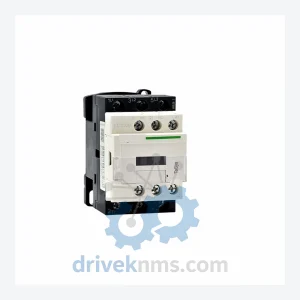
Schneider Electric TeSys D Series Contactors: LC1D09M7C
Schneider Electric LC1D09M7C is listed for TeSys D RFQ review. Confirm quantity, condition and destination before quotation.
RFQ-ready industrial model
Model: LC1D38M7C
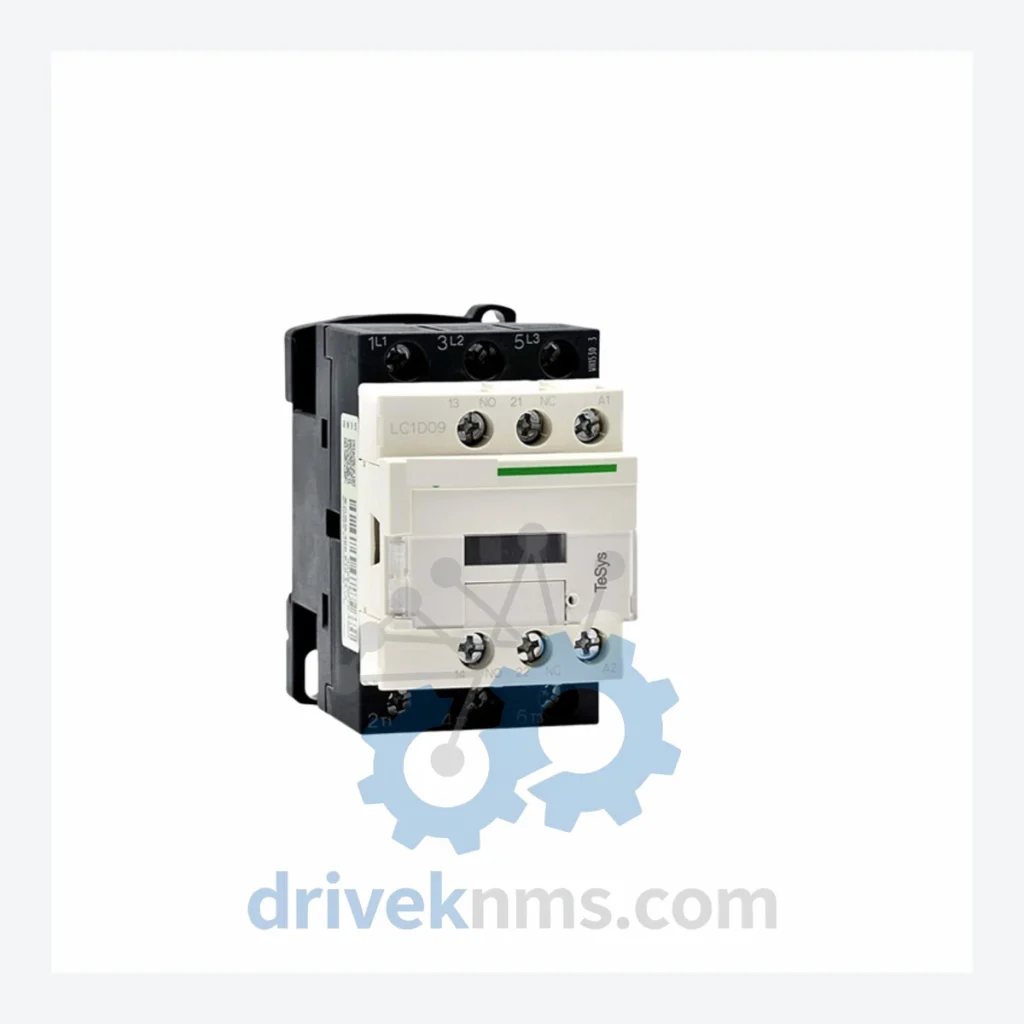
Product Overview
Commercial availability is handled through direct RFQ, model verification and export-oriented follow-up rather than public cart checkout.
Datasheet Preview
Use attached product manuals when available. If the manual is not public yet, request the full file directly through RFQ.
Commercial Path
Product pages on DRIVEKNMS are designed to verify model, brand and series first, then move the buyer into one clean quotation path.
Technical Dossier
DriveKNMS reviews sourcing options for this model through RFQ handling before quotation.
RFQ support for obsolete parts: Send the model number, required quantity and destination so DriveKNMS can confirm sourcing options before quotation.
| Parameter | Value |
|---|---|
| Manufacturer | Schneider Electric |
| Part Number | LC1D38M7C |
| Series | TeSys D |
| Type | 3-Pole AC Contactor |
| Rated Current (AC-3) | 38 A |
| Motor Power (400V AC-3) | 18.5 kW |
| Coil Voltage | 220 V AC, 50/60 Hz (M7 designation) |
| Auxiliary Contacts | 1 NO + 1 NC (integrated) |
| Mounting | DIN rail or screw mounting |
| Country of Origin | France |
| Production Status | Discontinued / Obsolete – specific coil variant no longer in active manufacture |
| Typical Legacy Systems | Schneider Modicon-based MCC panels, Telemecanique motor control centers, legacy HVAC and pump control cabinets |
The TeSys D contactor family was the backbone of motor control infrastructure across European and Asian industrial installations for over two decades. The LC1D38M7C — with its 220 V AC coil — was specified extensively in control panels designed around local grid standards, particularly in facilities across China, Southeast Asia, and the Middle East. As Schneider Electric has rationalized its contactor portfolio and shifted production toward the TeSys Giga and TeSys F families, specific coil-voltage variants of the TeSys D have been phased out of active manufacturing.
The operational reality for plant managers is straightforward: the control logic, wiring topology, and DIN rail layout of an existing panel were engineered around this exact footprint. Substituting a different contactor family — even from the same manufacturer — introduces engineering review costs, potential relay logic changes, and recertification obligations that no maintenance budget absorbs without pain. A verified LC1D38M7C replacement eliminates all of that exposure.
Facilities running Telemecanique-branded legacy panels, older Schneider Modicon-integrated motor control centers, or any installation where the original bill of materials specifies LC1D38M7C should treat sourcing this component as a direct asset protection measure — not a procurement line item.
How to extend your automation asset life by 5–10 years through strategic spare parts management:
First, conduct a criticality audit of every contactor, relay, and drive in your existing panels. Identify which part numbers are no longer listed as active in the manufacturer's current catalog. For each discontinued item, calculate the replacement cost of the downstream system it protects — not the component cost, but the full panel or line replacement cost. That ratio defines your stocking priority.
Fourth, document the coil voltage and auxiliary contact configuration of every contactor in your panels before a failure event. Post-failure sourcing under production pressure is where costly specification errors occur. A pre-failure audit costs nothing and eliminates that risk entirely.
Sourcing a discontinued contactor from the secondary market carries legitimate quality concerns. DriveKNMS applies a 5-step inspection protocol to every LC1D38M7C unit before it is offered for sale:
Step 1 – Visual and mechanical inspection: Full external examination for housing cracks, contact wear indicators, and arc chamber integrity. Units with visible mechanical damage are rejected at intake.
Step 2 – Coil resistance verification: The 220 V AC coil winding is tested for resistance consistency against manufacturer reference values. Coil degradation is a primary failure mode in aged contactors and is non-negotiable as a pass criterion.
Step 3 – Contact surface assessment: Main contact surfaces are inspected for erosion depth and silver-alloy layer integrity. Contacts showing erosion beyond serviceable limits are flagged and the unit is downgraded or rejected.
Step 4 – Pin and terminal corrosion check: All screw terminals and auxiliary contact pins are examined for oxidation and corrosion. Corroded terminals are a leading cause of intermittent faults in stored legacy components.
Q: How are RFQ terms confirmed?
A: Quantity, required condition, documentation needs, destination and sourcing route are confirmed during RFQ review before quotation.
Units that pass all five steps are classified as Grade A serviceable spares. Units with minor cosmetic issues but full functional integrity are classified as Grade B and disclosed as such at point of sale.
The LC1D38M7C is a direct, drop-in replacement for any panel position currently occupied by the same part number. No rewiring, no relay logic modification, no PLC parameter change, and no engineering review is required for a like-for-like swap. The mechanical footprint, DIN rail clip geometry, terminal pitch, and auxiliary contact block interface are identical to the original specification.
Avoiding a forced migration to a current-generation contactor family also avoids the cascade of associated costs: updated panel drawings, revised maintenance procedures, retraining of maintenance staff, and potential recertification of the control panel under current electrical standards. A verified LC1D38M7C spare eliminates every one of those costs.
How do I know the unit is genuine and not a counterfeit?
All units sourced by DriveKNMS are inspected against Schneider Electric's published dimensional and electrical specifications. We do not purchase from unverified secondary channels. If you require documentation of the inspection process for a specific unit, this can be provided on request prior to purchase.
Should I buy more than one unit?
For any discontinued component controlling a critical process, holding at least one additional unit on-site is a sound maintenance practice. The LC1D38M7C is no longer in active production. Secondary market availability will decrease over time, not increase. The cost of a second unit today is a fraction of the cost of an emergency sourcing effort — or a forced system upgrade — two years from now.
Continue The Model Path
Move from this exact model into the matching system hub, brand archive, model-family archive or lifecycle sourcing route before sending a final RFQ list.
Related Paths
Schneider Electric LC1D09M7C is listed for TeSys D RFQ review. Confirm quantity, condition and destination before quotation.
Schneider Electric LC1D32M7C is listed for TeSys D RFQ review. Confirm quantity, condition and destination before quotation.
Schneider Electric LC1D18M7C is listed for TeSys D RFQ review. Confirm quantity, condition and destination before quotation.