
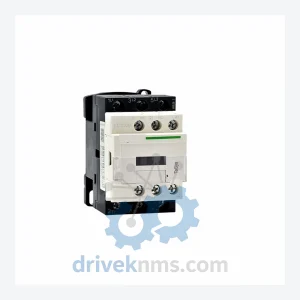
Schneider Electric TeSys D Series Contactors: LC1D09M7C
Schneider Electric LC1D09M7C is listed for TeSys D RFQ review. Confirm quantity, condition and destination before quotation.
RFQ-ready industrial model
Model: LC1D18M7C
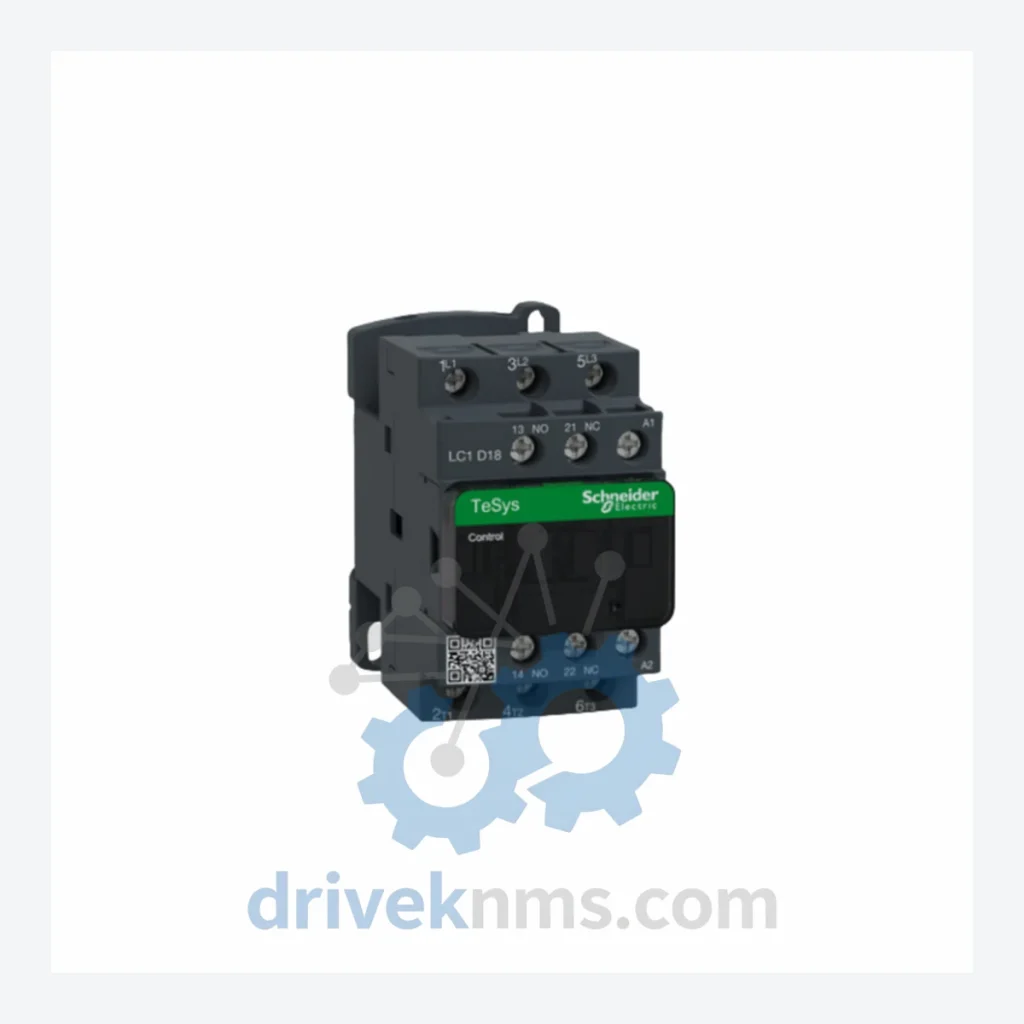
Product Overview
Commercial availability is handled through direct RFQ, model verification and export-oriented follow-up rather than public cart checkout.
Datasheet Preview
Use attached product manuals when available. If the manual is not public yet, request the full file directly through RFQ.
Commercial Path
Product pages on DRIVEKNMS are designed to verify model, brand and series first, then move the buyer into one clean quotation path.
Technical Dossier
| Parameter | Value |
|---|---|
| Part Number | LC1D18M7C |
| Brand | Schneider Electric |
| Series | TeSys D |
| Type | 3-Pole AC Contactor |
| Rated Current (AC-3) | 18 A |
| Coil Voltage | 220 V AC, 50/60 Hz |
| Motor Power (400V, AC-3) | 7.5 kW |
| Auxiliary Contacts | 1 NO + 1 NC (integrated) |
| Mounting | DIN rail / screw |
| Enclosure Rating | IP20 (open type) |
| Country of Origin | France |
| Production Status | Active – Critical Emergency Spare |
The LC1D18M7C operates at the intersection of motor protection and process continuity. It is widely deployed in pump stations, HVAC systems, conveyor drives, compressor panels, and general-purpose motor control centers (MCCs). In facilities running legacy panel designs — particularly those built around Schneider TeSys D architecture from the 1990s through the 2010s — this contactor is wired into fixed panel layouts where a direct replacement is the only practical option.
Substituting a different frame size or coil voltage requires panel re-engineering, updated wiring diagrams, and in regulated industries, re-certification of the control panel. The engineering cost alone can reach multiples of the component price. Maintaining a RFQ-reviewed sourcing status of LC1D18M7C units eliminates that risk entirely.
Contactors are wear components. Their mechanical and electrical service life is finite and defined by switching cycles, not calendar years. In high-cycle applications — compressors, conveyors, press lines — a contactor may reach end-of-life well before the surrounding control system does. The following maintenance posture has been proven to extend the operational life of motor control infrastructure by a decade or more:
1. Condition-based replacement scheduling: Track switching cycle counts where possible. For high-cycle applications, schedule proactive replacement at 70–80% of rated mechanical life rather than waiting for failure.
2. Pre-qualified spare inventory: Hold a minimum of two LC1D18M7C units per critical circuit. One for immediate swap, one as a verified backup. This eliminates the procurement gap that turns a 30-minute repair into a 3-day shutdown.
3. Coil voltage discipline: The M7 suffix designates a 220V AC coil. Mixing coil voltages in a spare parts store is a documented source of field errors. Label and segregate spares by coil voltage at the point of storage.
5. Panel documentation control: Maintain current wiring diagrams that reflect the exact contactor model installed. When a replacement is made, update the documentation immediately. This protects the next technician and supports any future compliance audit.
These five practices, applied consistently, protect the capital investment in motor control infrastructure and defer the cost of panel upgrades by years.
Every LC1D18M7C unit shipped by DriveKNMS passes a structured inspection protocol before dispatch:
Step 1 – Visual and mechanical inspection: Housing integrity, coil terminal condition, and contact carrier movement are checked against OEM tolerances.
Step 2 – Coil resistance verification: Coil resistance is measured and compared against published specifications to confirm electrical integrity without energizing.
Step 3 – Contact surface assessment: Main and auxiliary contact surfaces are inspected for arc erosion, pitting, and contamination.
Step 4 – Auxiliary contact function test: NO and NC auxiliary contacts are verified for correct switching sequence and continuity.
Step 5 – Firmware / label verification: Part number, date code, and country of origin markings are cross-referenced against Schneider Electric documentation to confirm authenticity.
Units that do not pass all five steps are quarantined and not offered for sale.
The LC1D18M7C is a direct, drop-in replacement for any existing TeSys D 18A installation with a 220V AC coil. No panel re-engineering is required. No firmware changes. No recalibration of overload relays. The replacement technician connects three power terminals and two coil terminals — the same physical footprint, the same DIN rail clip, the same auxiliary contact block interface.
This matters in practice. An emergency replacement carried out by a maintenance technician at 2 AM does not benefit from engineering support. A verified drop-in spare eliminates the margin for error and gets the line running again without a specialist on site.
Avoiding panel redesign also means avoiding the associated costs: engineering hours, updated documentation, re-certification where required, and the production time lost during the redesign process. For a single contactor replacement, those avoided costs can be measured in thousands of dollars.
Q: How is condition confirmed before quotation?
A: Available condition, photos, test records and documentation are checked according to the requested model and sourcing channel before a formal RFQ response.
Q: Can you support multi-unit or repeat RFQ requests?
A: Yes. Send the model list, target quantity and destination so DRIVEKNMS can review sourcing options and quote the requirement as a project RFQ.
Continue The Model Path
Move from this exact model into the matching system hub, brand archive, model-family archive or lifecycle sourcing route before sending a final RFQ list.
Related Paths
Schneider Electric LC1D09M7C is listed for TeSys D RFQ review. Confirm quantity, condition and destination before quotation.
Schneider Electric LC1D38M7C is listed for TeSys D RFQ review. Confirm quantity, condition and destination before quotation.
Schneider Electric LC1D32M7C is listed for TeSys D RFQ review. Confirm quantity, condition and destination before quotation.