
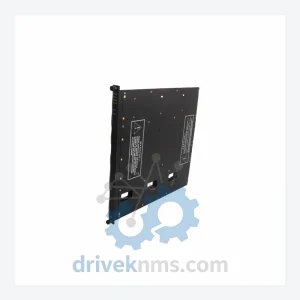
Triconex 3805E Analog Output Module – TMR Safety System
Triconex 3805E Analog Output Module is listed for TMR Safety System RFQ review. Confirm quantity, condition and destination before quotation.
RFQ-ready industrial model
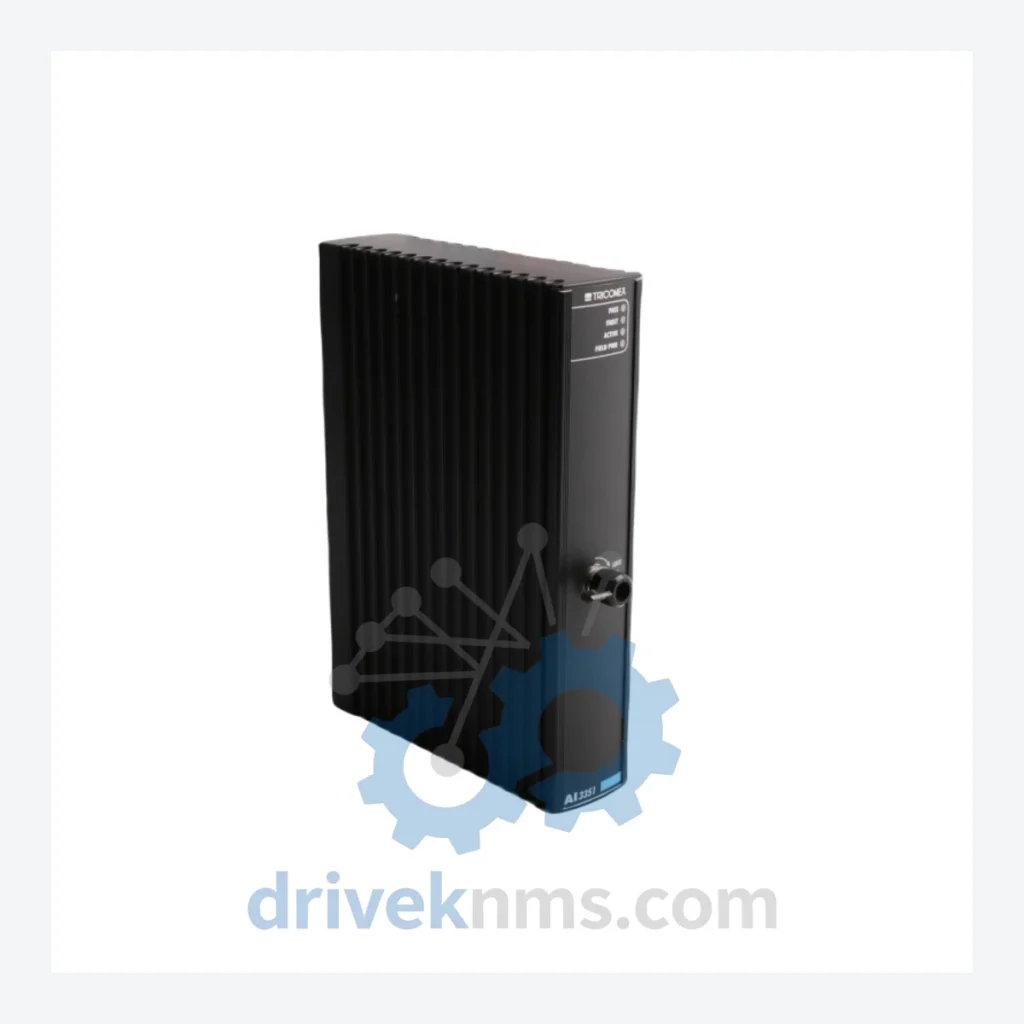
Model: AI 3351S2
Product Overview
Commercial availability is handled through direct RFQ, model verification and export-oriented follow-up rather than public cart checkout.
Datasheet Preview
Use attached product manuals when available. If the manual is not public yet, request the full file directly through RFQ.
Commercial Path
Product pages on DRIVEKNMS are designed to verify model, brand and series first, then move the buyer into one clean quotation path.
Technical Dossier
The Triconex Tricon platform (formerly a Invensys brand, now under Schneider Electric) is one of the most widely deployed Triple Modular Redundant (TMR) Safety Instrumented Systems (SIS) in global heavy industry. Installed across petrochemical complexes, nuclear power stations, offshore platforms, LNG terminals, and refinery process units, the Tricon architecture is certified to IEC 61511 and IEC 61508 SIL 3. The AI 3351S2 is a field-proven analog input module within this ecosystem, designed for high-integrity signal acquisition in safety-critical loops. Its deployment spans ESD (Emergency Shutdown), F&G (Fire & Gas), and HIPPS (High Integrity Pressure Protection System) applications where signal fidelity and fault tolerance are non-negotiable.
The Triconex Tricon system was introduced in the 1980s as one of the first commercially available TMR programmable safety controllers. Its architecture is built on three independent processing legs (Leg A, Leg B, Leg C), each executing the same logic simultaneously. A voter circuit compares outputs and isolates any single-leg fault without process interruption — a design that enables fault tolerance without spurious trips.
Early generations (Tricon v1–v7) used proprietary backplane communication and were limited to specific I/O module families. The introduction of the 3000 Series I/O modules (including the 3351S2) standardized the analog input interface across Tricon v9 and v10 main chassis. The subsequent Tricon CX platform extended this architecture with modern fieldbus integration (HART, Modbus, OPC-UA) while maintaining backward compatibility with legacy 3000-series modules in mixed-chassis configurations. Understanding this generational boundary is critical for spare parts procurement: modules from the 3300 and 3500 series are not interchangeable without chassis and firmware validation.
Analog Input Modules
Analog Output Modules
Digital Input Modules
Digital Output Modules
CPU & Main Processor Modules
Power Supply Modules
Schneider Electric has progressively transitioned its safety system portfolio toward the Tricon CX and Tricon v11 platforms. As a result, a significant portion of the 3000-series module catalog — including the AI 3351S2 — has entered end-of-life or limited-availability status through OEM channels. Production facilities operating legacy Tricon v9 and v10 systems face a procurement gap: OEM support windows have closed, yet the installed base remains operational and requires periodic module replacement due to component aging, electrostatic discharge events, or scheduled maintenance rotations.
Triconex TMR modules present specific validation challenges due to their three-leg internal architecture. A module may pass basic power-on diagnostics while carrying a latent fault in one of its three processing legs — a condition that would only manifest under a specific fault scenario in the field. DriveKNMS applies a structured test protocol for all Tricon modules prior to dispatch:
Continue The Model Path
Move from this exact model into the matching system hub, brand archive, model-family archive or lifecycle sourcing route before sending a final RFQ list.
Related Paths
Triconex 3805E Analog Output Module is listed for TMR Safety System RFQ review. Confirm quantity, condition and destination before quotation.
Triconex PI3381 is listed for Tricon RFQ review. Confirm quantity, condition and destination before quotation.
Triconex 7400221-100 is listed for Tricon RFQ review. Confirm quantity, condition and destination before quotation.