
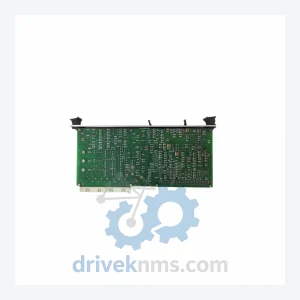
Yokogawa K9634DA-01 TCD Card Modules
Yokogawa K9634DA-01 is listed for Servo Drives RFQ review. Confirm quantity, condition and destination before quotation.
RFQ-ready industrial model
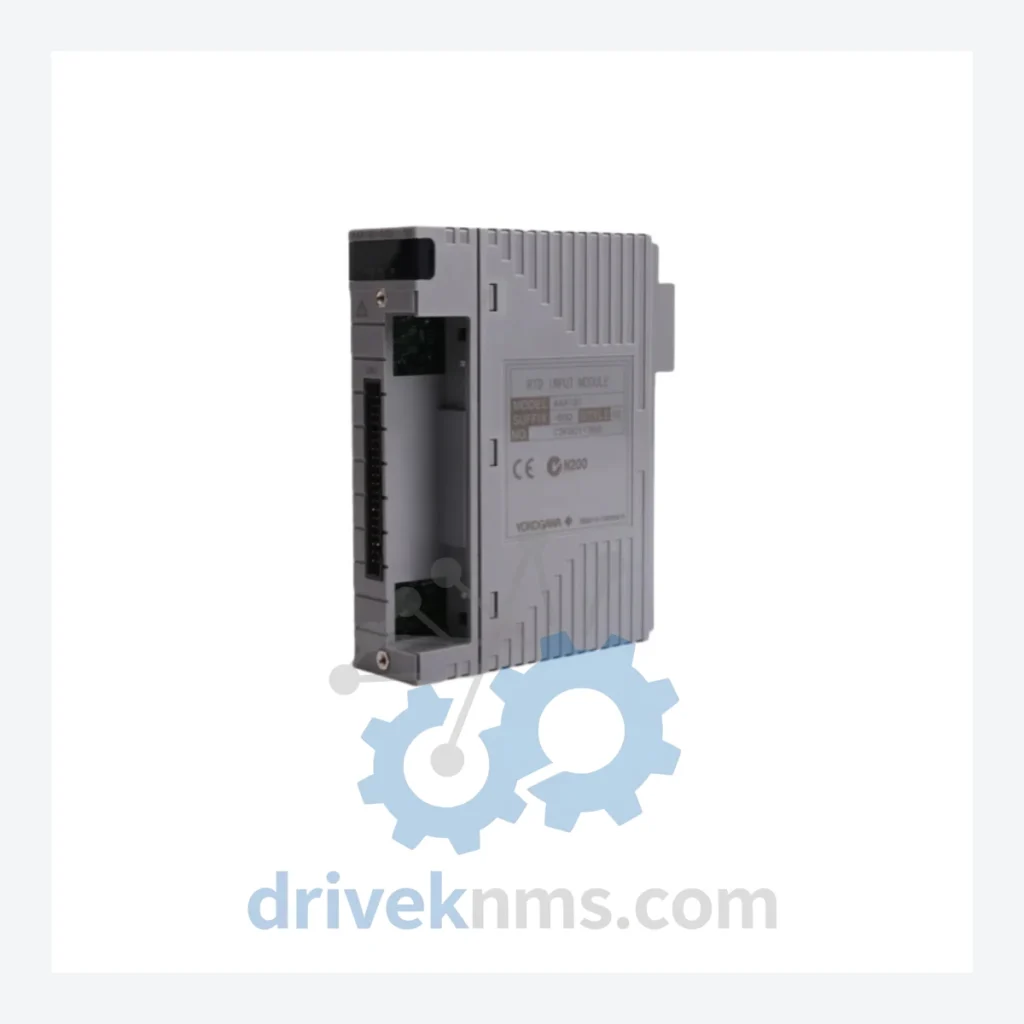
Model: AAP135-S50
Product Overview
Commercial availability is handled through direct RFQ, model verification and export-oriented follow-up rather than public cart checkout.
Datasheet Preview
Use attached product manuals when available. If the manual is not public yet, request the full file directly through RFQ.
Commercial Path
Product pages on DRIVEKNMS are designed to verify model, brand and series first, then move the buyer into one clean quotation path.
Technical Dossier
The Yokogawa AAP135 series represents a family of pulse input modules deployed within the CENTUM CS 3000 and CENTUM VP distributed control systems — platforms that have accumulated decades of installed base across global heavy industry. Refineries, petrochemical complexes, LNG terminals, nuclear auxiliary systems, and continuous process plants across Asia, the Middle East, and Europe have standardized on CENTUM architecture. The AAP135 series modules serve as the interface layer between field-level pulse-generating instruments (flow meters, turbine meters, encoders) and the DCS controller bus. Their role in accurate flow totalization and high-frequency pulse counting makes them a non-negotiable component in custody transfer and mass balance applications. As CENTUM CS 3000 transitions into its extended support phase and CENTUM VP matures, the AAP135 series occupies a critical position: still operationally active in thousands of facilities, yet increasingly difficult to source through standard distribution channels.
Yokogawa's CENTUM platform has evolved through several generations since the 1990s. The original CENTUM XL gave way to CENTUM CS, then CENTUM CS 1000/3000, and ultimately CENTUM VP — each generation refining the I/O bus architecture, backplane communication protocols, and module form factors. The AAP135 series was introduced to address the growing demand for high-resolution pulse counting in process industries where volumetric flow accuracy directly impacts revenue and regulatory compliance.
Early AAP135 variants were designed for the Nest-based I/O architecture of CENTUM CS 3000, using the RIO (Remote I/O) bus for communication with the Field Control Station (FCS). Later revisions maintained backward compatibility with the same nest slots while introducing improved noise immunity and extended input frequency ranges. The suffix designations (e.g., -S50) indicate specific hardware revisions or regional certification variants. When sourcing replacement units, matching the exact suffix is critical — firmware and hardware revisions are not always interchangeable across suffix variants without engineering validation.
With Yokogawa's official end-of-sale announcements for portions of the CS 3000 hardware catalog, facilities running these systems face a defined horizon: either migrate to CENTUM VP (a multi-year, multi-million dollar project) or establish a long-term spare parts strategy. The AAP135-S50 and its sibling models are central to that strategy.
The following SKUs represent confirmed models within the Yokogawa AAP135 series and closely associated CENTUM CS 3000 / VP I/O module families. Each entry reflects a distinct hardware configuration or functional variant:
AAP135-S50: Pulse input module, high-frequency counting, CENTUM CS 3000 / VP nest-compatible
AAP135-S10: Pulse input module, standard frequency range, single-channel configuration
AAP135-S20: Pulse input module, dual-channel, mid-range frequency input
AAP135-S30: Pulse input module, extended input voltage tolerance variant
AAP135-S40: Pulse input module, enhanced EMI shielding revision
AAI135-S50: Analog input module, 16-channel, 4–20 mA, HART-compatible, CS 3000 nest
AAI141-S50: Analog input module, 8-channel, high-accuracy, isolated inputs
AAI143-S50: Analog input module, 4-channel, high-speed sampling variant
AAO145-S50: Analog output module, 8-channel, 4–20 mA, HART-compatible
ADV151-P60: Digital input module, 32-channel, 24 VDC, high-density nest card
ADV161-P60: Digital output module, 32-channel, transistor output, 24 VDC
ADV551-P50: Digital input module, 16-channel, isolated, for safety-critical loops
AIP835-S50: Pulse input module, turbine meter interface, frequency-to-digital conversion
ACM12-S10: Communication module, Modbus RTU/TCP gateway for CENTUM FCS
ACM71-S10: Communication module, FOUNDATION Fieldbus H1 interface card
AFV10D-S10: Field control station power supply module, 24 VDC regulated output
AFV30D-S10: Redundant power supply module for CENTUM VP FCS nest
DriveKNMS maintains a dedicated procurement channel for Yokogawa CENTUM CS 3000 and CENTUM VP hardware that has exited standard distribution. The AAP135-S50 and related pulse input modules are among the most frequently requested items from facilities operating legacy flow measurement infrastructure.
For plant managers facing system retirement pressure, the economic case for spare parts procurement is straightforward: a single AAP135-S50 replacement unit, even at premium obsolete-market pricing, costs a fraction of the engineering hours required to reconfigure a flow measurement loop for a different I/O platform. When multiplied across a facility with dozens of pulse input points, the capital preservation argument for maintaining a vetted spare parts buffer is unambiguous.
DriveKNMS ships globally with full export documentation. Inquiries with part numbers, required quantities, and delivery timelines receive priority response within one business day.
Pulse input modules present specific failure modes that differ from standard analog or digital I/O cards. The AAP135 series QC protocol at DriveKNMS addresses the following inspection points:
1. Input Comparator Circuit Verification: The pulse detection threshold comparator is tested across the full specified input voltage range. Degraded comparators produce missed counts or false triggers — a failure mode that is not always visible during static bench testing and requires dynamic signal injection.
2. Backplane Connector Integrity: CENTUM nest connectors are inspected under magnification for pin deformation, oxidation, and solder joint fatigue. Connector issues are the leading cause of intermittent communication faults in aged CENTUM hardware.
3. Electrolytic Capacitor Assessment: Modules manufactured prior to 2010 are subject to capacitor ESR (Equivalent Series Resistance) measurement. Capacitors showing elevated ESR are replaced with equivalent-specification components before the unit is offered for sale.
4. Firmware Version Documentation: Where accessible, the installed firmware revision is recorded and disclosed. Customers integrating replacement modules into existing CENTUM systems should verify firmware compatibility with their FCS configuration before installation.
5. Functional Bus Communication Test: Each module is tested for correct RIO bus enumeration and data exchange using a CENTUM-compatible test fixture. Modules that fail to enumerate correctly are not offered for sale regardless of visual condition.
Continue The Model Path
Move from this exact model into the matching system hub, brand archive, model-family archive or lifecycle sourcing route before sending a final RFQ list.
Related Paths
Yokogawa K9634DA-01 is listed for Servo Drives RFQ review. Confirm quantity, condition and destination before quotation.
Yokogawa UT350 UT350-01 is listed for Servo Drives RFQ review. Confirm quantity, condition and destination before quotation.
Yokogawa K9403JA-02 is listed for Servo Drives RFQ review. Confirm quantity, condition and destination before quotation.