
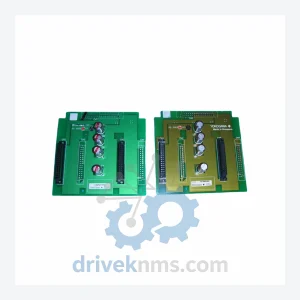
YOKOGAWA ASS9262AT-1: CENTUM CS3000 DCS Analog Signal Sub-unit Board
Yokogawa ASS9262AT-1 is listed for CENTUM CS3000 RFQ review. Confirm quantity, condition and destination before quotation.
RFQ-ready industrial model
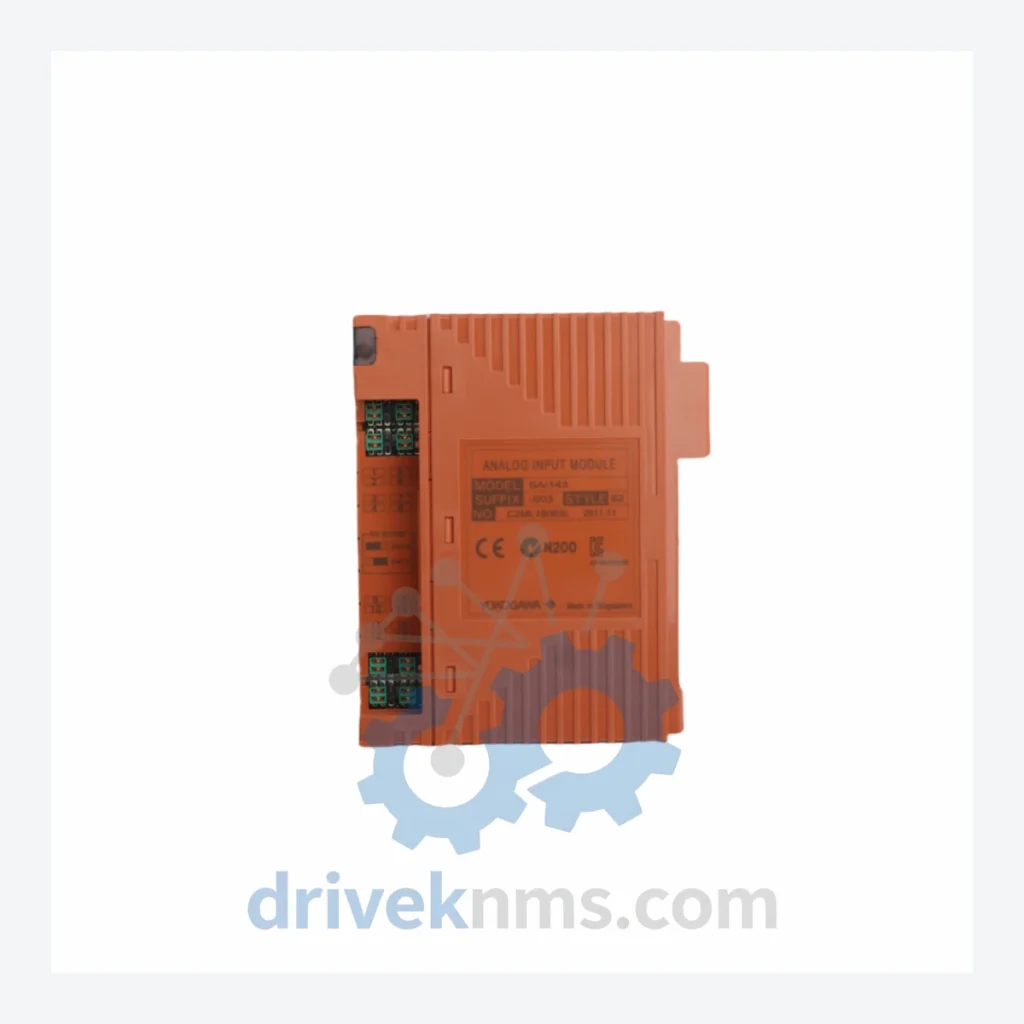
Model: SAI143-S03 S2
Product Overview
Commercial availability is handled through direct RFQ, model verification and export-oriented follow-up rather than public cart checkout.
Datasheet Preview
Use attached product manuals when available. If the manual is not public yet, request the full file directly through RFQ.
Commercial Path
Product pages on DRIVEKNMS are designed to verify model, brand and series first, then move the buyer into one clean quotation path.
Technical Dossier
The Yokogawa CENTUM CS3000 is a distributed control system (DCS) platform deployed across heavy industrial sectors including petroleum refining, petrochemical complexes, LNG terminals, nuclear power auxiliary systems, pulp and paper mills, and large-scale chemical plants. With installations spanning over 30 countries, the CS3000 represents one of the highest-density DCS deployments in process automation history. Its modular I/O architecture — built around field control stations (FCS) and human interface stations (HIS) — allows granular expansion and redundancy configuration. The SAI143-S03 S2 is a 16-channel analog input module operating within this architecture, designed for 4–20 mA HART-compatible field instrument signals.
Yokogawa's CENTUM platform traces its lineage to the CENTUM V (1993) and CENTUM XL (1995) systems, which established the foundational node-based I/O bus topology. The CS1000 (1998) introduced compact FCS units suitable for mid-scale plants, while the CS3000 (1999–2008 primary production cycle) scaled this to enterprise-grade redundancy with dual-redundant CPUs, dual-redundant Vnet/IP communication buses, and hot-swap I/O modules. The CS3000 R3 revision introduced enhanced HART pass-through and expanded the I/O module catalog to include safety-rated variants. By 2012, Yokogawa began transitioning customers toward the CENTUM VP platform, which maintains backward compatibility with CS3000 I/O modules at the hardware level but introduces a new engineering environment (CENTUM VP Engineering). As of 2026, the CS3000 is in its end-of-life support phase; Yokogawa provides limited OEM spare parts, making third-party certified suppliers critical for plant maintenance continuity. Compatibility between CS3000 and CS1000 I/O modules is partial — node address configuration and FCS slot assignments must be verified before substitution.
Analog Input Modules (AI)
Analog Output Modules (AO)
Digital Input Modules (DI)
Digital Output Modules (DO)
CPU / Controller Modules
Communication & Power Modules
CENTUM CS3000 I/O modules incorporate proprietary backplane bus protocols and node-address DIP configurations that require specialized test environments. DriveKNMS applies the following verification procedures to all CS3000 modules prior to dispatch: (1) Backplane bus continuity test using CS3000-compatible FCS test rig to verify node enumeration and slot recognition. (2) Analog channel calibration verification across the full 4–20 mA range with ±0.1% accuracy tolerance check. (3) HART communication layer test for AI/AO modules — device descriptor (DD) polling confirmed at 1200 baud. (4) Firmware revision identification and logging — S2 vs S3 suffix differentiation is recorded on the test certificate. (5) 48-hour burn-in cycle under simulated field load conditions. (6) Final visual inspection of backplane connector pins, conformal coating integrity, and capacitor condition. Each unit ships with a DriveKNMS test certificate and revision-matched documentation.
Continue The Model Path
Move from this exact model into the matching system hub, brand archive, model-family archive or lifecycle sourcing route before sending a final RFQ list.
Related Paths
Yokogawa ASS9262AT-1 is listed for CENTUM CS3000 RFQ review. Confirm quantity, condition and destination before quotation.
Yokogawa CP133E-16-S3 is listed for CENTUM CS3000 RFQ review. Confirm quantity, condition and destination before quotation.
Yokogawa AIP502-S1 is listed for CENTUM CS3000 RFQ review. Confirm quantity, condition and destination before quotation.