Technical Dossier
Product Details And Specifications
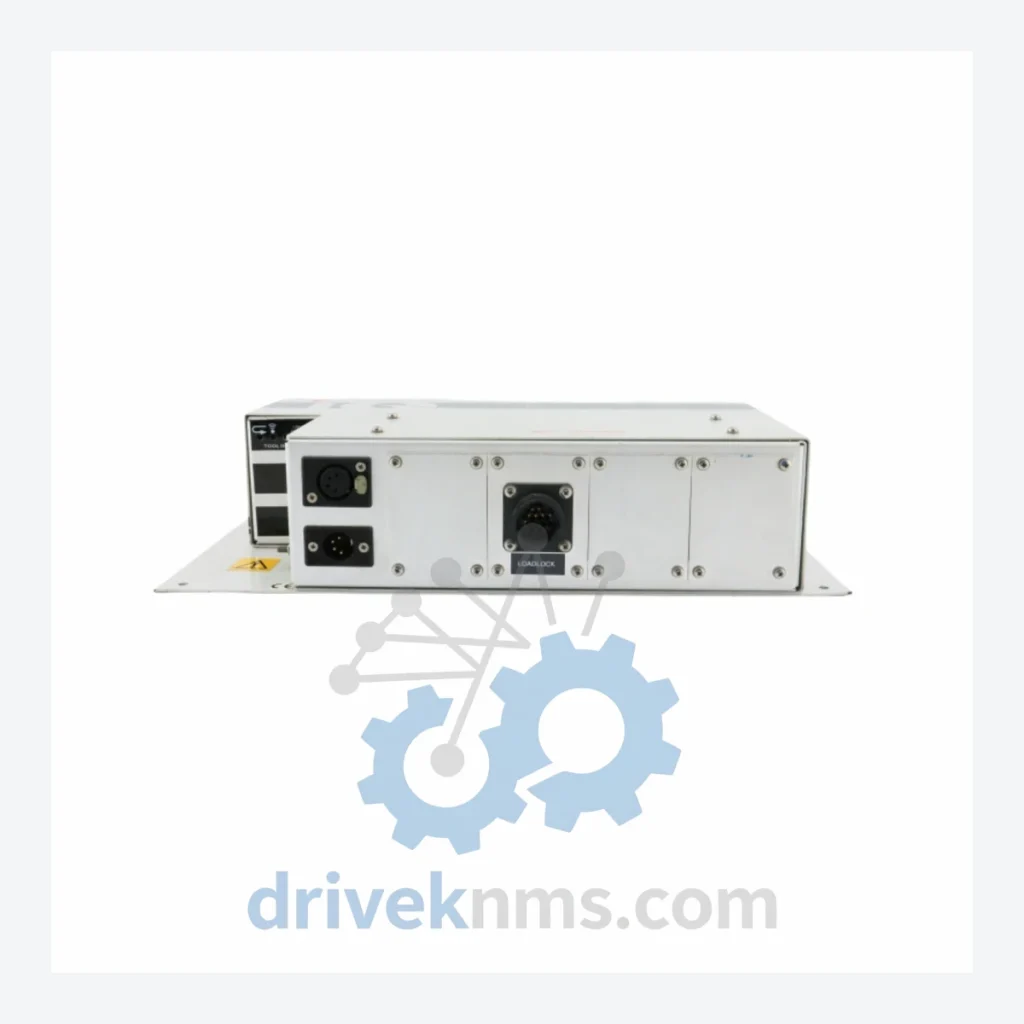
Edwards A52844458 ML25995 0190-02362 IQ Interface Module – Obsolete EST IQ Series Spare Part
RFQ support for obsolete parts: Send the model number, required quantity and destination so DriveKNMS can confirm sourcing options before quotation.
Technical Specifications
Q: How are RFQ terms confirmed?
A: Quantity, required condition, documentation needs, destination and sourcing route are confirmed during RFQ review before quotation.
Solving the Discontinued Hardware Crisis
The Edwards EST IQ Series was deployed extensively across commercial, industrial, and institutional facilities throughout the 1990s and 2000s. These panels remain in active service in hospitals, manufacturing plants, data centers, and high-rise buildings — environments where ripping out a functional, code-compliant fire alarm backbone is neither operationally simple nor financially rational.
The A52844458 IQ Interface Module serves as the communication bridge between the IQ panel's central processor and field devices or ancillary systems. When this module degrades or fails, the panel loses the ability to process signals from connected zones or relay outputs — a condition that in many jurisdictions triggers mandatory system shutdown and immediate remediation under fire code.
No equivalent drop-in replacement exists from current-generation Edwards product lines without a full panel replacement. This is the hardware discontinuation trap: the system works, the infrastructure is sound, but a single unavailable module forces a capital expenditure that no maintenance budget anticipated. Facilities that have pre-positioned a spare A52844458 avoid this trap entirely. Those that have not face the full cost of emergency procurement at distressed pricing — or the full cost of system replacement.
For plant managers and facility directors operating under asset lifecycle pressure, the calculus is direct: the cost of one spare module versus the cost of unplanned system replacement is not a close comparison.
How to Extend Your Legacy Fire Alarm System Life by 5–10 Years
Facilities managing Edwards EST IQ Series panels under deferred replacement budgets can realistically extend operational life by five to ten years through a structured spare parts strategy. The following approach is used by maintenance teams that manage these systems professionally:
1. Identify single-point-of-failure modules first. Interface modules like the A52844458 are high-risk components because they are non-redundant in most IQ panel configurations. A failure here is a system failure. These should be the first modules stocked.
2. Maintain a minimum of one cold spare per panel. For facilities with multiple IQ panels, one spare per panel type is the baseline. For critical facilities (hospitals, data centers), two spares per panel is the defensible standard.
4. Implement a scheduled inspection cycle for aging interface modules. Electrolytic capacitor degradation, connector pin oxidation, and firmware-related communication errors are the three primary failure modes in modules of this age. A biannual inspection protocol catches degradation before it becomes failure.
5. Document firmware versions before any module swap. IQ Series panels can be sensitive to firmware mismatches between the CPU board and interface modules. Maintaining a record of the installed firmware version ensures that a replacement module is configured correctly before it goes live.
This approach does not require capital expenditure approval. It requires procurement of spare parts — a maintenance budget line item — and a documented inspection schedule. For facilities facing board-level pressure to defer system replacement, this strategy provides the operational evidence that the existing system can be maintained reliably.
Condition & Reliability Assurance
DriveKNMS applies a 5-step quality assurance process to all obsolete modules before dispatch review:
Step 1 – Visual and Physical Inspection: Full board inspection for physical damage, corrosion, burnt components, and connector integrity. Modules with compromised PCB traces or housing damage are rejected at this stage.
Step 2 – Electrolytic Capacitor Assessment: Capacitors are the primary age-related failure point in modules of this generation. Each capacitor is tested for capacitance value, ESR (equivalent series resistance), and leakage. Out-of-specification capacitors are replaced with equivalent-rated components before the module proceeds.
Step 4 – Pin and Connector Inspection: All edge connectors and pin headers are inspected for oxidation, bending, and contact integrity. Oxidized contacts are cleaned using appropriate contact restoration methods. Bent pins are corrected or the module is rejected.
Key Features for System Maintenance
Drop-in replacement: The A52844458 installs directly into the existing IQ panel slot. No panel reconfiguration, no new wiring runs, no engineering change orders required in standard replacement scenarios.
No reprogramming of the panel database: The IQ panel's programming — zone assignments, device mappings, output logic — resides in the panel CPU, not in the interface module. Replacing the module does not require reloading or rebuilding the panel program.
Avoids engineering and commissioning costs: A new-generation panel replacement requires licensed fire alarm engineers for design, installation contractors for wiring, and an Authority Having Jurisdiction (AHJ) inspection for re-acceptance. None of these costs apply to a module-level replacement. The cost differential between a spare module and a system replacement is measured in orders of magnitude.
Maintains existing code compliance status: A panel that is currently accepted by the AHJ and operating within its listed parameters does not lose its compliance status through a like-for-like module replacement. A full system replacement restarts the acceptance process.
Q: Can you support multi-unit or repeat RFQ requests?
A: Yes. Send the model list, target quantity and destination so DRIVEKNMS can review sourcing options and quote the requirement as a project RFQ.
Q: How should I store a spare module if I am not installing it immediately?
A: Store in a sealed anti-static bag in a climate-controlled environment, away from direct sunlight and humidity. Avoid storage in areas subject to temperature cycling. Proper storage maintains module integrity for years.