
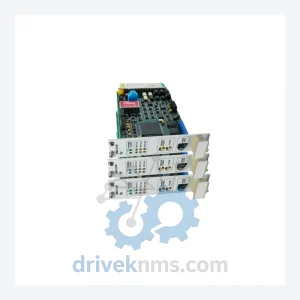
Emerson PR6424/010-140 CON021/914-060 Eddy Current Sensor – Bently Nevada
Emerson PR6424/010-140 CON021/914-060 is listed for Bently Nevada RFQ review. Confirm quantity, condition and destination before quotation.
RFQ-ready industrial model
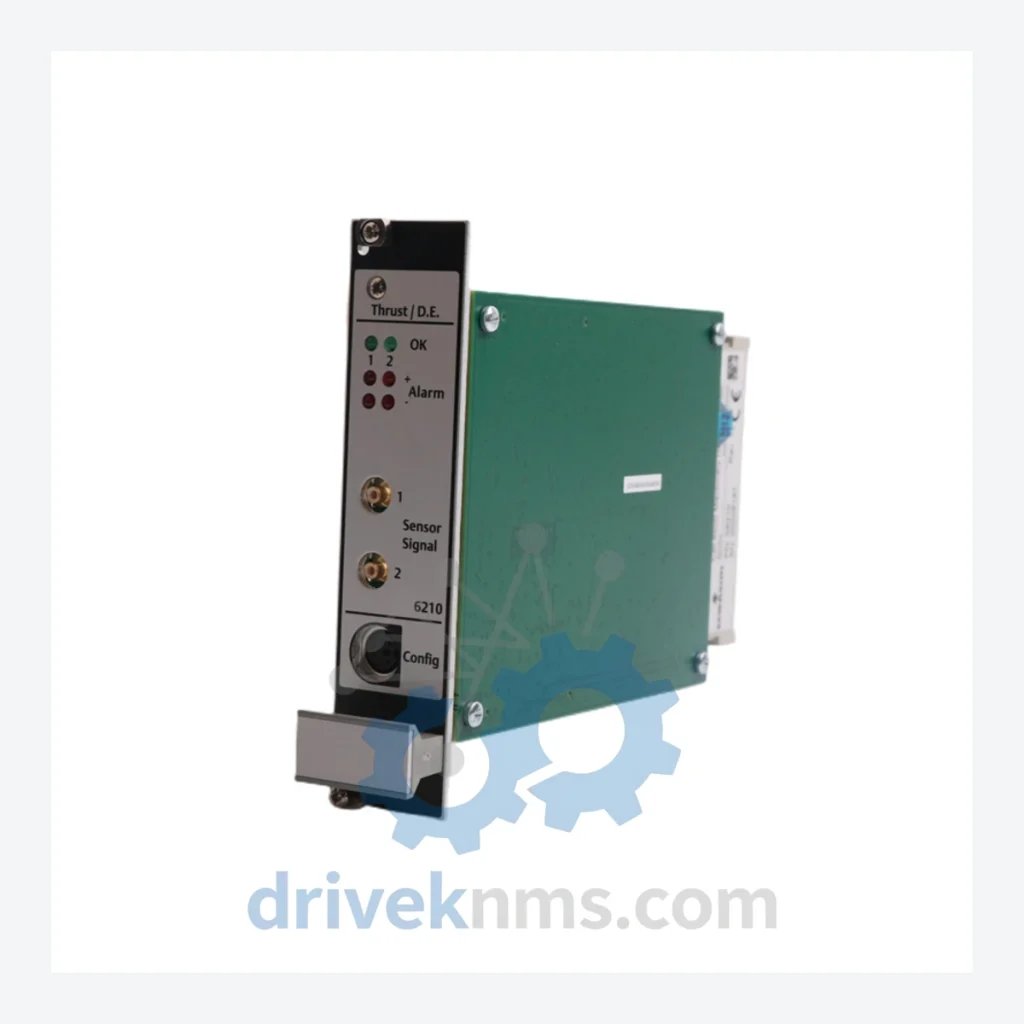
Model: A6210
Product Overview
Commercial availability is handled through direct RFQ, model verification and export-oriented follow-up rather than public cart checkout.
Datasheet Preview
Use attached product manuals when available. If the manual is not public yet, request the full file directly through RFQ.
Commercial Path
Product pages on DRIVEKNMS are designed to verify model, brand and series first, then move the buyer into one clean quotation path.
Technical Dossier
RFQ support for obsolete parts: Send the model number, required quantity and destination so DriveKNMS can confirm sourcing options before quotation.
| Parameter | Detail |
|---|---|
| Part Number | A6210 |
| Manufacturer | Emerson (Bently Nevada) |
| Function | Thrust & Differential Expansion Measurement Module |
| Compatible Platform | Bently Nevada 3500 Series Machinery Protection System |
| Measurement Type | Axial position (thrust), differential expansion (DE) |
| Product Status | Discontinued / Obsolete – No longer manufactured |
| Country of Origin | United States |
| Condition Available | New surplus / Professionally refurbished (see QA section) |
Note: Electrical parameters such as input voltage range, output signal type, and channel count are model-revision dependent. DriveKNMS will confirm exact revision specifications upon inquiry to ensure compatibility with your installed rack configuration.
The Bently Nevada 3500 platform has been the industry standard for turbine and compressor machinery protection across power generation, oil & gas, and petrochemical facilities for decades. The A6210 module occupies a specific and non-interchangeable slot in this architecture: it conditions raw proximity probe signals into calibrated axial position and differential expansion data that feeds directly into the plant's trip logic and condition monitoring historian.
When Emerson discontinued the A6210, it did not eliminate the installed base — it transferred the maintenance burden entirely to the plant. Facilities running this module now face a binary choice: locate genuine replacement hardware, or fund a full rack replacement that requires new probe cabling, re-certification of trip setpoints, integration with the DCS or safety system, and a planned outage window. For a mid-size combined-cycle power plant or an LNG compression train, that outage window alone carries a cost that dwarfs the price of a spare module by orders of magnitude.
For obsolete electronic modules, condition verification is not a formality — it is the difference between a reliable spare and a latent failure waiting to occur. DriveKNMS applies a structured 5-step inspection protocol to all A6210 units before they are offered for sale:
Step 1 – Electrolytic Capacitor Assessment: Modules of this generation use aluminum electrolytic capacitors with a finite service life. Each unit is inspected for capacitor bulging, electrolyte leakage, and ESR drift. Units showing capacitor degradation are either recapped with equivalent-spec components or removed from saleable inventory.
Step 2 – Firmware Version Verification: The A6210 has been produced across multiple hardware and firmware revisions. We document the firmware version of each unit and cross-reference it against known compatibility matrices for the 3500 rack configurations most commonly encountered in the field. Revision mismatches are flagged before dispatch review.
Step 3 – Connector and Pin Integrity Check: Backplane connectors and field wiring terminals are inspected under magnification for pin corrosion, mechanical deformation, and contact oxidation. Affected contacts are cleaned or the unit is quarantined.
Step 4 – Functional Bench Test: Where test fixtures are available, units are powered and exercised through basic functional checks to confirm signal conditioning and communication behavior consistent with the module's documented specification.
Step 5 – Packaging and ESD Protection: All units are shipped in anti-static packaging with desiccant, inside rigid outer packaging rated for international freight. Each shipment includes a condition report documenting the inspection findings for that specific unit.
The A6210 is a direct replacement for the same slot in the Bently Nevada 3500 rack. Installation does not require rack reconfiguration, re-wiring of proximity probe inputs, or modification of the system's configuration database — provided the replacement unit matches the installed firmware revision. This is a genuine drop-in replacement scenario, which means:
No re-engineering of trip setpoints or alarm thresholds. No involvement of the turbine OEM or system integrator for the module swap itself. No modification to the plant's functional safety documentation beyond a standard maintenance record entry. Minimal planned outage duration — module replacement on a 3500 rack is a technician-level task measured in minutes, not an engineering project measured in weeks.
For plant managers evaluating the cost of maintaining legacy Bently Nevada infrastructure versus migrating to current-generation platforms, the arithmetic is straightforward: a verified A6210 spare extends the operational life of the existing system at a fraction of the cost of a platform migration. For assets with 5 to 10 years of remaining planned service life, maintaining a spares buffer is the financially defensible position. The capital cost of a full 3500 rack replacement — including engineering, installation, commissioning, and the associated outage — is a cost that can be deferred for years through disciplined spare parts management. The A6210 is a direct instrument of that deferral strategy.
Q: How do I know the unit is genuine and not a counterfeit?
A: All A6210 units in our inventory are sourced from traceable channels. We provide documentation of the unit's provenance on request. Physical authenticity markers — PCB markings, component date codes, and housing stampings — are verified during inspection. We do not source from unverified brokers or online auction platforms.
Q: Should I buy more than one unit as a long-term spare?
A: For any obsolete module that sits in a critical protection system, holding a minimum of one cold spare per installed unit is standard practice. For facilities with multiple turbines or compressors running the same rack configuration, a ratio of one spare per two to three installed units is a defensible minimum. As market availability of the A6210 continues to tighten, the cost of sourcing additional units will increase. Procurement decisions made today carry a lower cost and lower risk than the same decision made under emergency conditions.
Continue The Model Path
Move from this exact model into the matching system hub, brand archive, model-family archive or lifecycle sourcing route before sending a final RFQ list.
Related Paths
Emerson PR6424/010-140 CON021/914-060 is listed for Bently Nevada RFQ review. Confirm quantity, condition and destination before quotation.
Emerson KJ3001X1-BB1 12P0550X142 is listed for DeltaV RFQ review. Confirm quantity, condition and destination before quotation.
Emerson ES0350.M1A05L.27N0 is listed for DeltaV RFQ review. Confirm quantity, condition and destination before quotation.