
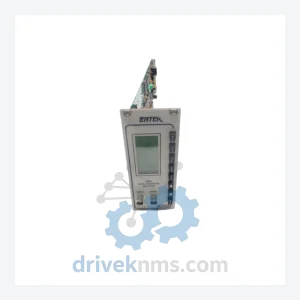
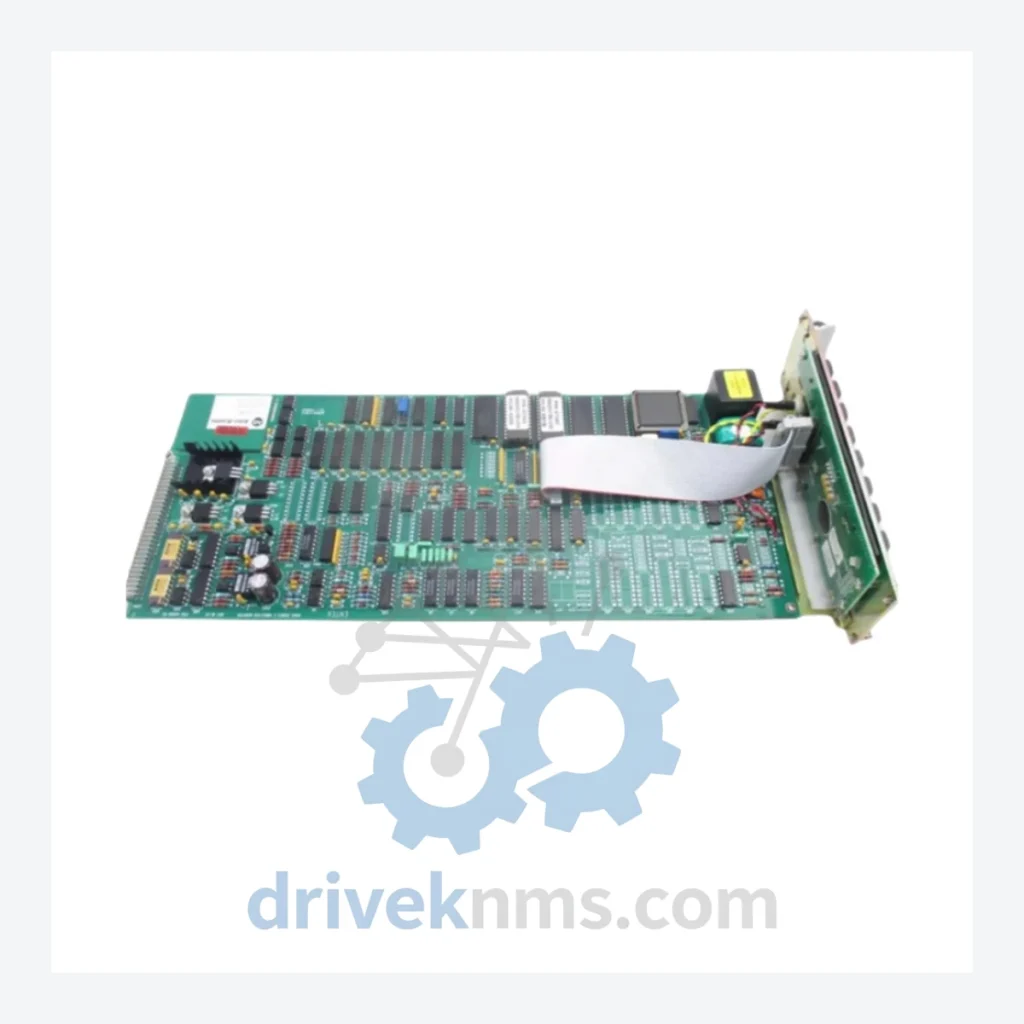
ENTEK C6682 (EC6682) Axial Position Monitor – Machinery Protection System
Entek C6682 EC6682 is listed for Machinery Protection System RFQ review. Confirm quantity, condition and destination before quotation.
RFQ-ready industrial model
Model: 6682 C6682
Product Overview
Commercial availability is handled through direct RFQ, model verification and export-oriented follow-up rather than public cart checkout.
Datasheet Preview
Use attached product manuals when available. If the manual is not public yet, request the full file directly through RFQ.
Commercial Path
Product pages on DRIVEKNMS are designed to verify model, brand and series first, then move the buyer into one clean quotation path.
Technical Dossier
The ENTEK 6682 series is a family of machinery protection and condition monitoring modules deployed across global heavy industry installations, including petrochemical refineries, nuclear power stations, offshore platforms, and rotating equipment facilities. The series operates within the ENTEK Emonitor and IRD Mechanalysis ecosystem, providing continuous vibration, position, and process variable monitoring for critical rotating machinery such as turbines, compressors, pumps, and fans. The 6682 series occupies a well-established position in the installed base of legacy machinery protection systems, with thousands of units still in active service across facilities that require long-term spare parts availability and lifecycle extension support.
The ENTEK 6682 architecture was developed as part of the broader ENTEK rack-based monitoring platform, designed for DIN-rail and card-cage installation in 19-inch rack enclosures. Early iterations of the 6682 family focused on analog signal conditioning for proximity probe inputs (eddy-current type), providing DC gap voltage, 1X and 2X vibration amplitude, and phase reference outputs compatible with Bently Nevada-style wiring conventions. This cross-compatibility made the 6682 series a common retrofit and replacement option in facilities originally equipped with Bently Nevada 3300 or 7200 series systems.
As the platform matured, ENTEK introduced communication-capable variants supporting 4–20 mA analog outputs and relay contact outputs for alarm and danger setpoints. The C6682 variant specifically addresses shaft radial position monitoring, measuring DC gap voltage from proximity probes to determine shaft centerline position — a critical parameter for journal bearing condition assessment. The series remained in active production through the Rockwell Automation acquisition of ENTEK in the early 2000s, after which the product line transitioned toward the Enpac and XM series platforms. The 6682 series is now classified as a mature/end-of-life product line, with no new production. All procurement is sourced from certified surplus and refurbished inventory channels.
The following SKUs represent verified models within the ENTEK 6682 series and its direct ecosystem. Each module is listed with its primary functional classification:
C6682: Shaft radial position monitor; DC gap voltage output from proximity probe input, dual-channel capable.
6682: Base position monitor module; single-channel proximity probe interface, analog output.
6681: Vibration monitor module; 1X amplitude and phase output, proximity probe or velocity input.
6683: Dual-channel vibration monitor; simultaneous radial vibration measurement on two planes.
6684: Thrust position monitor; axial shaft position measurement via proximity probe pair.
6685: Speed/phase reference monitor; keyphasor signal conditioning and tachometer output.
6686: Process variable monitor; 4–20 mA input conditioning for temperature, pressure, flow signals.
6687: Relay output module; configurable alarm and danger relay contacts for 6682-series monitors.
6688: Power supply module; rack-level DC power distribution for 6682-series card cage.
6689: Communication interface module; serial RS-232/RS-485 output for DCS/SCADA integration.
6690: Multiplexer module; sequential scanning of multiple proximity probe channels.
6691: Barrier/isolator module; intrinsic safety interface for hazardous area proximity probe installations.
6692: Rack backplane assembly; passive bus interconnect for 6682-series card cage.
6693: Display/indicator module; local LED bar-graph display of vibration or position amplitude.
6694: Calibration reference module; precision signal source for in-situ verification of 6682-series monitors.
6695: Differential expansion monitor; measures relative thermal growth between rotor and casing.
6696: Eccentricity monitor; slow-roll shaft bow measurement via proximity probe during startup/shutdown.
6697: Valve position monitor; linear variable differential transformer (LVDT) signal conditioning module.
Continue The Model Path
Move from this exact model into the matching system hub, brand archive, model-family archive or lifecycle sourcing route before sending a final RFQ list.
Related Paths
Entek C6682 EC6682 is listed for Machinery Protection System RFQ review. Confirm quantity, condition and destination before quotation.
Entek 6682 EC6682 is listed for Bently Nevada Compatible RFQ review. Confirm quantity, condition and destination before quotation.
Entek 6652 EC6652 is listed for 6652 Series RFQ review. Confirm quantity, condition and destination before quotation.