
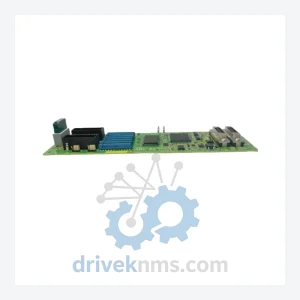
Fanuc A20B-2004-038 Control Card – Series 16/18/21
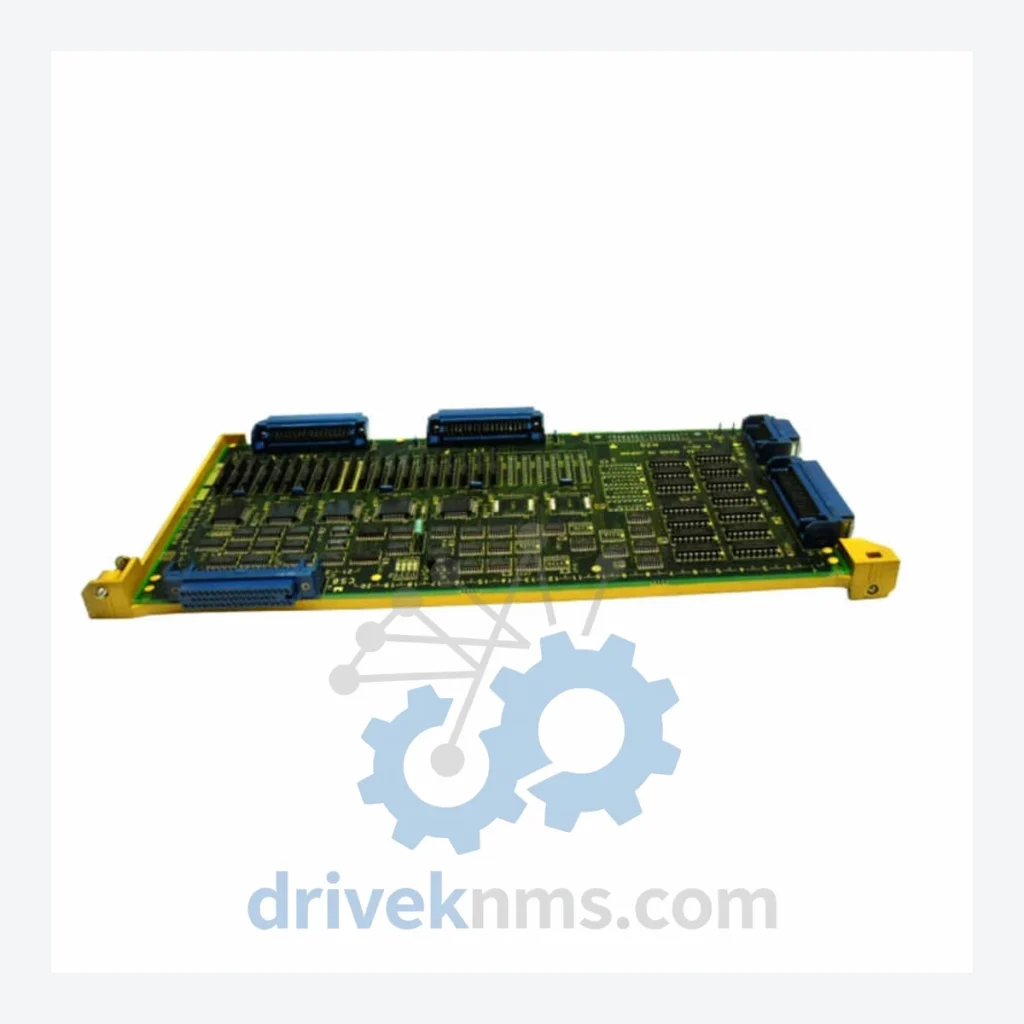
Fanuc A20B-2004-038 is listed for Series 16/18/21 RFQ review. Confirm quantity, condition and destination before quotation.
RFQ-ready industrial model
Model: A16B-2203-0111
Product Overview
Commercial availability is handled through direct RFQ, model verification and export-oriented follow-up rather than public cart checkout.
Datasheet Preview
Use attached product manuals when available. If the manual is not public yet, request the full file directly through RFQ.
Commercial Path
Product pages on DRIVEKNMS are designed to verify model, brand and series first, then move the buyer into one clean quotation path.
Technical Dossier
The FANUC A16B series represents one of the most widely deployed families of printed circuit boards in industrial CNC and robotics automation. Installed across chemical processing plants, nuclear power facilities, petroleum refineries, automotive stamping lines, and aerospace manufacturing cells, A16B boards serve as the foundational hardware layer for FANUC 0, 10, 11, 15, 16, 18, 21, and 30i-series CNC controllers. Their prevalence in heavy industry is a direct consequence of FANUC's decades-long dominance in machine tool control, with global installed base estimates exceeding several million CNC units. The A16B designation covers CPU boards, axis control boards, power supply units, I/O interface boards, and communication adapters — each engineered to operate continuously in high-vibration, high-temperature industrial environments.
The A16B series traces its origins to FANUC's early 1980s transition from discrete-logic control boards to large-scale integrated PCB assemblies. The initial A16B-1000 and A16B-1010 sub-families were designed for FANUC Model 0 and Model 3 controllers, using through-hole component technology and parallel bus architectures that prioritized deterministic real-time response over processing throughput. By the mid-1990s, the A16B-2200 sub-family introduced surface-mount technology (SMT), higher-density memory arrays, and expanded axis count support, aligning with the FANUC 16 and 18 controller generations. The A16B-2203 sub-family — which includes the A16B-2203-0111 — represents a further refinement targeting FANUC 21i and 0i-series platforms, incorporating RISC-based processor architectures, enhanced SRAM battery backup circuits, and improved EMI shielding. The A16B-3200 sub-family extended the architecture into the 30i/31i/32i era, supporting multi-path machining and high-speed servo communication via FSSB (FANUC Serial Servo Bus). Compatibility between sub-families is generally not interchangeable without firmware and parameter migration; engineers must verify the specific controller model, software series, and hardware revision before substitution.
The following SKUs represent verified, commonly stocked models within the FANUC A16B series. Each entry is classified by primary function.
CPU & Main Control Boards
Power Supply Boards
I/O Interface Boards
Axis Control & Communication Boards
A16B boards present specific test challenges due to their multi-layer PCB construction, proprietary FANUC ASICs, and battery-backed SRAM circuits. DriveKNMS applies a structured test protocol for each A16B unit: (1) Visual inspection for capacitor ESR degradation, solder joint fatigue, and corrosion on edge connectors; (2) Power-on functional test using a matched FANUC controller chassis to verify boot sequence, FROM/SRAM integrity, and axis communication handshake; (3) I/O verification using a dedicated breakout fixture to confirm all DI/DO channels respond within specification; (4) FSSB communication test for axis control boards, confirming servo amplifier detection and encoder feedback loop closure; (5) 48-hour burn-in at elevated ambient temperature to screen for latent component failures. Units that do not pass all five stages are quarantined and not offered for sale.
Continue The Model Path
Move from this exact model into the matching system hub, brand archive, model-family archive or lifecycle sourcing route before sending a final RFQ list.
Related Paths
Fanuc A20B-2004-038 is listed for Series 16/18/21 RFQ review. Confirm quantity, condition and destination before quotation.
Fanuc A20B-2200-0321 is listed for Controller Cards RFQ review. Confirm quantity, condition and destination before quotation.
Fanuc A16B-2204-0010 is listed for Controller Cards RFQ review. Confirm quantity, condition and destination before quotation.