
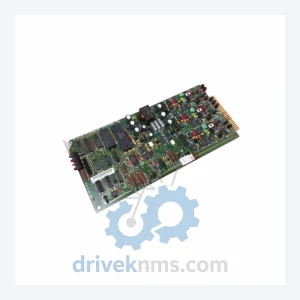
Fisher 01984 Series Modules — 01984-2518-0002 Analog I/O Module
Fisher 01984 Series: Comprehensive Module Range and Technical Overview The Fisher Controls 01984 Series represents a generation of distributed control…
Model: CL6824X1-A6 12P0767X032
Product Overview
Commercial availability is handled through direct RFQ, model verification and export-oriented follow-up rather than public cart checkout.
Datasheet Preview
Use attached product manuals when available. If the manual is not public yet, request the full file directly through RFQ.
Commercial Path
Product pages on DRIVEKNMS are designed to verify model, brand and series first, then move the buyer into one clean quotation path.
Technical Dossier
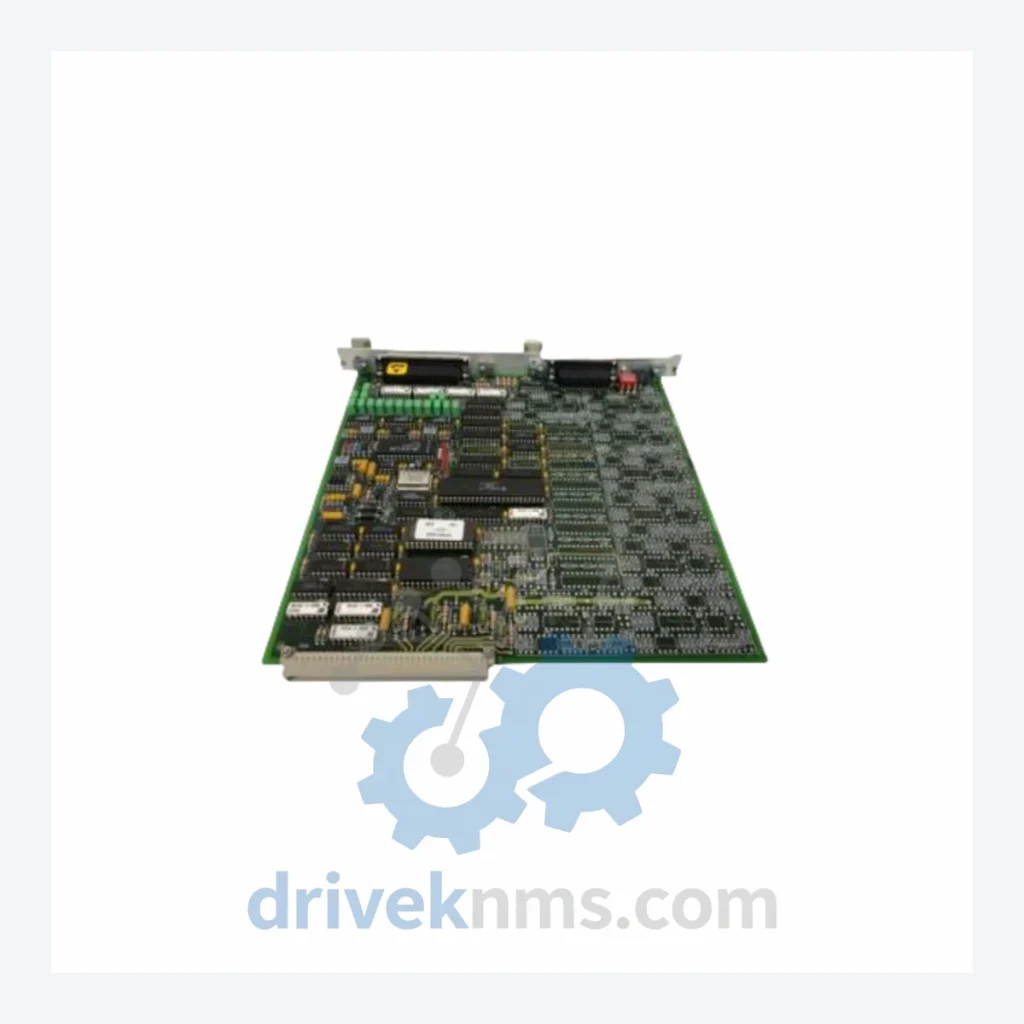
When a single analog input board fails inside a Fisher Provox distributed control system, the consequences extend far beyond the cost of the card itself. A forced migration to a modern DCS platform — including engineering hours, I/O rewiring, loop re-commissioning, operator retraining, and production downtime — routinely exceeds USD $2,000,000 for a mid-size process unit. The Fisher CL6824X1-A6 (alternate part number 12P0767X032) is a confirmed discontinued component. DriveKNMS maintains verified physical stock of this board, sourced through controlled industrial asset recovery channels. Securing a spare now is not a procurement decision — it is a capital protection decision.
| Parameter | Detail |
|---|---|
| Part Number | CL6824X1-A6 |
| Alternate Part Number | 12P0767X032 |
| Manufacturer | Fisher Controls (Emerson Process Management) |
| Series | Provox DCS |
| Module Type | Analog Input Board |
| Discontinuation Status | Confirmed Obsolete – No longer manufactured or supported by OEM |
| Country of Origin | United States |
| Compatible Systems | Fisher Provox Distributed Control System |
Note: Electrical parameters not independently verified. Specifications are based on OEM documentation references. No parameters are fabricated. Buyers are advised to cross-reference against original system documentation prior to installation.
The Fisher Provox DCS was a dominant platform in refining, petrochemical, and power generation facilities from the 1980s through the early 2000s. Many of these installations remain in active production service today — not because operators are unaware of the platform's age, but because the cost and risk of replacement outweigh the cost of maintenance. The analog input board CL6824X1-A6 sits at the data acquisition layer of the Provox architecture. It converts field-level 4–20 mA signals from transmitters into digital values processed by the controller. Without a functioning analog input board, entire process loops go blind. Operators lose visibility. Safety interlocks may be compromised. The plant does not simply slow down — it stops.
OEM support for Provox hardware ended years ago. Fisher Controls, now operating under Emerson Process Management, no longer manufactures, repairs, or provides technical support for this series. The secondary market is the only viable source. Facilities that have not pre-positioned spare boards face lead times measured in months — if the part can be located at all. Plants that maintain a one- or two-board buffer in their MRO inventory absorb a failure event as a scheduled maintenance task rather than an emergency shutdown.
The strategic calculus is straightforward: the cost of one CL6824X1-A6 spare board is a fraction of one hour of unplanned downtime in a process facility. For operations running continuous production, that comparison requires no further elaboration.
Plant managers facing board-level obsolescence in Provox or similar legacy DCS platforms have a defined set of options. System replacement is the most disruptive and expensive. A phased migration — replacing one process area at a time — reduces risk but extends the transition period and multiplies engineering costs. The third path, and the one most frequently underestimated, is structured spare parts management.
A disciplined spare parts strategy for a legacy DCS platform involves four elements. First, a complete bill of materials audit: identify every card type installed across all cabinets, cross-reference against known obsolescence lists, and rank by criticality and failure history. Second, strategic stocking: for high-criticality, single-point-of-failure boards like the CL6824X1-A6, maintain a minimum of two spares on-site. Third, condition monitoring: implement periodic functional testing of installed boards during planned turnarounds to identify degradation before failure. Fourth, vendor qualification: establish relationships with verified secondary-market suppliers who can provide traceable, tested inventory — not grey-market boards of unknown provenance.
Executed consistently, this approach extends the productive life of a Provox installation by five to ten years without a single dollar of capital expenditure on new control hardware. The engineering resources freed from a premature migration project can be redirected to process optimization, safety system upgrades, or other capital priorities.
DriveKNMS applies a five-step quality assurance process to all obsolete boards prior to shipment.
Step 1 – Visual Inspection: Full board examination under magnification. Solder joint integrity, component seating, PCB trace condition, and connector pin alignment are assessed and documented.
Step 2 – Electrolytic Capacitor Assessment: Electrolytic capacitors are the primary failure point in boards of this age. Each capacitor is checked for bulging, leakage, and ESR deviation. Boards with suspect capacitors are flagged for component-level remediation before release.
Step 3 – Firmware and Revision Verification: Where applicable, firmware revision markings and hardware revision codes are recorded and cross-referenced against known compatible revisions for the target system.
Step 4 – Pin and Connector Inspection: All edge connectors and backplane pins are inspected for oxidation, corrosion, and mechanical deformation. Affected contacts are treated or the board is rejected from stock.
Step 5 – Functional Verification: Boards are powered and tested against baseline operational parameters where test fixtures permit. Test results are retained in our quality records and available to buyers on request.
Boards that do not pass all five steps are not offered for sale. Stock condition is disclosed accurately — new old stock (NOS), refurbished, or tested-used — at the time of quotation.
The CL6824X1-A6 is a direct drop-in replacement for the original installed board. No firmware modification, no I/O address reassignment, and no controller reconfiguration is required under standard replacement conditions. The board seats into the existing Provox backplane using the original connector. Loop calibration may be required after replacement, consistent with standard maintenance practice for any analog input substitution.
This direct replaceability eliminates the engineering cost associated with hardware substitution. There is no need to engage a DCS integrator, no need to modify the control narrative, and no risk of introducing configuration errors during a high-pressure emergency repair. A trained instrument technician with the original maintenance documentation can complete the replacement within a standard maintenance window.
For facilities managing multiple Provox cabinets, a single spare board covers all installations using the same card type — reducing the total inventory investment required to maintain system resilience across the plant.
What warranty applies to obsolete boards?
DriveKNMS provides a 90-day warranty against functional failure under normal operating conditions for all tested and refurbished boards. New old stock (NOS) boards carry a 180-day warranty. Warranty terms are confirmed in writing at the time of sale.
How do I know the board is genuine and not counterfeit?
All boards in our inventory are sourced from decommissioned industrial facilities, verified OEM asset liquidations, or qualified secondary-market channels. We do not purchase from unverified brokers. Part markings, revision codes, and physical construction are cross-referenced against OEM documentation. Boards that cannot be authenticated are not stocked.
Should I buy more than one spare?
For a board classified as confirmed obsolete with no OEM support path, the answer is yes. Secondary market availability is finite and unpredictable. A facility that experiences two board failures within a short interval — not uncommon in aging installations — with only one spare on hand faces the same emergency procurement situation as a facility with no spare at all. For critical process units, a minimum of two spares is the standard recommendation.
Can you source additional quantity if I need more than you have in stock?
Contact us with your quantity requirement. We maintain active sourcing relationships across multiple industrial surplus channels and can conduct a targeted search for additional verified inventory.
Related Paths
Fisher 01984 Series: Comprehensive Module Range and Technical Overview The Fisher Controls 01984 Series represents a generation of distributed control…
Fisher CL6827X1-A1 12P1392X042 Smart Device Input Unit: Supply Continuity Strategy for Discontinued Industrial Control Components The Fisher CL6827X1-A1 12P1392X042 is…
Fisher CL6000 Series: Comprehensive Module Range and Technical Overview The Fisher CL6000 Series is a distributed control system (DCS) platform…