
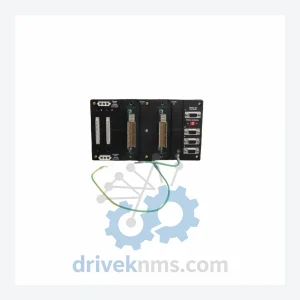
Foxboro RH924YF Mounted Modular Controller – Obsolete I/A Series Spare Part
Foxboro RH924YF is listed for I/A Series RFQ review. Confirm quantity, condition and destination before quotation.
RFQ-ready industrial model
Model: P0916ACOB
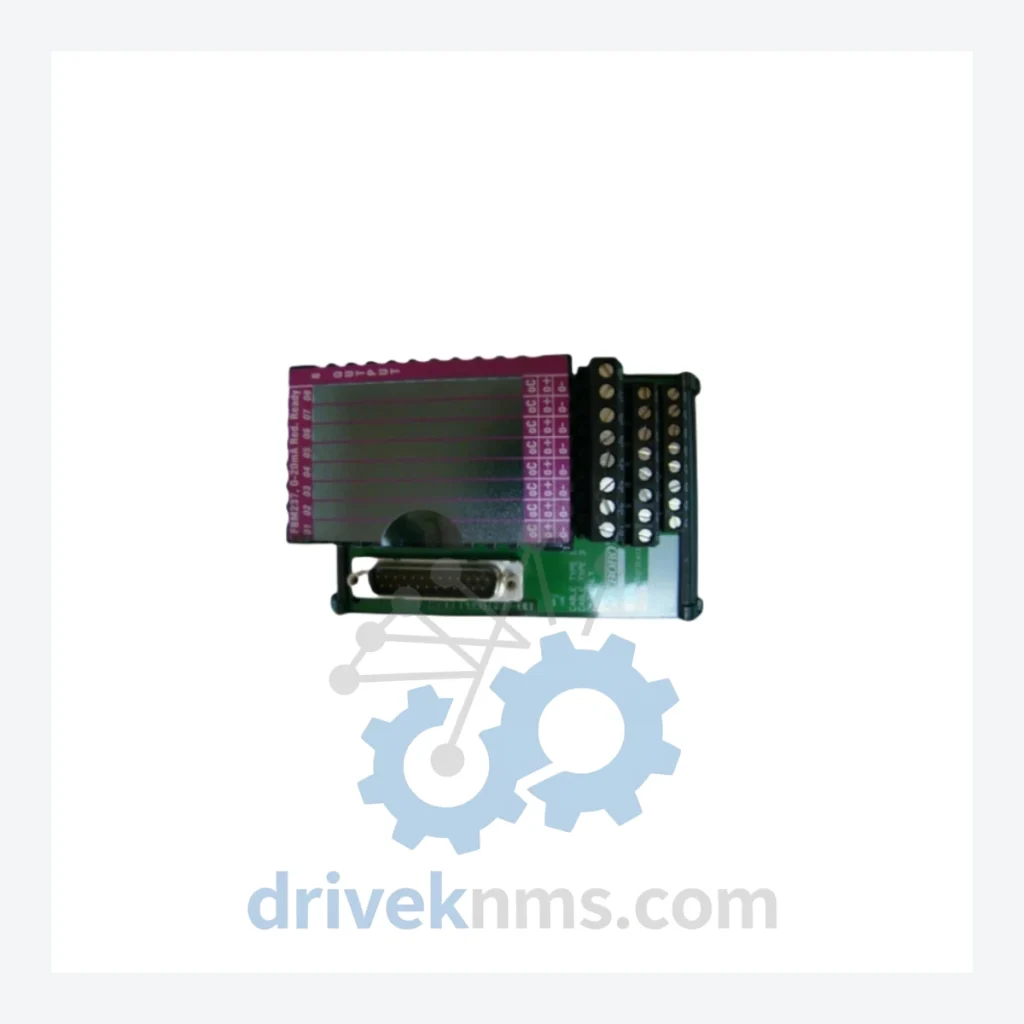
Product Overview
Commercial availability is handled through direct RFQ, model verification and export-oriented follow-up rather than public cart checkout.
Datasheet Preview
Use attached product manuals when available. If the manual is not public yet, request the full file directly through RFQ.
Commercial Path
Product pages on DRIVEKNMS are designed to verify model, brand and series first, then move the buyer into one clean quotation path.
Technical Dossier
When a thermocouple input module fails inside a Foxboro I/A Series distributed control system, the consequences extend far beyond a single loop going offline. In process industries — refining, petrochemical, power generation, pulp and paper — the I/A Series DCS is frequently the backbone of an entire production unit. A single failed module can trigger a controlled shutdown. A prolonged outage, caused by the inability to source a discontinued component, can force plant management into a decision no one wants to make: a multi-million dollar platform migration under operational pressure, with all the engineering, commissioning, and revalidation costs that entails.
The Foxboro P0916ACOB is a thermocouple input module designed for the Foxboro I/A Series control architecture. This series has been in service at industrial facilities worldwide for decades, and while Schneider Electric (which acquired Foxboro) has transitioned its portfolio toward newer platforms, a substantial installed base of I/A Series systems remains in active production service. Replacement modules for this generation are no longer manufactured. What exists in the market is finite.
DriveKNMS reviews sourcing options for this model through RFQ handling before quotation.
RFQ support for obsolete parts: Send the model number, required quantity and destination so DriveKNMS can confirm sourcing options before quotation.
| Parameter | Detail |
|---|---|
| Part Number | P0916ACOB |
| Manufacturer | Foxboro (now Schneider Electric) |
| Module Type | Thermocouple Input Module |
| Compatible Platform | Foxboro I/A Series DCS |
| Country of Origin | United States |
| Discontinuation Status | Discontinued / Obsolete – No longer in production |
| Typical Legacy Systems | Foxboro I/A Series (FoxCAE, FoxView, AW70, CP60, CP30 environments) |
The Foxboro I/A Series was engineered for long service life, and many facilities made capital investment decisions based on a 20–30 year operational horizon. The discontinuation of modules like the P0916ACOB does not retire those systems — it simply removes the safety net of OEM supply.
A single P0916ACOB module held in a controlled spare parts inventory eliminates that pressure. It converts an unplanned emergency into a planned maintenance event. For facilities operating on thin margins or under regulatory oversight, that distinction is material.
The I/A Series architecture uses a modular fieldbus structure, and thermocouple input modules occupy a defined slot in the I/O subsystem. There is no software-configurable workaround for a failed hardware module of this type. The physical component must be replaced with a compatible unit. That is the operational reality that makes RFQ-reviewed sourcing status of the P0916ACOB a legitimate line item in a plant's asset protection budget.
For plant management teams facing pressure to retire aging DCS infrastructure, the following framework has been applied successfully at facilities that have extended I/A Series operational life well beyond OEM support windows:
1. Conduct a module-level criticality audit. Map every I/O module in the system against its process function. Identify which modules, if failed, would cause a process shutdown versus a degraded-mode operation. The P0916ACOB, as a thermocouple input module, typically sits in a high-criticality position — temperature measurement is fundamental to process control and safety interlock logic in most continuous processes.
2. Establish a tiered spare parts inventory. Critical modules (those whose failure causes shutdown) warrant a minimum of two physical spares per installed unit. Secondary modules warrant one. This inventory should be stored in controlled conditions — temperature-regulated, humidity-controlled, with anti-static packaging — to prevent passive degradation of electronic components over a multi-year holding period.
3. Implement a scheduled swap-and-test protocol. Modules held in long-term storage should be rotated into service periodically and tested under live process conditions. This validates firmware compatibility, confirms hardware integrity, and prevents the scenario where a spare module — pulled from the shelf during an emergency — is itself found to be non-functional.
4. Document firmware and configuration baselines. For I/A Series systems, module configuration is held in the control database. Maintain current backups of all configuration files and document the firmware revision installed on each module type. This eliminates revalidation delays when a replacement module is installed.
5. Engage a specialist supplier for long-term procurement planning. OEM channels for discontinued modules are closed. The secondary market for verified I/A Series components is the operational supply chain for these systems. Establishing a relationship with a supplier who can provide condition-RFQ-reviewed sourcing status — and who maintains inventory visibility across multiple module types — reduces the risk of a single-point procurement failure during a critical outage.
Facilities that apply this framework consistently report the ability to sustain I/A Series operations for 5–10 years beyond the point at which OEM support was withdrawn, without compromising process safety or regulatory compliance.
Every P0916ACOB unit supplied by DriveKNMS passes a structured 5-step quality verification process before dispatch:
Step 1 – Visual and mechanical inspection. Full external examination for physical damage, connector pin condition, and housing integrity. Pins are inspected for corrosion, bending, and oxidation. Units with compromised connector interfaces are rejected at this stage.
Step 2 – Electrolytic capacitor assessment. Aged electrolytic capacitors are a primary failure mode in electronics manufactured in the 1990s and 2000s. Each unit is assessed for capacitor condition. Units showing evidence of electrolyte leakage, bulging, or ESR degradation are flagged and not supplied.
Step 3 – Firmware version verification. Where firmware revision data is accessible, the installed version is documented and cross-referenced against known compatibility requirements for the I/A Series platform. This information is provided to the customer as part of the delivery documentation.
Step 4 – Functional bench test. Units are powered and tested for basic operational response. This does not replicate full process conditions but confirms that the module initializes correctly and responds to input signals within expected parameters.
Step 5 – Packaging and storage verification. Units are packaged in anti-static materials with desiccant. Storage history, where known, is documented. Units with unknown or unverifiable storage histories are disclosed as such.
Condition grades (New, Refurbished-Tested, Used-Tested) are disclosed at the time of quotation. No unit is represented as new unless it is confirmed as such.
Drop-in replacement compatibility. The P0916ACOB is a direct hardware replacement for the same part number within the I/A Series I/O subsystem. No re-engineering of the control cabinet, no fieldbus reconfiguration, and no modification to the application software database is required. The module slots into the existing carrier, and the system recognizes it through the standard I/A Series hardware identification protocol.
Avoidance of engineering reconstruction costs. A platform migration triggered by a single failed module carries costs that extend well beyond hardware procurement: control system engineering, application software migration, factory acceptance testing, site acceptance testing, operator retraining, and regulatory revalidation where applicable. A verified spare module eliminates this cost vector entirely for the duration of the spare's service life.
Q: Can you source other Foxboro I/A Series modules?
A: Yes. DriveKNMS specializes in legacy industrial control system components across multiple platforms. If you have additional I/A Series module requirements, contact us with your part numbers and we will advise on availability.
Continue The Model Path
Move from this exact model into the matching system hub, brand archive, model-family archive or lifecycle sourcing route before sending a final RFQ list.
Related Paths
Foxboro RH924YF is listed for I/A Series RFQ review. Confirm quantity, condition and destination before quotation.
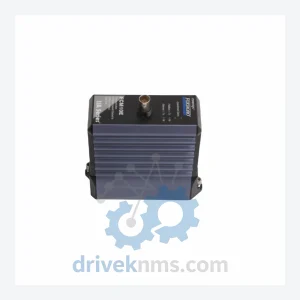
Foxboro FCM10E P0914YM is listed for I/A Series RFQ review. Confirm quantity, condition and destination before quotation.
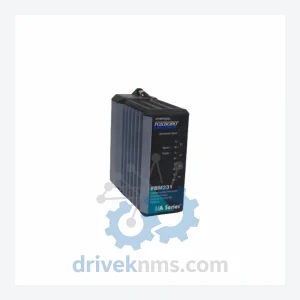
Foxboro AO2 is listed for I/A Series RFQ review. Confirm quantity, condition and destination before quotation.