
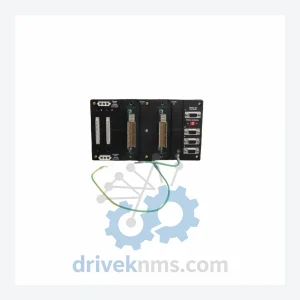
Foxboro RH924YF Mounted Modular Controller – Obsolete I/A Series Spare Part
Foxboro RH924YF is listed for I/A Series RFQ review. Confirm quantity, condition and destination before quotation.
RFQ-ready industrial model
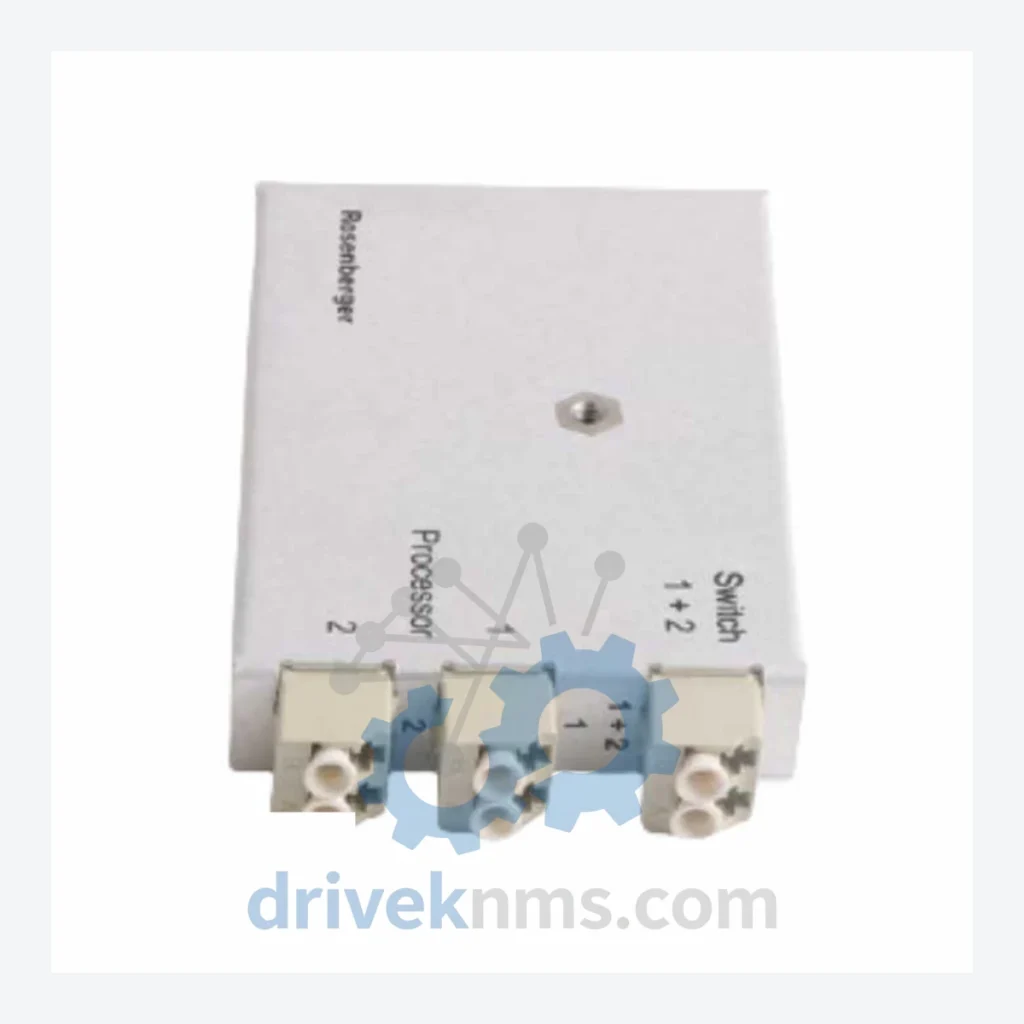
Model: P0926MX
Product Overview
Commercial availability is handled through direct RFQ, model verification and export-oriented follow-up rather than public cart checkout.
Datasheet Preview
Use attached product manuals when available. If the manual is not public yet, request the full file directly through RFQ.
Commercial Path
Product pages on DRIVEKNMS are designed to verify model, brand and series first, then move the buyer into one clean quotation path.
Technical Dossier
When a signal splitter fails inside a Foxboro I/A Series distributed control system, the consequences extend far beyond a single loop. The P0926MX sits at the intersection of field instrumentation and the control network — its failure can cascade into process shutdowns, loss of critical measurement data, and, in the worst case, force a plant-wide evaluation of whether to retire an entire DCS architecture that may have cost millions of dollars to engineer and commission. A full system migration to a modern DCS platform — including engineering, FAT/SAT, loop re-commissioning, and operator retraining — routinely runs between USD 2 million and USD 8 million for a mid-size process facility. Against that figure, securing a verified spare P0926MX is not a procurement decision; it is an asset protection decision.
RFQ support for obsolete parts: Send the model number, required quantity and destination so DriveKNMS can confirm sourcing options before quotation.
| Parameter | Detail |
|---|---|
| Manufacturer | Foxboro (Schneider Electric) |
| Part Number | P0926MX |
| Function | Signal Splitter / Signal Conditioner |
| Compatible System | Foxboro I/A Series DCS |
| Discontinuation Status | Obsolete – No longer manufactured or supported by OEM |
| Country of Origin | United States |
| Condition Available | New surplus / Professionally refurbished |
Note: Electrical parameters such as input/output signal range, power supply voltage, and loop impedance specifications should be verified against the original Foxboro I/A Series engineering documentation for your specific system revision. DriveKNMS does not publish unverified parameters.
The Foxboro I/A Series platform was deployed extensively across refining, petrochemical, pulp and paper, and power generation facilities from the 1980s through the 2000s. Many of these installations remain in active production service today — not because operators are unaware of the hardware age, but because the process knowledge embedded in the control strategy, the custom function blocks, and the decades of tuning data represent an engineering asset that cannot be migrated without significant risk and cost.
Maintaining a verified spare P0926MX on the shelf eliminates all three of those outcomes. It is the lowest-cost risk mitigation available for this failure mode.
Plant managers operating legacy DCS platforms face a structural problem: OEM support contracts expire, field replaceable units go obsolete, and the capital budget for full system replacement is rarely available on the timeline that hardware failure demands. The following maintenance strategy has been applied successfully across multiple facilities to extend I/A Series and comparable legacy DCS installations well beyond their nominal end-of-life dates.
1. Failure Mode Mapping: Identify the ten to fifteen modules in your DCS architecture that, if they failed, would cause a process shutdown or require a loop re-engineering effort. The P0926MX class of signal conditioning modules typically appears on this list. Prioritize spare procurement for these items above all others.
3. Firmware and Revision Control: Legacy modules often exist in multiple hardware revisions. Before procurement, confirm that the revision of the spare matches the revision installed in your system. Mismatched revisions can cause configuration incompatibilities that are not immediately apparent during installation.
4. Scheduled Condition Assessment: Every 24 to 36 months, pull critical modules from service during a planned shutdown and perform a bench-level inspection: check electrolytic capacitors for bulging or leakage, inspect connector pins for oxidation, and verify that the module passes its self-diagnostic routine. Modules that show early degradation should be replaced proactively, not reactively.
All P0926MX units supplied by DriveKNMS pass a structured 5-step quality process before dispatch review:
Step 1 – Visual and Mechanical Inspection: Full board-level inspection for physical damage, corrosion, and connector integrity. Pins are cleaned and inspected under magnification.
Step 2 – Electrolytic Capacitor Assessment: Capacitors are the primary failure point in aged electronics. Each unit is assessed for capacitor bulging, leakage, and ESR deviation. Units with degraded capacitors are either recapped with equivalent-spec components or removed from inventory.
Step 3 – Firmware Version Verification: Where applicable, firmware or EPROM revision is confirmed and documented. Customers are informed of the revision prior to shipment so compatibility with their installed system can be verified.
Step 4 – Functional Burn-In Test: Units are powered and exercised under load conditions to identify latent failures before dispatch review.
Q: How are RFQ terms confirmed?
A: Quantity, required condition, documentation needs, destination and sourcing route are confirmed during RFQ review before quotation.
The P0926MX is a direct form-fit-function replacement for the original installed unit. No re-engineering of the control loop is required. No changes to the DCS configuration database are necessary. Installation is a physical swap — remove the failed unit, install the verified spare, restore power, and confirm loop operation. This drop-in replacement characteristic is the defining value of sourcing the correct OEM part number rather than attempting a field-engineered substitute.
Avoiding a field re-engineering effort eliminates the associated costs: engineering hours, loop re-validation testing, potential process safety review, and the risk of introducing new failure modes through a non-standard design. For a plant operating under a tight maintenance budget, the P0926MX spare is the lowest-risk, lowest-cost path to restoring loop integrity.
Q: How do I know the unit is new or properly refurbished, not a counterfeit?
A: All units are sourced through documented industrial channels. Refurbished units are clearly identified as such, with a condition report included. We do not mix new and refurbished units in the same shipment without explicit disclosure.
Q: Can you support multi-unit or repeat RFQ requests?
A: Yes. Send the model list, target quantity and destination so DRIVEKNMS can review sourcing options and quote the requirement as a project RFQ.
Continue The Model Path
Move from this exact model into the matching system hub, brand archive, model-family archive or lifecycle sourcing route before sending a final RFQ list.
Related Paths
Foxboro RH924YF is listed for I/A Series RFQ review. Confirm quantity, condition and destination before quotation.
Foxboro FCM10E P0914YM is listed for I/A Series RFQ review. Confirm quantity, condition and destination before quotation.
Foxboro AO2 is listed for I/A Series RFQ review. Confirm quantity, condition and destination before quotation.