
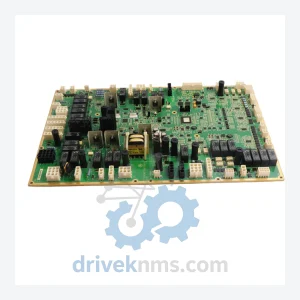
GE IS200WETBH1BAA Elevator Control Board – Obsolete Speedtronic Spare Part
General Electric IS200WETBH1BAA is listed for Speedtronic RFQ review. Confirm quantity, condition and destination before quotation.
RFQ-ready industrial model
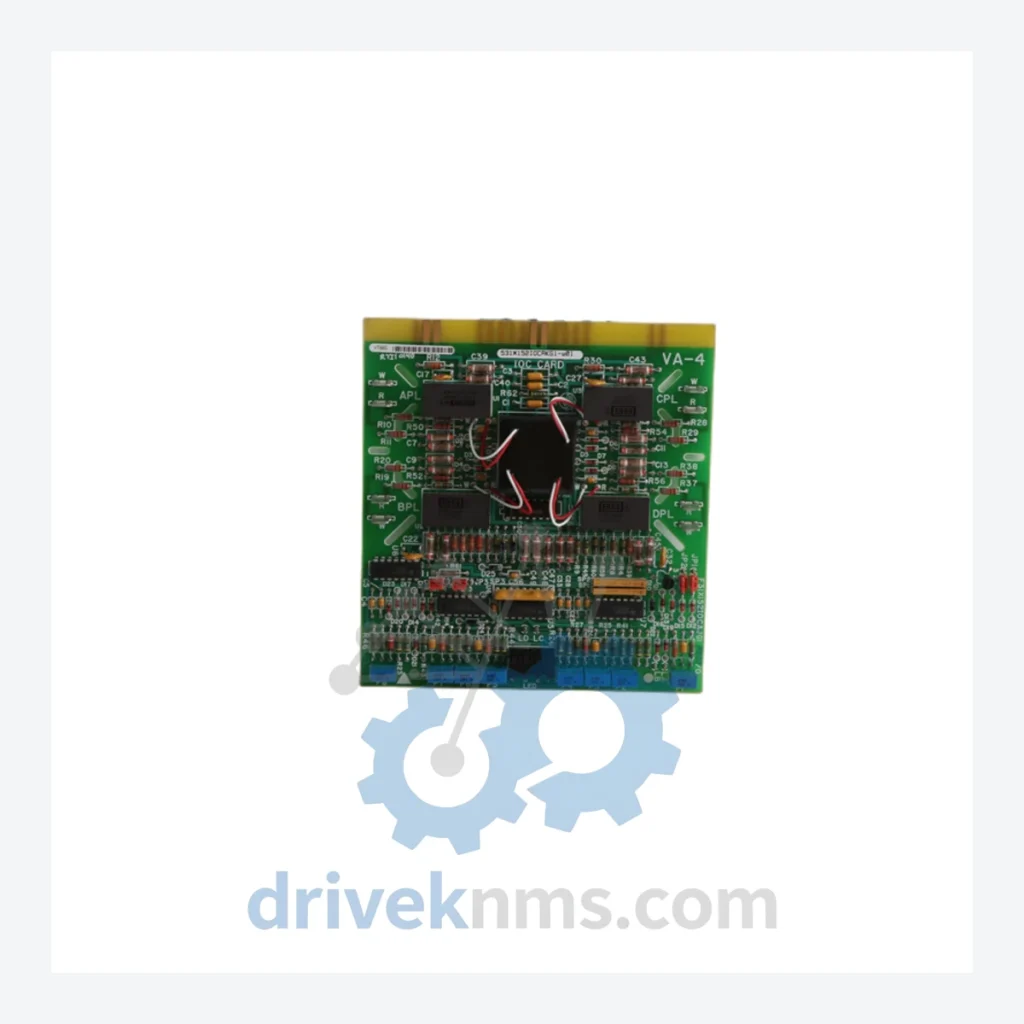
Model: 531X152IOCAKG1
Product Overview
Commercial availability is handled through direct RFQ, model verification and export-oriented follow-up rather than public cart checkout.
Datasheet Preview
Use attached product manuals when available. If the manual is not public yet, request the full file directly through RFQ.
Commercial Path
Product pages on DRIVEKNMS are designed to verify model, brand and series first, then move the buyer into one clean quotation path.
Technical Dossier
The GE 531X series represents a core family of printed circuit board assemblies deployed within GE's Mark V, EX2100, and LCI (Load Commutated Inverter) turbine and excitation control platforms. These modules are installed across heavy industrial sectors including petrochemical refineries, nuclear power stations, offshore platforms, combined-cycle gas turbine (CCGT) plants, and large-scale hydroelectric facilities. The 531X board family provides the analog I/O, digital I/O, overcurrent protection, firing pulse generation, and communication backbone functions that are critical to continuous turbine and drive system operation. Due to the long operational lifecycles of GE Mark V and EX2100 installations—commonly 20 to 35 years—the 531X series has entered a mature-to-end-of-life phase, making reliable spare parts sourcing a primary concern for plant maintenance engineers worldwide.
The 531X board family was introduced as part of GE's transition from relay-based turbine protection to fully digital, microprocessor-controlled systems in the late 1980s and early 1990s. The Mark V platform, which the 531X series primarily supports, replaced the Mark IV and Mark II systems and introduced triple-redundant TMR (Triple Modular Redundancy) control architecture. Within this architecture, 531X boards are distributed across the R, S, and T control processors as well as the I/O expansion racks.
Early 531X variants used through-hole component technology with EPROM-based firmware. Mid-generation revisions introduced surface-mount components, improved EMI shielding, and expanded diagnostic LED arrays. Later revisions added compatibility with GE's EX2100 static excitation system and the LCI variable-frequency drive platform. As GE transitioned customers toward the Mark VIe and Mark VIeS platforms from the mid-2000s onward, the 531X series was formally discontinued from active production. No direct plug-and-play replacement exists for most 531X part numbers within the Mark V architecture; functional substitution requires engineering evaluation and in some cases firmware re-flashing.
Compatibility constraints are significant: 531X boards are backplane-specific, and substitution across sub-families (e.g., using a 531X115 in a slot designed for a 531X152) requires verification of connector pinout, voltage rail, and firmware revision compatibility. Plants operating Mark V systems beyond OEM support windows must maintain a dedicated 531X spare parts inventory to avoid unplanned outages.
The following SKUs represent verified, commonly stocked members of the GE 531X series. Each entry reflects the board's primary functional role within the Mark V, EX2100, or LCI control architecture.
531X152IOCAKG1: Overcurrent IOC protection card; monitors phase current thresholds and triggers protective trip signals in LCI and excitation systems.
531X111PRGAJG1: Pulse rate generator card; produces firing pulses for SCR gate drive circuits in LCI variable-frequency drive applications.
531X115APCAJG1: Analog process control card; handles analog signal conditioning and scaling for turbine control loop inputs.
531X121PCCAJG1: Power conversion control card; manages DC bus regulation and converter sequencing in LCI drive systems.
531X123LTCAJG1: Line transient control card; provides AC line voltage monitoring and transient suppression logic for excitation systems.
531X124LTCAJG2: Revised line transient control card; second-generation variant with updated component tolerances and improved thermal performance.
531X125PCCAJG1: Power conversion control card variant; alternate configuration for specific LCI frame sizes and voltage ratings.
531X127PCCAJG1: Power conversion control card; used in high-power LCI configurations with extended current rating support.
531X129LTCAJG1: Line transient control card; deployed in EX2100 excitation systems for generator field voltage regulation.
531X132APCAJG1: Analog process control card; second-generation variant with expanded channel count for multi-loop turbine applications.
531X135PCCAJG1: Power conversion control card; supports medium-voltage LCI configurations in compressor drive applications.
531X139PCCAJG1: Power conversion control card; used in retrofit LCI installations replacing older Mark II drive controllers.
531X145APCAJG1: Analog process control card; provides thermocouple and RTD input conditioning for turbine exhaust temperature monitoring.
531X148PCCAJG1: Power conversion control card; high-current variant for large-frame LCI systems in steel mill and petrochemical applications.
531X150IOCAKG1: Overcurrent IOC card; earlier revision of the 531X152 family, used in first-generation LCI protection circuits.
531X155PCCAJG1: Power conversion control card; late-series variant with enhanced diagnostic register support for Mark V I/O diagnostics.
531X158APCAJG1: Analog process control card; specialized variant for vibration monitoring signal conditioning in turbine protection systems.
The 531X board family presents specific quality control challenges due to its mixed through-hole and surface-mount construction, backplane-dependent power sequencing, and firmware-coupled functional behavior. DriveKNMS applies the following test protocol to all 531X modules prior to shipment:
Visual and mechanical inspection: Full board inspection under 10x magnification for solder joint integrity, component seating, connector pin condition, and PCB trace continuity. Boards with evidence of thermal damage, arc tracking, or corrosion are rejected at this stage.
Power rail verification: Each board is energized on a GE-compatible backplane simulator. All regulated voltage rails (+5V, ±15V, +24V as applicable) are verified against OEM tolerance specifications before functional testing begins.
Functional signal testing: For IOC cards such as the 531X152IOCAKG1, overcurrent threshold response is verified by injecting calibrated current signals and confirming trip output timing against GE specification sheets. For analog cards, channel linearity, offset, and gain accuracy are measured across the full input range. For pulse generator cards, firing pulse timing, width, and phase accuracy are verified using a calibrated oscilloscope.
Communication bus verification: Boards with serial or parallel backplane communication interfaces are tested for correct data frame transmission and reception under simulated Mark V rack conditions.
Burn-in cycle: All refurbished boards undergo a minimum 48-hour powered burn-in at elevated ambient temperature (45°C) to screen for latent component failures before final packaging and shipment.
Continue The Model Path
Move from this exact model into the matching system hub, brand archive, model-family archive or lifecycle sourcing route before sending a final RFQ list.
Related Paths
General Electric IS200WETBH1BAA is listed for Speedtronic RFQ review. Confirm quantity, condition and destination before quotation.
General Electric 531X160HFCACG1 is listed for Mark V RFQ review. Confirm quantity, condition and destination before quotation.
General Electric 531X171TMAAFG2 is listed for Controller Cards RFQ review. Confirm quantity, condition and destination before quotation.