
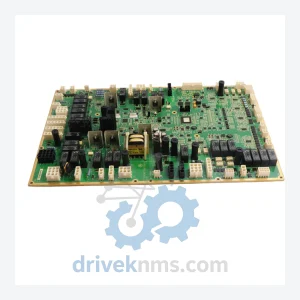
GE IS200WETBH1BAA Elevator Control Board – Obsolete Speedtronic Spare Part
General Electric IS200WETBH1BAA is listed for Speedtronic RFQ review. Confirm quantity, condition and destination before quotation.
RFQ-ready industrial model
Model: DS200FSAAG2ABA
Product Overview
Commercial availability is handled through direct RFQ, model verification and export-oriented follow-up rather than public cart checkout.
Datasheet Preview
Use attached product manuals when available. If the manual is not public yet, request the full file directly through RFQ.
Commercial Path
Product pages on DRIVEKNMS are designed to verify model, brand and series first, then move the buyer into one clean quotation path.
Technical Dossier
The GE DS200 series constitutes the core I/O, control, and power distribution layer of the GE Mark V and Mark VI turbine control systems — the dominant DCS platform deployed across gas turbine, steam turbine, and combined-cycle power generation facilities worldwide. Installations span petrochemical complexes, nuclear auxiliary systems, offshore platforms, and large-scale refineries across North America, Europe, the Middle East, and Asia-Pacific. The DS200 designation covers a broad family of printed circuit boards engineered for deterministic real-time control, high-noise-immunity backplane communication, and extended service life in Class I Division 2 environments. Due to the 20–40 year operational lifespan of turbine assets, DS200 modules remain in active demand long after GE's official production end-of-life announcements.
The DS200 platform was introduced as part of the Mark V control system in the late 1980s, replacing the earlier Mark IV relay-logic architecture with a fully digital, triple-redundant TMR (Triple Modular Redundancy) control structure. Early DS200 boards used through-hole component technology with EPROM-based firmware, requiring physical chip replacement for logic updates. Mid-generation revisions introduced surface-mount components, EEPROM configuration storage, and enhanced EMI shielding to address field reliability issues in high-voltage switchgear environments.
The transition from Mark V to Mark VI (circa 2000–2005) introduced the IONET and ARCNET communication backbones, replacing the earlier proprietary serial bus. Many DS200 boards were redesigned with IS200 or IS215 designations for Mark VI compatibility, though a significant installed base of Mark V systems continues to operate on original DS200 hardware. Cross-compatibility between DS200 and IS200 variants is board-specific and must be verified against the GE Mark V/VI Application Manual (GEH-6421). Firmware version mismatches between processor boards and I/O boards are a documented failure mode during unplanned replacements.
The following SKUs represent verified, commonly sourced DS200 series modules. Each entry reflects the board's primary functional role within the Mark V/VI control architecture.
Gate Firing & Power Conversion Boards
Analog I/O Modules
Digital I/O Modules
Processor & CPU Boards
Communication & Network Adapters
Power Supply Modules
GE formally discontinued production of the majority of DS200 series boards between 2008 and 2015, coinciding with the broader transition to the Mark VIe platform. However, the installed base of Mark V systems in power generation and petrochemical facilities remains substantial, with many operators extending asset life through 2030 and beyond under long-term service agreements.
DS200 series boards present specific test challenges due to their multi-layer backplane bus architecture, EPROM/EEPROM firmware dependencies, and mixed analog-digital signal paths. DriveKNMS applies a structured test protocol for each board type prior to shipment.
Gate firing boards (FSAA family) are tested under simulated load conditions using a dedicated firing circuit test rig that replicates the impedance profile of a standard IGBT bridge. PWM output timing, dead-band intervals, and fault latch behavior are verified against GE specification sheets. Analog I/O boards undergo full-channel calibration using traceable reference standards, with linearity and offset error documented per channel. Digital I/O boards are cycled through full contact closure and relay actuation sequences under rated voltage. Processor boards are powered in a Mark V-compatible rack with known-good I/O boards to verify boot sequence completion, IONET/ARCNET node registration, and diagnostic self-test pass status. All boards are inspected for capacitor ESR degradation, solder joint integrity, and corrosion on edge connectors prior to functional test entry.
Continue The Model Path
Move from this exact model into the matching system hub, brand archive, model-family archive or lifecycle sourcing route before sending a final RFQ list.
Related Paths
General Electric IS200WETBH1BAA is listed for Speedtronic RFQ review. Confirm quantity, condition and destination before quotation.
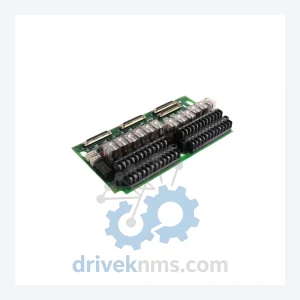
General Electric IS200TRLYH1BED IS200TRLYH1B is listed for Controller Cards RFQ review. Confirm quantity, condition and destination before quotation.
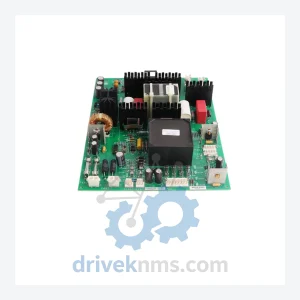
General Electric IS210AEPSG1AFC IS210AEPSG1 is listed for IS210 Series RFQ review. Confirm quantity, condition and destination before quotation.