
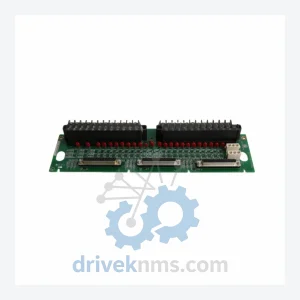
GE Fanuc IS200TBCIS2CCD I/O Terminal Board – Mark VI Redundant Control System
GE Fanuc IS200TBCIS2CCD is listed for Mark VI RFQ review. Confirm quantity, condition and destination before quotation.
RFQ-ready industrial model
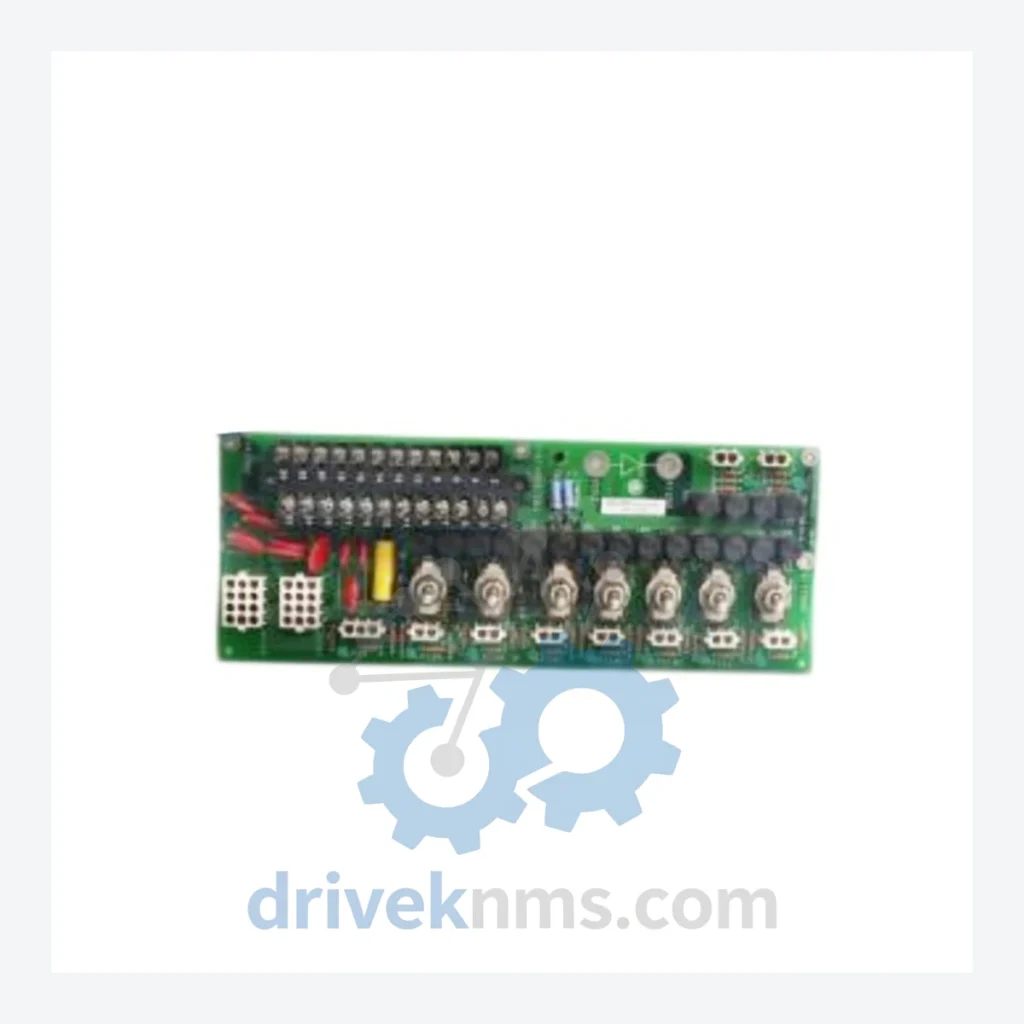
Model: IS200TBACIH1B
Product Overview
Commercial availability is handled through direct RFQ, model verification and export-oriented follow-up rather than public cart checkout.
Datasheet Preview
Use attached product manuals when available. If the manual is not public yet, request the full file directly through RFQ.
Commercial Path
Product pages on DRIVEKNMS are designed to verify model, brand and series first, then move the buyer into one clean quotation path.
Technical Dossier
DriveKNMS holds RFQ-reviewed sourcing status of the IS200TBACIH1B. For plant managers and reliability engineers who are already under pressure to justify keeping aging Mark VI infrastructure in service, this availability is a direct cost-avoidance instrument.
RFQ support for obsolete parts: Send the model number, required quantity and destination so DriveKNMS can confirm sourcing options before quotation.
| Parameter | Detail |
|---|---|
| Part Number | IS200TBACIH1B |
| Manufacturer | GE (General Electric) |
| Series | Speedtronic Mark VI |
| Board Function | Thermocouple & Analog Input Terminal Board |
| Compatible Controllers | GE Mark VI, Mark VIe turbine control systems |
| Typical Application | Gas turbine, steam turbine, combined-cycle power generation |
| Discontinuation Status | Obsolete – no longer manufactured by GE |
| Country of Origin | United States |
| Electrical Parameters | Consult unit nameplate and GE Mark VI engineering documentation |
The GE Speedtronic Mark VI platform was deployed extensively across gas turbine and combined-cycle power generation facilities from the 1990s through the 2000s. Thousands of units remain in active service globally, and the control logic embedded in these systems — tuned over years of operation — represents an engineering asset that cannot be replicated by simply installing a newer platform.
GE ceased production of Mark VI I/O boards including the IS200TBACIH1B as the product line transitioned to Mark VIe. Authorized repair channels have progressively narrowed. The result is a supply gap that leaves plant operators with three options: source the original board from specialist distributors, undertake a partial or full control system upgrade, or accept the operational risk of running without a verified spare.
The first option is the only one that preserves the existing control architecture without triggering a capital project. A single IS200TBACIH1B sourced at the right moment can defer a multi-million-dollar upgrade decision by five to ten years — provided the board is verified, tested, and ready to install.
For facilities operating multiple Mark VI-equipped turbines, the calculus is straightforward: the cost of holding one or two spare boards is a rounding error against the cost of an unplanned outage or a forced migration. The IS200TBACIH1B is not a commodity component. It is a system-critical asset that determines whether a turbine control system remains operational or becomes a liability.
Obsolete boards sourced from secondary markets carry inherent risk. DriveKNMS applies a five-step qualification process to every IS200TBACIH1B unit before it is offered for sale:
1. Visual and Physical Inspection — Full board examination for mechanical damage, pin corrosion, solder joint integrity, and connector condition. Corroded or oxidized pins are a primary failure mode in boards that have been stored or removed from service.
2. Electrolytic Capacitor Assessment — Aging electrolytic capacitors are the leading cause of latent failure in boards of this vintage. Each unit is evaluated for capacitor condition; boards with suspect capacitors are either reconditioned or rejected.
3. Firmware Version Verification — Where applicable, firmware revision is confirmed against known Mark VI compatibility matrices to ensure the board will communicate correctly with the host controller.
4. Functional Bench Test — Boards are powered and tested under controlled conditions to verify analog input channel response and signal integrity.
5. Documentation and Traceability — Each unit is logged with inspection records. Condition grade (New Surplus, Refurbished, or Tested Used) is disclosed prior to sale. No unit is represented as new unless it is factory-sealed new surplus.
The IS200TBACIH1B is a direct drop-in replacement for the same part number within the Mark VI architecture. Installation does not require reprogramming of the host controller, reconfiguration of I/O assignments, or modification of existing wiring terminations. The board interfaces with the Mark VI VCMI or VCRC controller cards through the standard backplane connection.
This matters operationally: a maintenance team can execute a board swap during a planned outage window without involving a controls engineer or a GE service representative. There are no licensing transfers, no firmware re-flashing procedures, and no engineering change orders required. The replacement restores the system to its prior operating state.
For plants that have already invested in Mark VI infrastructure — including the associated CIMPLICITY HMI, historian integration, and protection relay coordination — maintaining that architecture with verified spare boards is a lower-cost strategy than any migration path currently available.
The pressure to retire aging control systems is real, but it is rarely driven by technical necessity alone. In most cases, the trigger is a parts availability crisis: a critical board fails, no replacement can be sourced, and the plant is forced into an emergency upgrade on the worst possible timeline and budget.
The countermeasure is deliberate spare parts management. For Mark VI-equipped facilities, a structured approach to critical board inventory — covering the I/O terminal boards, controller cards, and power supply modules most likely to fail — can extend the operational life of the control system by five to ten years beyond what would otherwise be achievable.
The IS200TBACIH1B represents exactly the type of component that should be held as a site spare. It is a high-consequence single point of failure: if it fails and no replacement is available, the turbine it controls cannot operate. Holding one verified spare eliminates that risk entirely at a cost that is negligible relative to the asset it protects.
Plant managers facing board-level obsolescence decisions should evaluate the following before committing to a system upgrade: the actual failure rate of the boards in question, the current sourcing status and cost of verified spares, and the true all-in cost of migration including engineering, commissioning, operator retraining, and production loss during cutover. In the majority of cases, a targeted spare parts strategy is the more defensible financial decision.
Q: How are RFQ terms confirmed?
A: Quantity, required condition, documentation needs, destination and sourcing route are confirmed during RFQ review before quotation.
Should I hold more than one spare?
For facilities with multiple Mark VI-equipped turbines, holding two spares per critical board type is a standard reliability practice. Given the declining availability of IS200TBACIH1B units on the secondary market, procurement decisions made now will be more cost-effective than those made under emergency conditions.
Can you source other Mark VI boards?
Yes. DriveKNMS maintains inventory across the GE Mark VI I/O board range. Contact us with your full part number list for availability and pricing.
Continue The Model Path
Move from this exact model into the matching system hub, brand archive, model-family archive or lifecycle sourcing route before sending a final RFQ list.
Related Paths
GE Fanuc IS200TBCIS2CCD is listed for Mark VI RFQ review. Confirm quantity, condition and destination before quotation.
General Electric IS200DSPXH1D is listed for Mark VI RFQ review. Confirm quantity, condition and destination before quotation.
General Electric IS200BICLH1AED is listed for Mark VI RFQ review. Confirm quantity, condition and destination before quotation.