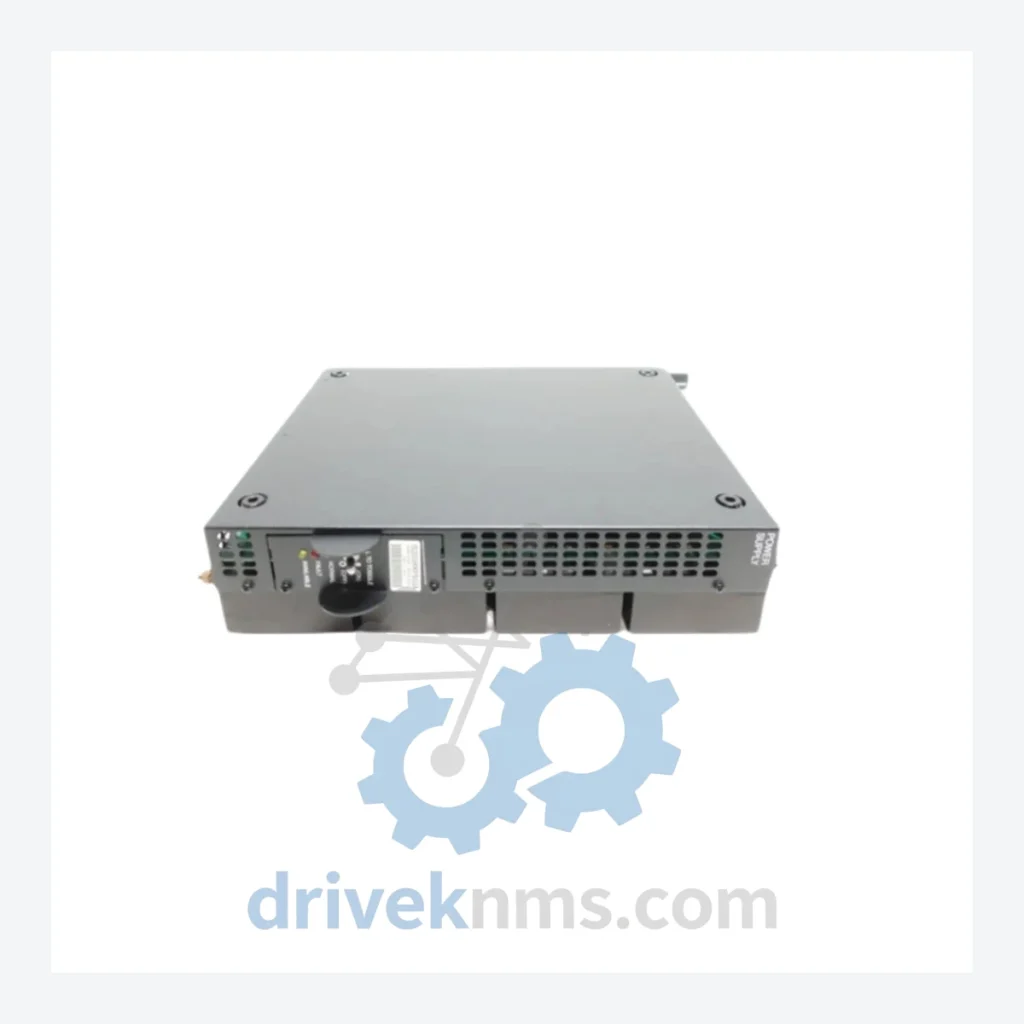
GE Mark VI IS200 Series Modules: IS2020RKPSG2A

Model: IS2020RKPSG2A

Series Mark VI
Model IS2020RKPSG2A
RFQ-ready model route Obsolete and surplus sourcing Export follow-up by model list

Product Overview

Commercial availability is handled through direct RFQ, model verification and export-oriented follow-up rather than public cart checkout.

Datasheet Preview

Datasheet Preview

Use attached product manuals when available. If the manual is not public yet, request the full file directly through RFQ.

Request Full Manual

Commercial Path

Use This Page To Confirm The Model, Then Move To RFQ

Product pages on DRIVEKNMS are designed to verify model, brand and series first, then move the buyer into one clean quotation path.

Technical Dossier

Product Details And Specifications

GE Mark VI IS200 Series Technical Notes

The GE Mark VI turbine control system, built around the IS200 and IS2020 module families, represents one of the most widely deployed distributed control architectures in global heavy industry. Installed across gas turbine power plants, combined-cycle facilities, petrochemical complexes, nuclear auxiliary systems, and offshore oil & gas platforms, the Mark VI platform has accumulated decades of field-proven operational history. Its modular I/O architecture, deterministic real-time processing, and redundant communication backbone made it the reference standard for turbine control from the mid-1990s through the 2010s. The IS2020RKPSG2A is a representative module within this ecosystem — a rack power supply and signal conditioning assembly used in Mark VI simplex and TMR (Triple Modular Redundant) configurations.

The Evolution of Mark VI IS200 Architecture

GE's turbine control lineage progressed from the Mark I relay-based systems of the 1960s through the Mark IV and Mark V digital platforms, culminating in the Mark VI, which introduced a fully networked, IEC 61131-3-compatible control environment. The IS200 module series was introduced as the hardware backbone of the Mark VI, replacing the earlier DS200 (Mark V) modules. Key architectural milestones include:

  • Mark V (DS200 series, ~1991–1998): First fully digital turbine controller; proprietary ARCNET communication; non-redundant I/O by default.
  • Mark VI (IS200 series, ~1995–2012): Introduced IONet (100 Mbps Ethernet-based deterministic network); TMR redundancy standard; modular rack system with hot-swap capability.
  • Mark VIe (IS200/IS420 series, ~2005–present): Ethernet-native I/O; IEC 61850 compatibility; expanded to non-turbine BOP (Balance of Plant) control.
  • Mark VIeS (IS200 series, ~2012–present): Safety-instrumented system (SIS) variant; SIL 2/3 certified; used in burner management and emergency shutdown applications.

Compatibility between IS200 and IS2020 modules is rack- and firmware-dependent. Substitution across Mark VI and Mark VIe generations requires engineering validation of IONet protocol version, power rail voltage, and I/O signal mapping.

IS200 / IS2020 Full Catalog & Functionalities (SKU List)

The following SKUs represent verified, commonly stocked modules within the GE Mark VI IS200 and IS2020 families, classified by functional category:

Power Supply & Rack Infrastructure

  • IS2020RKPSG2A: Mark VI rack power supply / signal conditioning assembly; provides regulated DC power rails to I/O modules within the MKVI control rack.
  • IS200EPCTG1A: Exciter protection and control terminal board; interfaces generator excitation system to Mark VI controller.
  • IS200PSDAG1A: Power supply distribution assembly; distributes 28 VDC and 5 VDC to downstream I/O terminal boards.
  • IS200TPROS1A: Rack power supply output board; monitors and distributes rack-level power with fault detection.

CPU / Controller Modules

  • IS200UCVEH2A: Mark VI main controller board (UCVE); dual-core processor; hosts application logic and IONet communication stack.
  • IS200UCVEH2B: Revised UCVE controller; updated firmware compatibility for Mark VIe migration path.
  • IS200VCRCH1B: VME controller rack card; manages rack-level arbitration in TMR configurations.
  • IS200DSPXH1D: Digital signal processor expansion board; handles high-speed analog computation tasks.

Analog Input (AI) Modules

  • IS200TBAIH1C: Analog input terminal board; 16-channel, 4–20 mA / 0–10 V; used for process variable acquisition (pressure, temperature, flow).
  • IS200AEPAH1A: Analog input/output expansion board; supports thermocouple and RTD inputs with cold-junction compensation.
  • IS200TRLYH1C: Analog relay output terminal board; 16-channel relay driver for alarm and trip functions.

Digital Input (DI) / Digital Output (DO) Modules

  • IS200TBCIH1C: Contact input terminal board; 24-channel dry-contact digital input; used for limit switches, valve position feedback.
  • IS200TBCOH1C: Contact output terminal board; 16-channel relay output; drives solenoid valves and motor starters.
  • IS200EDCFH1A: Digital I/O expansion card; mixed DI/DO configuration for compact rack installations.

Communication & Network Adapters

  • IS200ENETG1A: Ethernet network interface card; provides 100BASE-TX IONet connectivity; required for Mark VI to DCS gateway integration.
  • IS200STCIH1A: Serial communication interface board; RS-232/RS-485; used for legacy MODBUS RTU device integration.
  • IS200VSVOH1B: Servo valve output board; high-current analog output for electrohydraulic servo valve control (fuel, IGV, bypass).

Quality Control for the IS200 / IS2020 Range

IS200 and IS2020 modules incorporate complex multi-layer PCBs with proprietary ASICs, high-density backplane connectors (DIN 41612 variants), and firmware stored in flash or EEPROM devices. Standard visual inspection is insufficient for these assemblies. DriveKNMS applies a structured test protocol specific to the Mark VI hardware architecture:

  • Backplane connector inspection: Pin-by-pin continuity and impedance check on all J1/J2 DIN connectors; rejection threshold set at >0.5 Ω contact resistance.
  • Power rail verification: Load-regulated bench test of all DC output rails (5 V, 15 V, 28 V) under simulated rack load conditions.
  • IONet communication test: Module is inserted into a live Mark VI test rack; IONet packet integrity and latency are verified against GE specification GEH-6421.
  • I/O channel functional test: Each analog and digital channel is exercised across its full input/output range using calibrated signal sources and measurement equipment.
  • Firmware version audit: EEPROM contents are read and compared against the known-good firmware matrix for the specific module revision.
  • Thermal cycling: Modules are subjected to a 0–55 °C thermal cycle prior to final acceptance to screen latent solder joint defects.

Continue The Model Path

Use system, brand and series routes to compare related published models.

Move from this exact model into the matching system hub, brand archive, model-family archive or lifecycle sourcing route before sending a final RFQ list.

WhatsApp Prefilled Inquiry Email sale@driveknms.com Phone +86 18359293191 Top Back To Top