
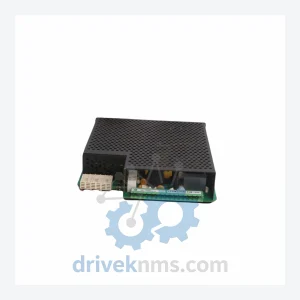
GE URSHB Power Supply Module – Obsolete UR Series Spare Part
GE Grid Solutions URSHB UR SHB is listed for UR Series RFQ review. Confirm quantity, condition and destination before quotation.
RFQ-ready industrial model
Model: UR8MH
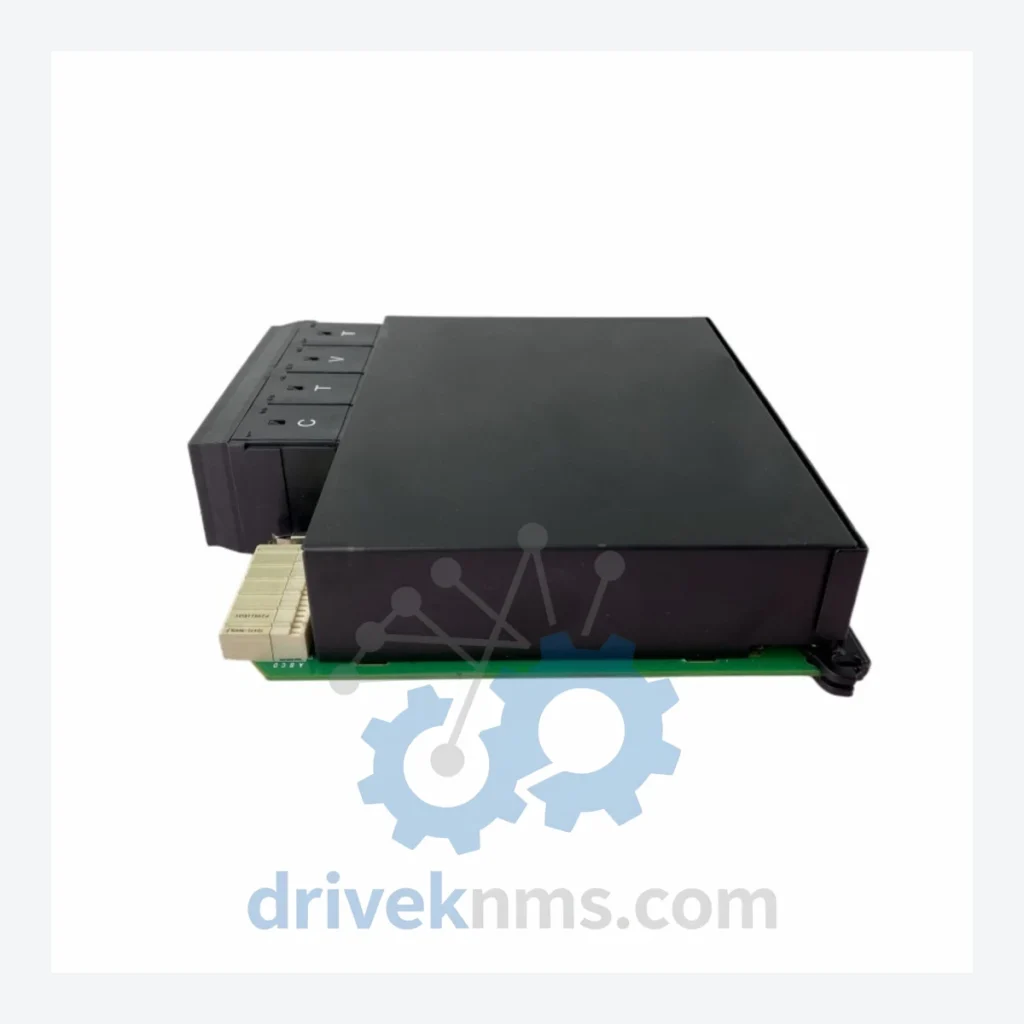
Product Overview
Commercial availability is handled through direct RFQ, model verification and export-oriented follow-up rather than public cart checkout.
Datasheet Preview
Use attached product manuals when available. If the manual is not public yet, request the full file directly through RFQ.
Commercial Path
Product pages on DRIVEKNMS are designed to verify model, brand and series first, then move the buyer into one clean quotation path.
Technical Dossier
RFQ support for obsolete parts: Send the model number, required quantity and destination so DriveKNMS can confirm sourcing options before quotation.
| Parameter | Detail |
|---|---|
| Manufacturer | GE Grid Solutions (formerly GE Multilin) |
| Part Number | UR8MH |
| Series | UR (Universal Relay) Series |
| Module Function | CT/VT Input Module (Current Transformer / Voltage Transformer Interface) |
| Platform Compatibility | GE UR Series chassis (T35, T60, L90, D60, C60, F60, G60, B30, B90, and related UR platform relays) |
| Discontinuation Status | Discontinued – No longer in active GE production |
| Country of Origin | United States |
| Typical Application | Substation protection, industrial power distribution, utility feeder protection |
Note: Electrical parameters specific to your chassis configuration should be verified against your original GE UR Series order code and relay documentation. DriveKNMS does not publish unverified specifications.
The GE UR Series was engineered for long-service-life deployment. Many installations commissioned in the early 2000s remain in active protection service today — and are expected to remain so for another decade or more. The problem is that GE's product lifecycle does not align with a substation's operational lifecycle. The UR8MH CT/VT module is the interface between the relay's processing core and the field-connected current and voltage transformers. Without a functioning UR8MH, the relay cannot acquire the analog inputs it needs to execute protection functions. There is no software workaround. There is no firmware patch. The module must be physically present and operational.
The professional approach is pre-failure procurement: identify the modules in your installed base that are no longer manufactured, and secure verified spares before the failure event forces your hand.
Protection relay infrastructure represents a capital investment that most facilities cannot replace on a short cycle. The following strategy is used by maintenance-focused operations to extend the productive life of UR Series and similar legacy relay platforms without committing to full system replacement:
1. Conduct a module-level obsolescence audit. Map every UR Series relay in your installation against current GE parts availability. Identify which modules — CT/VT inputs, power supplies, communications cards — are no longer in production. This audit converts an unknown risk into a managed one.
2. Establish a critical spare inventory. For each discontinued module type identified, procure a minimum of one verified spare per relay type in service. For high-criticality bays (main transformer protection, bus protection), two spares per module type is the defensible standard. The carrying cost of a spare module is a fraction of one hour of unplanned outage.
3. Source from verified secondary market suppliers. Not all secondary market inventory is equal. Modules must be inspected for electrolytic capacitor condition, firmware version compatibility, and connector integrity before being placed in a critical spare inventory. DriveKNMS applies a structured QA process to every unit we supply.
4. Document firmware and configuration baselines. Before any module swap, ensure relay configuration files are backed up and firmware versions are documented. UR Series modules must be compatible with the relay's firmware revision. This is a commissioning detail that is frequently overlooked until it causes a problem during an emergency replacement.
5. Plan the replacement window. A pre-sourced spare with a documented swap procedure converts a potential emergency outage into a planned maintenance event. The difference in cost and operational disruption between those two scenarios is substantial.
DriveKNMS applies a 5-step inspection protocol to every UR8MH unit before it is offered for sale:
Step 1 – Visual and mechanical inspection. Full examination of the module housing, connector pins, and PCB surface for physical damage, corrosion, or evidence of thermal stress.
Step 2 – Electrolytic capacitor assessment. Capacitor aging is the primary failure mode in modules of this generation. Each unit is inspected for capacitor bulging, leakage, and ESR degradation. Units with compromised capacitors are not offered for sale.
Step 3 – Connector and pin integrity check. CT/VT input connectors are inspected for pin corrosion, deformation, and contact resistance. Corroded or deformed pins are a direct reliability risk in high-impedance measurement circuits.
Step 4 – Firmware version verification. Where accessible, firmware revision is documented and disclosed. Buyers are advised to verify compatibility with their specific relay chassis firmware before installation.
Drop-in replacement compatibility. The UR8MH is a module-format component designed for field replacement within the UR Series chassis. A correctly sourced UR8MH installs into the existing chassis slot without mechanical modification.
No relay reprogramming required. Replacing a CT/VT input module does not alter the relay's protection settings or configuration. Settings reside in the relay's non-volatile memory, not in the module itself. This eliminates the need for protection engineer involvement in a routine module swap.
No engineering redesign. Because the UR8MH is a direct form-fit-function replacement for the original module, there is no requirement to revise protection drawings, update relay coordination studies, or obtain utility approval for a design change. The relay continues to operate under its existing approved protection scheme.
Immediate deployment readiness. Units in DriveKNMS inventory are available for prompt shipment. For facilities managing an active failure event, contact us directly for expedited handling.
How do I know the unit is genuine GE and not a counterfeit?
All units sourced by DriveKNMS are inspected for GE part markings, date codes, and PCB construction consistent with genuine GE Multilin manufacturing. We do not source from unverified channels. If you require additional traceability documentation, discuss this with our team at the time of inquiry.
Should I buy more than one spare?
For any relay platform where the CT/VT module is no longer manufactured, the answer is yes. Secondary market availability will not improve over time. If you have multiple UR Series relays of the same chassis type in service, procuring two to three spare UR8MH units now is a lower-cost decision than sourcing under emergency conditions in 18 months.
Can you source other UR Series modules?
Yes. DriveKNMS specializes in obsolete and hard-to-find industrial automation and protection relay components. Contact us with your full part number and we will advise on availability.
Continue The Model Path
Move from this exact model into the matching system hub, brand archive, model-family archive or lifecycle sourcing route before sending a final RFQ list.
Related Paths
GE Grid Solutions URSHB UR SHB is listed for UR Series RFQ review. Confirm quantity, condition and destination before quotation.
GE Grid Solutions UR8LV UR 8LV is listed for UR Series RFQ review. Confirm quantity, condition and destination before quotation.
GE Grid Solutions UR7IH UR 7IH is listed for UR Series RFQ review. Confirm quantity, condition and destination before quotation.