Technical Dossier
Product Details And Specifications
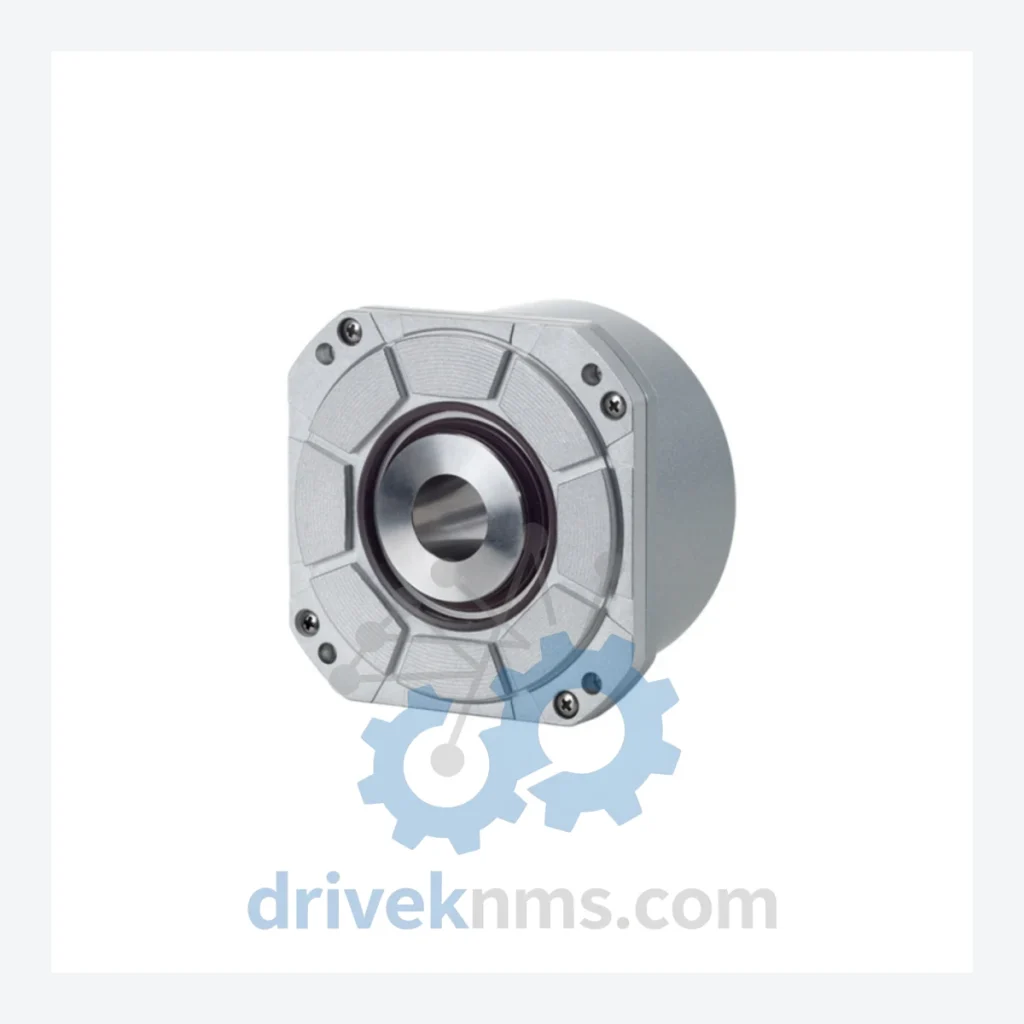
HEIDENHAIN RCN 223 16384 03S17-0D Absolute Angle Encoder – Obsolete RCN Series Spare Part
RFQ support for obsolete parts: Send the model number, required quantity and destination so DriveKNMS can confirm sourcing options before quotation.
Technical Specifications
| Parameter | Value |
| Manufacturer | HEIDENHAIN (Dr. Johannes Heidenhain GmbH) |
| Part Number / SKU | RCN 223 16384 03S17-0D |
| Series | RCN 200 (Discontinued) |
| Encoder Type | Absolute Angle Encoder (Rotary) |
| Signal Periods per Revolution | 16384 |
| Measuring Standard | DIADUR scale disk |
| Country of Origin | Germany |
| Discontinuation Status | End-of-Life / Obsolete – No longer manufactured |
| Typical System Compatibility | Siemens SINUMERIK 840D / 810D, HEIDENHAIN iTNC 530, TNC 426, TNC 430 |
| Application | Rotary tables, swivel heads, direct drive rotary axes on precision CNC machining centers |
Note: Electrical parameters not listed here are not confirmed from verified datasheets. DriveKNMS does not publish unverified specifications. Contact us for full technical documentation on available units.
Solving the Discontinued Hardware Crisis
The RCN 223 series was designed for direct integration into HEIDENHAIN's own controller ecosystem and into Siemens SINUMERIK drive systems via the EnDat interface protocol. Its mechanical form factor, shaft dimensions, and connector pinout are specific to the generation of rotary axes built around it. There is no drop-in modern equivalent that does not require mechanical rework.
Factories that built their precision machining capacity around 5-axis centers from the 2000s and early 2010s — Deckel Maho DMU series, Hermle C-series, Matsuura MAM series, and similar platforms — are now operating machines whose encoder supply chain has been discontinued. HEIDENHAIN's current RCN 8000 series, while technically superior, is not a direct mechanical or electrical substitute for the RCN 223 in most legacy installations.
The practical consequence: when an RCN 223 fails, the machine owner faces a binary choice. Either source an original-specification replacement unit, or commit to a re-engineering project that will take the axis offline for weeks and consume a significant portion of the machine's remaining book value in labor costs. For machines with 10–15 years of productive life remaining, the re-engineering path is rarely economically rational. The original spare is the correct answer — if it can be found.
This is the supply chain gap DriveKNMS exists to fill. We source, inspect, and hold verified units of discontinued HEIDENHAIN encoders for exactly this scenario.
Condition & Reliability Assurance
Discontinued encoder units sourced from the secondary market carry real risks: electrolytic capacitor degradation, firmware version mismatches, connector pin corrosion from improper storage, and scale disk contamination. DriveKNMS applies a structured 5-step inspection protocol to every RCN 223 unit before it is offered for sale.
Step 1 – Visual and Mechanical Inspection: Housing integrity, shaft runout check, connector body and pin condition. Any unit with physical damage to the scale disk housing is rejected.
Step 2 – Electrolytic Capacitor Assessment: Internal capacitors are evaluated for ESR (equivalent series resistance) drift. Aged capacitors are a primary failure mode in stored encoder electronics. Units with out-of-specification capacitors are either reconditioned or rejected.
Step 3 – Firmware Version Verification: The EnDat protocol version and firmware revision are read and documented. Compatibility with the target controller generation is confirmed before dispatch review.
Step 4 – Connector and Pin Corrosion Inspection: All connector pins are inspected under magnification. Oxidation is treated; pins with structural corrosion are flagged and the unit is downgraded or rejected.
Step 5 – Functional Signal Test: Where test equipment permits, the encoder output signal is verified against expected parameters. Test results are documented and available to the buyer on request.
Units that pass all five steps are classified as Verified Serviceable. Units that pass steps 1–4 but cannot be functionally tested are classified as Inspected – Untested and priced accordingly. Condition classification is disclosed in full before purchase.
Key Features for System Maintenance
The primary operational value of sourcing an original RCN 223 16384 03S17-0D is mechanical and electrical compatibility with the existing installation. The encoder mounts to the same shaft interface, connects to the same cable assembly, and communicates over the same EnDat protocol version as the original unit. No controller parameter changes are required. No mechanical adaptation plates are needed. No re-certification of the axis is triggered.
This is what drop-in replacement means in practice: the machine returns to production in hours, not weeks. The maintenance team does not need to involve the machine OEM's service department. The production schedule is not restructured around a multi-week re-engineering project.
For plant maintenance managers operating under pressure to maximize uptime on aging capital equipment, this is the lowest-cost, lowest-risk path to restoring a failed axis. The alternative — re-engineering the axis to accept a current-generation encoder — is a project, not a repair. It carries schedule risk, cost overrun risk, and the possibility of introducing new compatibility issues into a system that was otherwise running reliably.
Holding one verified RCN 223 spare in your maintenance inventory eliminates that entire risk category for the service life of the machine.
Extending Automation Asset Life by 5–10 Years: A Maintenance Strategy for Plant Management
A structured spare parts strategy for legacy HEIDENHAIN encoder-equipped machines should include the following elements:
1. Identify all encoder models installed across the fleet. A single machine model may use two or three different encoder variants across its axes. Document each one.
4. Define a replacement trigger. Encoders do not always fail catastrophically. Position drift, intermittent signal errors, and increased homing cycle time are early indicators of encoder degradation. Establishing a replacement trigger based on these indicators allows planned maintenance rather than emergency response.
5. Plan for the end of spare availability. At some point, original-specification RCN 223 units will no longer be available at any price. That is the point at which re-engineering becomes unavoidable. A proactive spare parts strategy delays that point by years and ensures that when re-engineering does occur, it is a planned capital project rather than a crisis response.
Q: How do I know the unit is genuine HEIDENHAIN and not a counterfeit?
A: All units are inspected for manufacturer markings, serial number format, and internal construction consistent with genuine HEIDENHAIN production. We do not source from channels known to carry counterfeit industrial components. Documentation of unit provenance is available on request.
Q: Do you provide technical documentation with the unit?
A: Available datasheets and inspection reports are provided with each shipment. For firmware version documentation and EnDat protocol specifications, contact us prior to purchase to confirm compatibility with your specific controller.