
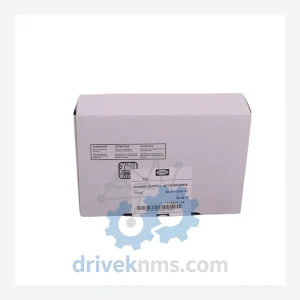
HIMA F7133 Power Distribution Module – Obsolete HIMatrix Spare Part
HIMA F7133 is listed for HIMatrix RFQ review. Confirm quantity, condition and destination before quotation.
RFQ-ready industrial model
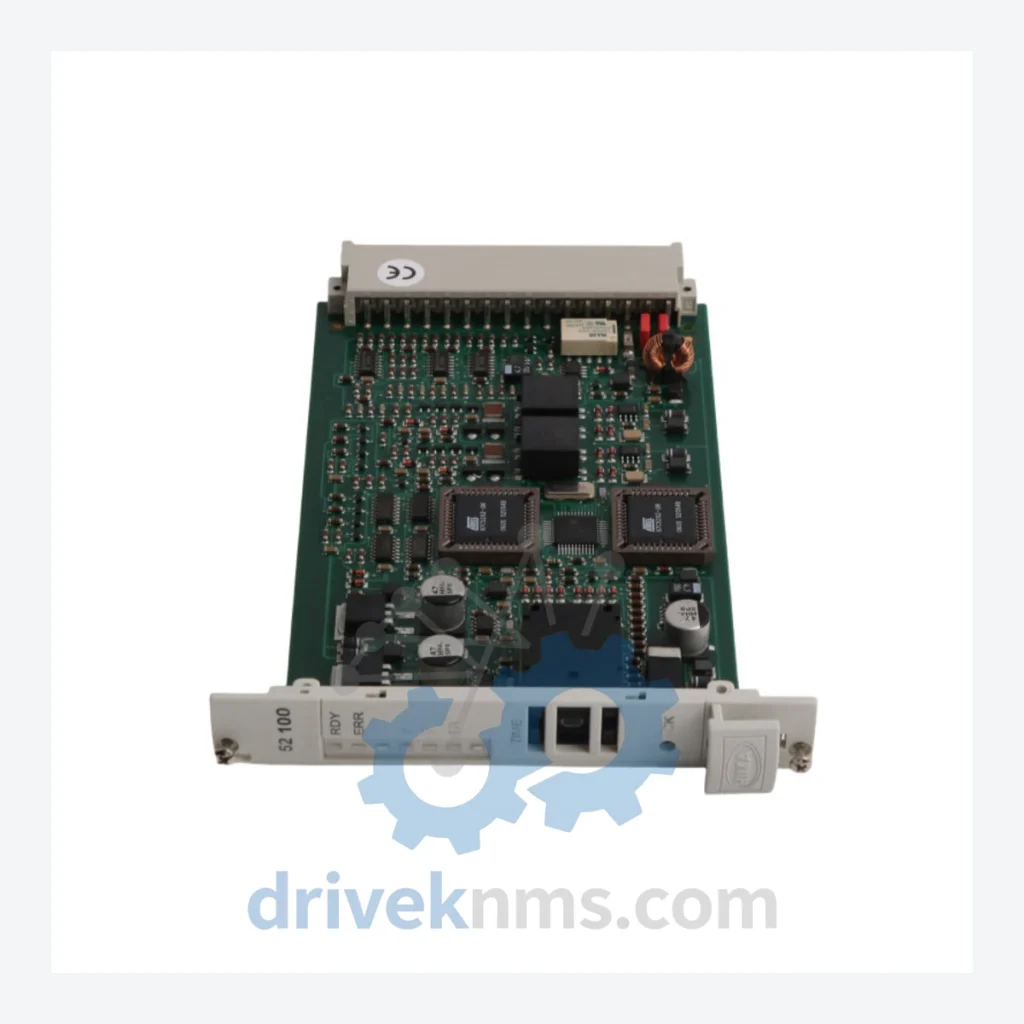
Model: 52100
Product Overview
Commercial availability is handled through direct RFQ, model verification and export-oriented follow-up rather than public cart checkout.
Datasheet Preview
Use attached product manuals when available. If the manual is not public yet, request the full file directly through RFQ.
Commercial Path
Product pages on DRIVEKNMS are designed to verify model, brand and series first, then move the buyer into one clean quotation path.
Technical Dossier
The HIMA F3 Series represents one of the most widely deployed safety programmable logic controller (SIL 3-certified) platforms in global heavy industry. Installed across petrochemical complexes, nuclear power stations, offshore platforms, LNG terminals, and refinery emergency shutdown systems (ESD), the F3 architecture has accumulated decades of field-proven reliability in environments where failure is not an option. The HIMA 52100 Delay Module is a functional timing component within this ecosystem, used to introduce configurable signal delays in safety-critical logic sequences — a requirement in burner management systems (BMS), turbine control, and process interlock chains.
HIMA (Paul Hildebrandt GmbH), headquartered in Brühl, Germany, engineered the F3 platform to meet IEC 61508 SIL 3 and IEC 61511 requirements. The series remains the backbone of installed safety instrumented systems (SIS) at facilities operated by Shell, BASF, Sinopec, Saudi Aramco, and comparable tier-1 operators globally. As the installed base ages, demand for certified spare parts — including the 52100 — continues from maintenance, repair, and operations (MRO) procurement teams worldwide.
The HIMA F3 platform was introduced in the late 1980s as a successor to earlier relay-based safety systems, establishing a modular backplane architecture that allowed incremental expansion without full system replacement. Early F3 configurations relied on parallel redundancy at the CPU level, with dedicated I/O modules communicating over a proprietary internal bus. The 5xxxx module numbering convention — which includes the 52100 — corresponds to the functional module tier: timing, signal conditioning, and auxiliary logic components that operate beneath the primary CPU and I/O layers.
Through the 1990s and 2000s, HIMA introduced the HIMatrix and HIQuad platforms as next-generation successors, incorporating Ethernet-based safety communication (PROFIsafe, SafeEthernet) and expanded diagnostic coverage. However, the F3 Series remained in active production and support through this period due to the long operational lifecycles of nuclear and petrochemical installations — facilities that cannot justify full SIS replacement during a 20-year plant lifecycle. Many F3 modules, including the 52100, are now classified as mature/end-of-production, making certified secondary-market sourcing the primary procurement path for maintenance teams.
Compatibility note: F3 modules are not directly interchangeable with HIMatrix or HIQuad hardware. Backplane bus protocols, power rail specifications, and firmware handshake sequences differ between generations. Replacement of any F3 module must be validated against the site's Safety Requirements Specification (SRS) and functional safety assessment records.
The following SKUs represent verified components within the HIMA F3 and associated safety module ecosystem. Each entry reflects a distinct functional role within the system architecture:
52100: Delay module; configurable signal timing for interlock and ESD logic sequences.
F3 DIO 20/8 01: Digital I/O module; 20 digital inputs, 8 digital outputs, SIL 3 rated.
F3 AI 8/4 01: Analog input module; 8 channels, 4–20 mA HART-compatible, SIL 2/3.
F3 AO 8/4 01: Analog output module; 8 channels, 4–20 mA, loop-powered.
F3 CPU 01: Central processing unit; dual-redundant safety CPU for F3 backplane.
F3 CPU 02: Enhanced CPU variant; increased scan cycle performance for large I/O configurations.
F3 PS 24 VDC 01: Power supply module; 24 VDC input, redundant rail output for F3 rack.
F3 PS 120/230 VAC 01: AC power supply module; universal voltage input, internal DC conversion.
F3 DO 16 01: Digital output module; 16 channels, relay-isolated, SIL 3 capable.
F3 DI 16 01: Digital input module; 16 channels, 24 VDC, short-circuit monitored.
F3 COM 01: Communication module; RS-485/RS-232 serial interface for legacy SCADA integration.
F3 ETH 01: Ethernet communication adapter; 10/100 Mbps, SafeEthernet protocol support.
F3 DP 01: PROFIBUS-DP master/slave module; GSD-file configurable, up to 12 Mbps.
F3 BM 01: Bus master module; coordinates internal backplane communication between CPU and I/O tiers.
F3 RIO 01: Remote I/O adapter; extends F3 I/O capacity over fiber-optic link to satellite racks.
F3 WD 01: Watchdog module; hardware-level process monitoring with independent trip output.
F3 MUX 01: Multiplexer module; consolidates multiple low-frequency signal channels onto single backplane slot.
52200: Counter/frequency module; pulse counting and rate measurement for rotating equipment monitoring.
52300: Signal conditioner module; galvanic isolation and level conversion for field instrument inputs.
HIMA F3 modules employ a proprietary backplane bus with hardware-encoded slot addressing and cyclic redundancy check (CRC) validation on all inter-module communication frames. DriveKNMS applies a structured test protocol to all F3 modules prior to dispatch:
Continue The Model Path
Move from this exact model into the matching system hub, brand archive, model-family archive or lifecycle sourcing route before sending a final RFQ list.
Related Paths
HIMA F7133 is listed for HIMatrix RFQ review. Confirm quantity, condition and destination before quotation.
HIMA F8650E is listed for HIMatrix RFQ review. Confirm quantity, condition and destination before quotation.
HIMA F7553 is listed for HIMatrix RFQ review. Confirm quantity, condition and destination before quotation.