Products / Hollysys / HOLLiAS Series
Hollysys HOLLiAS Series

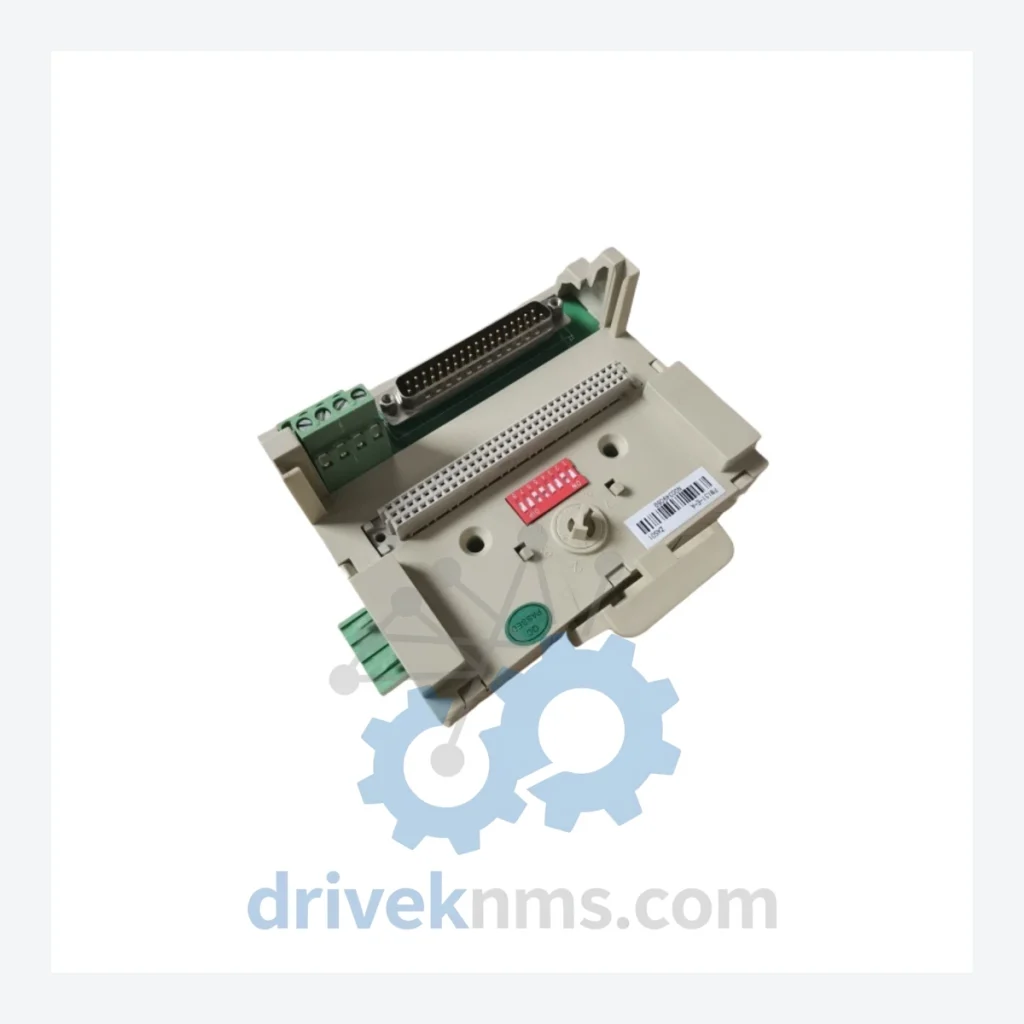
Hollysys FM131A Main Control Unit – Obsolete HOLLiAS Series Spare Part

Model: FM131A

Brand Hollysys
Series HOLLiAS Series
Model FM131A
RFQ-ready model route Obsolete and surplus sourcing Export follow-up by model list

Product Overview

Commercial availability is handled through direct RFQ, model verification and export-oriented follow-up rather than public cart checkout.

Datasheet Preview

Datasheet Preview

Use attached product manuals when available. If the manual is not public yet, request the full file directly through RFQ.

Request Full Manual

Commercial Path

Use This Page To Confirm The Model, Then Move To RFQ

Product pages on DRIVEKNMS are designed to verify model, brand and series first, then move the buyer into one clean quotation path.

Technical Dossier

Product Details And Specifications

Hollysys FM131A Main Control Unit – Obsolete HOLLiAS Series Spare Part

When a Hollysys FM131A fails on an active production line, the consequences are not limited to a single module replacement. For plants still operating on the HOLLiAS distributed control system architecture, this main control unit is the processing core of the entire control loop. Its failure does not trigger a module swap — it triggers a system-level crisis. A full DCS migration to a modern platform carries engineering costs that routinely exceed seven figures, plus months of downtime, revalidation, and retraining. DriveKNMS holds verified physical stock of the FM131A. For plant managers facing that calculation, the arithmetic is straightforward.

Technical Specifications

Part Number FM131A
Manufacturer Hollysys Automation Technologies
Series HOLLiAS DCS
Function Main Control Unit (MCU) – central processing and I/O coordination module
Country of Origin China
Discontinuation Status Discontinued / Obsolete – no longer in active production by OEM
Compatible Systems HOLLiAS MACS DCS platforms; legacy Hollysys process control architectures
Note on Parameters Electrical parameters not published here to prevent specification mismatch. Confirmed specs provided upon request with system documentation.

Solving the Discontinued Hardware Crisis

The HOLLiAS MACS platform was deployed extensively across petrochemical, power generation, and pharmaceutical manufacturing facilities throughout China and Southeast Asia during the 2000s and 2010s. The FM131A served as the main control unit within this architecture — responsible for scan cycle execution, I/O bus management, and inter-module communication. There is no software-only workaround when this unit fails. The control loop stops.

Hollysys has progressively phased out legacy HOLLiAS hardware in favor of its current-generation MACS V6 and SmartPro platforms. Spare parts for earlier-generation modules like the FM131A are no longer manufactured. The secondary market is the only viable supply channel.

Plants that invested in HOLLiAS infrastructure face a binary decision when critical modules fail: source the original hardware, or commit to a full system migration. Migration is not a maintenance decision — it is a capital project. It requires new engineering drawings, updated safety instrumented system (SIS) validation, operator retraining, and extended commissioning periods. For a mid-size process plant, total migration cost including lost production typically ranges from USD 800,000 to USD 3,000,000 depending on loop count and process complexity.

Sourcing a verified FM131A spare extends the operational life of the existing DCS by years, at a fraction of that cost. This is not a temporary fix — it is a documented asset protection strategy used by maintenance engineers across the industry.

How to extend your HOLLiAS DCS asset life by 5–10 years without a full migration:

  • Maintain a minimum two-unit FM131A buffer stock. One active spare is insufficient for a critical control node. Mean time between failures on legacy control hardware increases sharply after 15 years of continuous operation. A two-unit buffer provides coverage through a planned maintenance window without emergency procurement pressure.
  • Audit firmware revision levels across all installed FM131A units. Firmware version mismatches between redundant controllers are a documented source of failover instability. Standardizing firmware across the installed base is a low-cost intervention with measurable reliability impact.
  • Implement a scheduled capacitor inspection cycle. Electrolytic capacitors in control modules manufactured before 2015 are approaching or past their rated service life. Proactive inspection and replacement of aging capacitors — rather than waiting for module failure — is the single highest-return maintenance action available for legacy DCS hardware.
  • Document all I/O mapping and configuration parameters before any module swap. Configuration loss during an emergency replacement is a common cause of extended downtime. Maintaining current, verified configuration backups reduces recovery time from days to hours.
  • Negotiate a long-term supply agreement for critical obsolete modules. Spot market availability for discontinued parts decreases over time as existing inventories are consumed. Securing a multi-year supply arrangement with a verified distributor locks in availability and price before scarcity drives costs higher.

Condition & Reliability Assurance

DriveKNMS applies a five-step quality assurance process to all obsolete and legacy control hardware before shipment:

  • Step 1 – Visual and mechanical inspection: Full external examination for physical damage, pin corrosion, connector wear, and housing integrity. Units with compromised connectors or corroded pins are rejected at this stage.
  • Step 2 – Electrolytic capacitor assessment: Capacitors are the primary failure point in aged control modules. Each unit is assessed for capacitor bulging, leakage, and ESR deviation. Units with degraded capacitors are either reconditioned with OEM-equivalent components or removed from serviceable inventory.
  • Step 3 – Firmware version verification: The installed firmware revision is confirmed and documented. This information is provided to the buyer to ensure compatibility with the target system's existing firmware environment.
  • Step 4 – Functional power-on test: Where test infrastructure permits, units are powered and subjected to basic functional verification. Test results are documented and available upon request.
  • Step 5 – Anti-static packaging and condition grading: Units are graded as New (sealed OEM), Refurbished (reconditioned to serviceable standard), or Tested Used (functional, cosmetic wear acceptable). Grade is disclosed on the invoice and shipping documentation.

Key Features for System Maintenance

  • Drop-in replacement: The FM131A installs directly into the existing HOLLiAS rack without hardware modification. No backplane changes, no wiring alterations.
  • No reprogramming required: Control logic resides in the DCS configuration, not in the module itself. Replacing the FM131A does not require reloading or rewriting control programs, provided configuration backups are current.
  • Avoids engineering reconstruction costs: Substituting a compatible module eliminates the need for loop-by-loop re-engineering, updated P&ID documentation, and SIS revalidation that a platform migration would require.
  • Maintains existing operator interface: Operators continue working within the familiar HOLLiAS HMI environment. No retraining cost, no transition period productivity loss.
  • Preserves regulatory compliance status: For facilities operating under process safety management (PSM) or IEC 61511 frameworks, maintaining the validated DCS configuration avoids triggering a management of change (MOC) review cycle.

FAQ

Q: What warranty applies to an obsolete module like the FM131A?
A: DriveKNMS provides a 90-day warranty covering functional defects on all refurbished and tested-used units. New sealed units carry a 12-month warranty. Warranty terms are confirmed in writing on the sales order.

Q: How do I confirm the unit is genuine Hollysys hardware and not a counterfeit?
A: All units are sourced through documented supply channels. Hollysys part markings, board revision codes, and serial number formats are verified during intake inspection. Buyers may request pre-shipment photographs of the specific unit including board markings before payment is confirmed.

Q: Should I purchase more than one unit?
A: For any control node classified as critical — meaning its failure causes a process shutdown or safety system activation — maintaining a minimum of two spare units is the standard recommendation in industrial maintenance practice. Secondary market availability for discontinued modules decreases over time. Current stock levels cannot be guaranteed beyond the immediate order.

Q: Can you source FM131A units in volume for a long-term spares program?
A: Yes. Contact us directly to discuss volume requirements and long-term supply arrangements. We maintain sourcing relationships across multiple supply channels for legacy Hollysys hardware.

© 2026 DriveKNMS. Status: DRAFT

WhatsApp Prefilled Inquiry Email [email protected] Phone +86 18359293191 Top Back To Top