
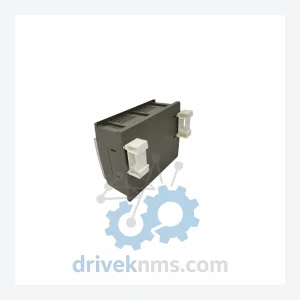
Honeywell XDL505 I/O Module FSC Series
Honeywell XDL505 is listed for Monitoring Systems RFQ review. Confirm quantity, condition and destination before quotation.
RFQ-ready industrial model
Model: 10307/1
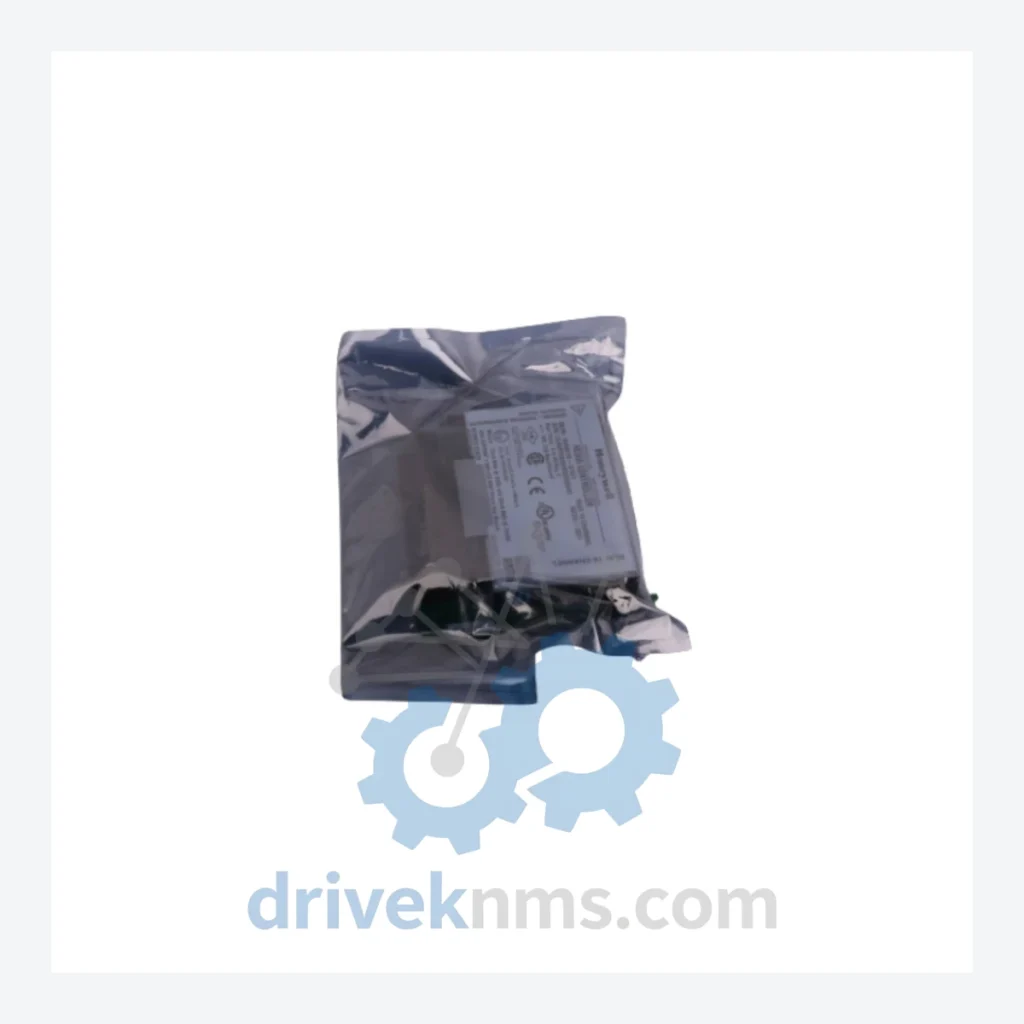
Product Overview
Commercial availability is handled through direct RFQ, model verification and export-oriented follow-up rather than public cart checkout.
Datasheet Preview
Use attached product manuals when available. If the manual is not public yet, request the full file directly through RFQ.
Commercial Path
Product pages on DRIVEKNMS are designed to verify model, brand and series first, then move the buyer into one clean quotation path.
Technical Dossier
The Honeywell 10307 Series proximity transducers are eddy-current (non-contact) displacement measurement devices engineered for continuous, high-reliability operation in heavy industrial environments. Deployed extensively in rotating machinery protection systems across petrochemical refineries, nuclear power stations, offshore platforms, and large-scale chemical processing facilities, the 10307 Series forms a core sensing layer in vibration monitoring and shaft displacement measurement architectures. These transducers are fully compatible with Honeywell's TDC 3000 and Experion PKS distributed control system (DCS) platforms, as well as third-party machinery protection systems conforming to API 670 standards. The 10307/1 variant is the primary single-channel proximity transducer in this family, designed for radial vibration and axial position measurement on turbines, compressors, pumps, and motors. Its eddy-current operating principle provides immunity to oil contamination, pressure, and temperature variations — critical factors in refinery and power generation environments where sensor reliability directly impacts plant uptime and safety system integrity.
The 10307 Series was introduced as part of Honeywell's machinery monitoring instrumentation portfolio during the expansion of DCS-integrated condition monitoring in the 1980s and 1990s. Early variants were designed to interface directly with Honeywell's PM (Process Manager) and HPM (High-Performance Process Manager) I/O subsystems, providing analog 4–20 mA or voltage output signals representing gap distance and vibration amplitude. As industrial standards evolved — particularly with the widespread adoption of API 670 (Machinery Protection Systems) — the 10307 Series was refined to meet tighter linearity, temperature coefficient, and EMI immunity specifications. The series operates on the eddy-current principle: a high-frequency oscillator drives a coil in the probe tip, and the impedance change caused by a conductive target (typically a steel shaft) is converted to a DC voltage proportional to gap distance. Driver/oscillator electronics are housed in a separate extension cable and driver unit, making the 10307 a three-component system: probe, extension cable, and driver. Compatibility between these three components is version-locked — mixing components from different calibration sets will produce measurement errors. As the TDC 3000 platform has entered its extended lifecycle support phase and Experion PKS has become the current-generation DCS, the 10307 Series occupies a mature/legacy classification. Honeywell continues to provide lifecycle support, but new installations are directed toward the 3300 XL Series and compatible Bently Nevada 3500 Series alternatives. For existing installations, the 10307 remains the only drop-in compatible replacement without recalibration of the monitoring system.
The following SKUs represent the verified, commonly stocked models within the Honeywell 10307 proximity transducer family. Each model is classified by function and physical configuration:
Proximity Probes (Sensing Elements)
Extension Cables
Driver / Oscillator Units
Calibration & Accessory Modules
Proximity transducer systems require system-level verification — probe, cable, and driver must be tested as a matched set. DriveKNMS applies the following test protocol to all 10307 Series units:
Continue The Model Path
Move from this exact model into the matching system hub, brand archive, model-family archive or lifecycle sourcing route before sending a final RFQ list.
Related Paths
Honeywell XDL505 is listed for Monitoring Systems RFQ review. Confirm quantity, condition and destination before quotation.
Honeywell U2-1018S-PF is listed for Monitoring Systems RFQ review. Confirm quantity, condition and destination before quotation.
Honeywell MC-GHAO11 51309540-175 is listed for Monitoring Systems RFQ review. Confirm quantity, condition and destination before quotation.