
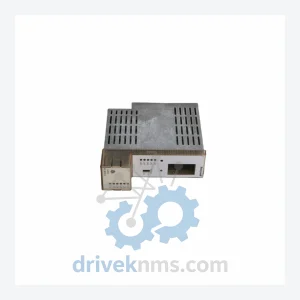
Honeywell XC5010C CPU Module
Honeywell XC5010C is listed for Servo Drives RFQ review. Confirm quantity, condition and destination before quotation.
RFQ-ready industrial model
Model: 51305725-100
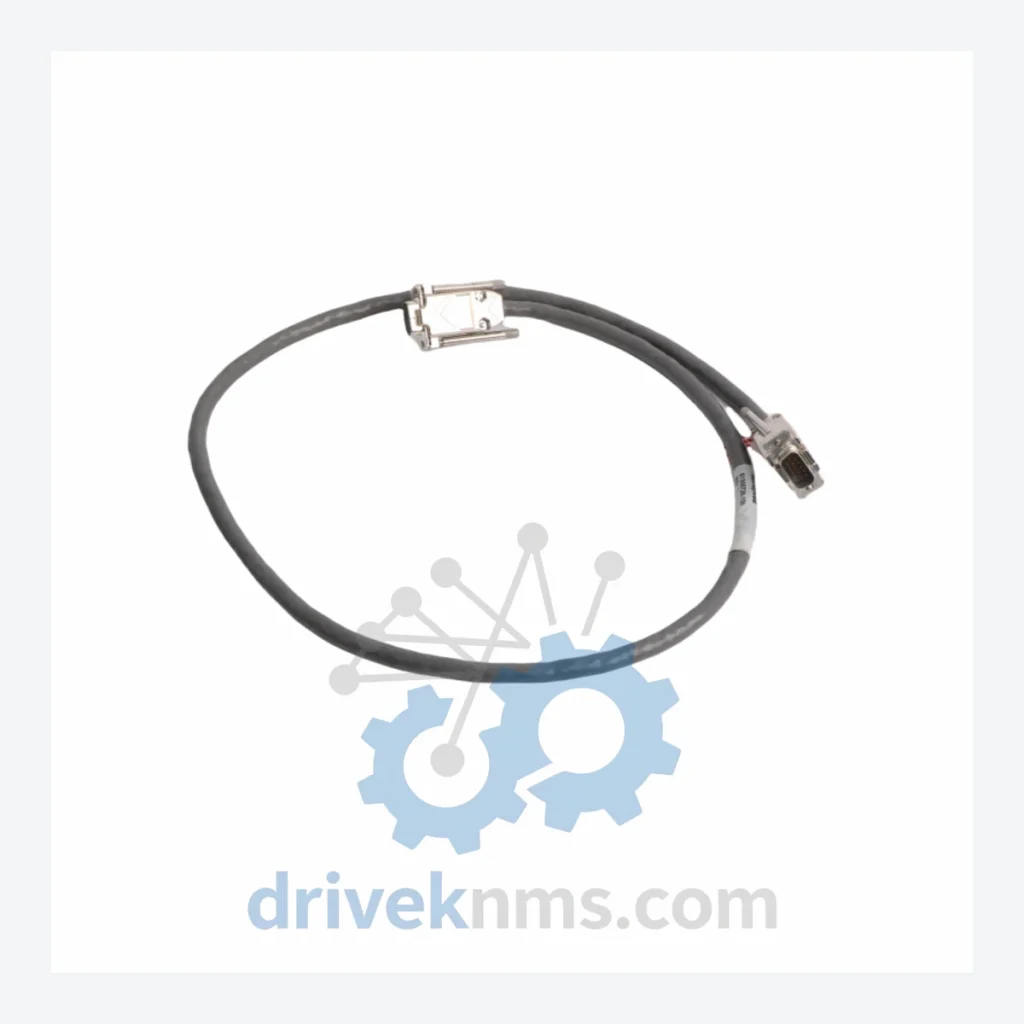
Product Overview
Commercial availability is handled through direct RFQ, model verification and export-oriented follow-up rather than public cart checkout.
Datasheet Preview
Use attached product manuals when available. If the manual is not public yet, request the full file directly through RFQ.
Commercial Path
Product pages on DRIVEKNMS are designed to verify model, brand and series first, then move the buyer into one clean quotation path.
Technical Dossier
RFQ support for obsolete parts: Send the model number, required quantity and destination so DriveKNMS can confirm sourcing options before quotation.
Note: Electrical parameters not independently verified for this listing. Specifications are sourced from original Honeywell TDC 3000 documentation. Do not substitute based on part number alone without cross-referencing your system revision level.
The Honeywell TDC 3000 platform was the backbone of process automation across refining, petrochemical, and power generation facilities for decades. The IKB (Inter-module Keyboard Bus) External module serves as a communication bridge within the LCN architecture — a role that cannot be replicated by a generic substitute or a software patch. When Honeywell formally discontinued TDC 3000 hardware support, it did not eliminate the installed base. Thousands of these systems remain in active service, and plant operators face a structural problem: the OEM will not supply parts, but the process cannot stop.
The consequence of an unplanned IKB External failure is not a minor inconvenience. Loss of this module can disrupt operator station communication across the entire LCN segment, triggering a cascade that forces a controlled shutdown or, in worst cases, an uncontrolled one. The cost of a single unplanned outage in a mid-scale refinery or chemical plant — measured in lost throughput, emergency contractor fees, and regulatory reporting — typically dwarfs the cost of maintaining a five-year spare parts inventory by a factor of ten or more.
Sourcing a verified 51305725-100 from DriveKNMS is not a workaround. It is the operationally sound decision for any facility that has not yet completed a full DCS migration and cannot afford the exposure of running without a hot spare.
For facilities operating legacy Honeywell TDC 3000 systems, the question is rarely whether to migrate — it is when, and at what cost. A structured spare parts strategy can defer that capital expenditure by five to ten years while maintaining system reliability at acceptable risk levels. The following approach is used by maintenance engineering teams managing long-lifecycle DCS assets:
1. Criticality mapping: Identify every module in the LCN and HPM (High-Performance Manager) architecture that has no modern equivalent and no field-repairable path. The 51305725-100 falls into this category. These are your Tier 1 spares — the ones that stop the plant if they fail and cannot be sourced within 48 hours.
4. Condition-based rotation: Do not store spares indefinitely without periodic bench testing. Electrolytic capacitors in boards manufactured before 2005 have a finite shelf life even in storage. A professional refurbishment cycle — capacitor replacement, conformal coating inspection, firmware verification — extends usable life and confirms the spare will perform when installed.
5. Vendor qualification: The secondary market for obsolete DCS hardware contains a significant volume of counterfeit and misrepresented parts. Qualify your suppliers on the basis of documented QA process, not price alone. The cost of installing a failed spare during an emergency is not recoverable.
DriveKNMS applies a 5-step qualification process to all obsolete DCS modules before they are offered for sale. This process is designed specifically for hardware that is no longer supported by the OEM and where field failure carries significant operational consequence.
Step 1 – Visual and mechanical inspection: Full board inspection under magnification. Pin corrosion, solder joint cracking, and connector wear are documented and assessed against acceptance criteria.
Step 2 – Electrolytic capacitor assessment: Capacitors are the primary failure mode in aged PCBs. Each board is evaluated for capacitor bulging, leakage, and ESR (Equivalent Series Resistance) deviation. Out-of-specification capacitors are replaced with equivalents meeting or exceeding original ratings.
Step 3 – Firmware and revision verification: Where applicable, firmware version and hardware revision are confirmed against the customer's system revision level prior to shipment. Mismatched revisions are flagged before the order is confirmed.
Step 4 – Functional bench test: Modules are powered and tested under controlled conditions. Communication interfaces are verified. Any module that does not pass functional testing is not offered for sale.
Step 5 – Packaging and ESD protection: All modules are shipped in anti-static packaging with desiccant. Long-term storage units are vacuum-sealed.
Q: How do I know the unit is genuine and not counterfeit?
A: All units sourced by DriveKNMS are inspected for authenticity markers including PCB silkscreen, component date codes, and Honeywell part marking conventions. We do not purchase from unverified liquidation channels. Documentation of provenance is available on request for critical applications.
Q: Should I buy more than one unit?
A: For a module in active service with no OEM supply path, holding a minimum of two units is standard practice among facilities with a formal asset protection program. Global secondary market supply for TDC 3000 hardware is contracting. Units available today may not be available in 18 months.
Q: Can you verify compatibility with my specific TDC 3000 revision?
A: Yes. Provide your system revision level and LCN configuration details when you contact us. We will confirm compatibility before the order is processed.
Continue The Model Path
Move from this exact model into the matching system hub, brand archive, model-family archive or lifecycle sourcing route before sending a final RFQ list.
Related Paths
Honeywell XC5010C is listed for Servo Drives RFQ review. Confirm quantity, condition and destination before quotation.
Honeywell MP-DNCF02-200 51402455-100 is listed for Servo Drives RFQ review. Confirm quantity, condition and destination before quotation.
Honeywell U2-1010S-PF is listed for Servo Drives RFQ review. Confirm quantity, condition and destination before quotation.