
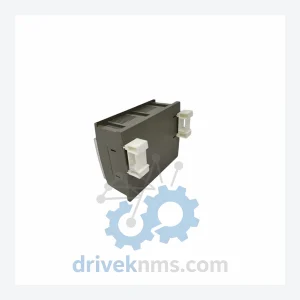
Honeywell XDL505 I/O Module FSC Series
Honeywell XDL505 is listed for Monitoring Systems RFQ review. Confirm quantity, condition and destination before quotation.
RFQ-ready industrial model
Model: FS-IOBUS-CPIO4
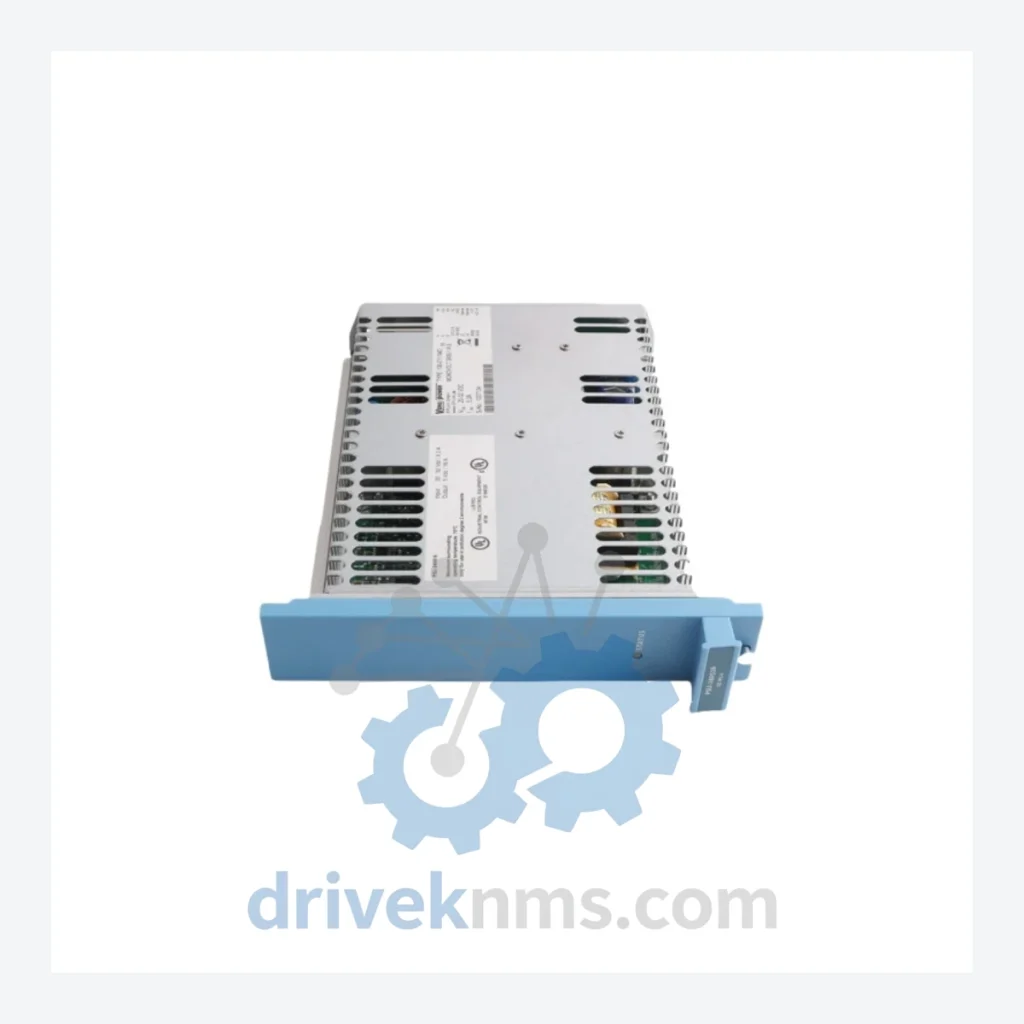
Product Overview
Commercial availability is handled through direct RFQ, model verification and export-oriented follow-up rather than public cart checkout.
Datasheet Preview
Use attached product manuals when available. If the manual is not public yet, request the full file directly through RFQ.
Commercial Path
Product pages on DRIVEKNMS are designed to verify model, brand and series first, then move the buyer into one clean quotation path.
Technical Dossier
When the FS-IOBUS-CPIO4 fails in a live safety instrumented system, the consequences extend far beyond a single module replacement. A forced migration away from the Honeywell FSC (Fail Safe Controller) / Safety Manager platform can trigger a full SIS re-engineering project — new hardware qualification, updated functional safety assessments, revised P&IDs, and mandatory SIL re-verification. Conservative industry estimates place such projects between USD $500,000 and several million dollars, depending on process complexity and regulatory jurisdiction. A single spare module, sourced in time, eliminates that exposure entirely.
DriveKNMS reviews sourcing options for this model through RFQ handling before quotation.
RFQ support for obsolete parts: Send the model number, required quantity and destination so DriveKNMS can confirm sourcing options before quotation.
| Part Number | FS-IOBUS-CPIO4 |
| Manufacturer | Honeywell |
| Product Series | FSC (Fail Safe Controller) / Safety Manager |
| Module Function | I/O Bus Communication Module (CP to I/O rack interface) |
| OEM Discontinuation Status | Discontinued – No longer manufactured or supported by Honeywell |
| Compatible Systems | Honeywell FSC Safety Manager, FSC Central Processor racks |
| Country of Origin | United States |
| Condition Available | New surplus / Professionally refurbished (see QA section) |
Note: Electrical parameters not independently verified by DriveKNMS. All specifications should be cross-referenced against the original Honeywell FSC engineering documentation prior to installation in a safety-critical application.
The Honeywell FSC Safety Manager platform was deployed extensively across oil & gas, petrochemical, and power generation facilities throughout the 1990s and 2000s. Its deterministic, IEC 61508-compliant architecture made it the backbone of emergency shutdown (ESD) and burner management systems (BMS) in facilities where failure is not an option.
The FS-IOBUS-CPIO4 serves as the communication bridge between the central processor and the distributed I/O racks. Without a functioning bus module, the CP loses visibility to field instruments — pressure transmitters, temperature sensors, valve position feedback — rendering the safety loop inoperable. In a certified SIS, an inoperable loop is not a maintenance issue; it is a process safety event that may trigger mandatory plant shutdown under local regulatory frameworks (OSHA PSM, EU ATEX, IEC 61511).
For plant managers operating under capital expenditure constraints, the calculus is straightforward: a verified spare module extends the operational life of a certified, proven-in-use safety system by years, at a fraction of the cost of a platform migration. Facilities that have maintained a strategic inventory of FSC spare modules have consistently deferred multi-million dollar upgrade projects by 5 to 10 years without compromising functional safety integrity — provided that periodic proof testing and documentation disciplines are maintained.
DriveKNMS applies a 5-step inspection protocol to all discontinued safety system modules before dispatch review:
Step 1 – Electrolytic Capacitor Assessment: Age-related capacitor degradation is the primary failure mode in legacy bus modules. Each unit undergoes ESR (Equivalent Series Resistance) measurement to identify capacitors approaching end-of-life. Degraded capacitors are replaced with specification-matched components before the unit is cleared for sale.
Step 2 – Firmware Version Verification: The installed firmware revision is documented and cross-referenced against known FSC compatibility matrices. Units with unverified or mismatched firmware versions are quarantined and disclosed to the buyer prior to sale.
Step 3 – Pin and Connector Inspection: All backplane connectors and I/O bus interface pins are inspected under magnification for oxidation, mechanical deformation, and corrosion. Affected contacts are treated or the unit is downgraded accordingly.
Step 4 – Functional Bench Test: Where test fixtures are available, modules are powered and subjected to communication loop testing to confirm basic operational integrity.
Step 5 – Documentation and Traceability: Each unit ships with an inspection record, condition classification (New Surplus / Grade A Refurbished), and photographic documentation of the physical condition at time of dispatch.
The FS-IOBUS-CPIO4 is a direct, drop-in replacement for the original installed module. No firmware re-flashing, no rack reconfiguration, and no changes to the safety application program are required under standard replacement conditions. This is a critical distinction from platform migration scenarios, which require full re-engineering of the safety application, updated HAZOP documentation, and re-certification of the SIL rating.
For maintenance managers operating aging FSC installations, the strategic recommendation is to hold a minimum of one cold spare FS-IOBUS-CPIO4 per CP rack in inventory. Given the finite and declining availability of this module on the secondary market, procurement delay carries real risk. Units that are available today may not be available at the moment of an unplanned failure.
Q: How do I know the unit is genuine and not counterfeit?
A: All units sourced by DriveKNMS are inspected for OEM markings, label integrity, and physical construction consistency with known-genuine reference units. Photographic documentation is provided with each shipment. We do not source from unverified brokers.
Q: Should I buy more than one unit?
A: For any FSC installation that is not scheduled for decommissioning within 24 months, holding at least one additional cold spare is a defensible maintenance strategy. The FS-IOBUS-CPIO4 is no longer manufactured. Secondary market availability will continue to decline. The cost of a spare module is negligible relative to the cost of an unplanned shutdown caused by an unavailable replacement part.
Q: Can this module be used in a SIL-rated application?
A: The FSC platform carries IEC 61508 certification from its original design qualification. A replacement module of the same part number, installed in accordance with the original system documentation, does not invalidate the system's SIL rating under IEC 61511 management of functional safety principles — provided the replacement is documented in the safety management system. Consult your functional safety engineer for site-specific guidance.
Continue The Model Path
Move from this exact model into the matching system hub, brand archive, model-family archive or lifecycle sourcing route before sending a final RFQ list.
Related Paths
Honeywell XDL505 is listed for Monitoring Systems RFQ review. Confirm quantity, condition and destination before quotation.
Honeywell U2-1018S-PF is listed for Monitoring Systems RFQ review. Confirm quantity, condition and destination before quotation.
Honeywell MC-GHAO11 51309540-175 is listed for Monitoring Systems RFQ review. Confirm quantity, condition and destination before quotation.