
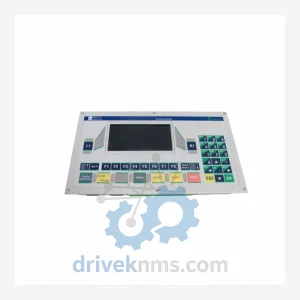
INDRAMAT BTV06.1HN-RS-FW Operator Panel – Obsolete BTV Series Spare Part
INDRAMAT BTV06.1HN-RS-FW Operator Panel – Obsolete BTV Series Spare Part When a BTV06.1HN-RS-FW operator panel fails on an active production…
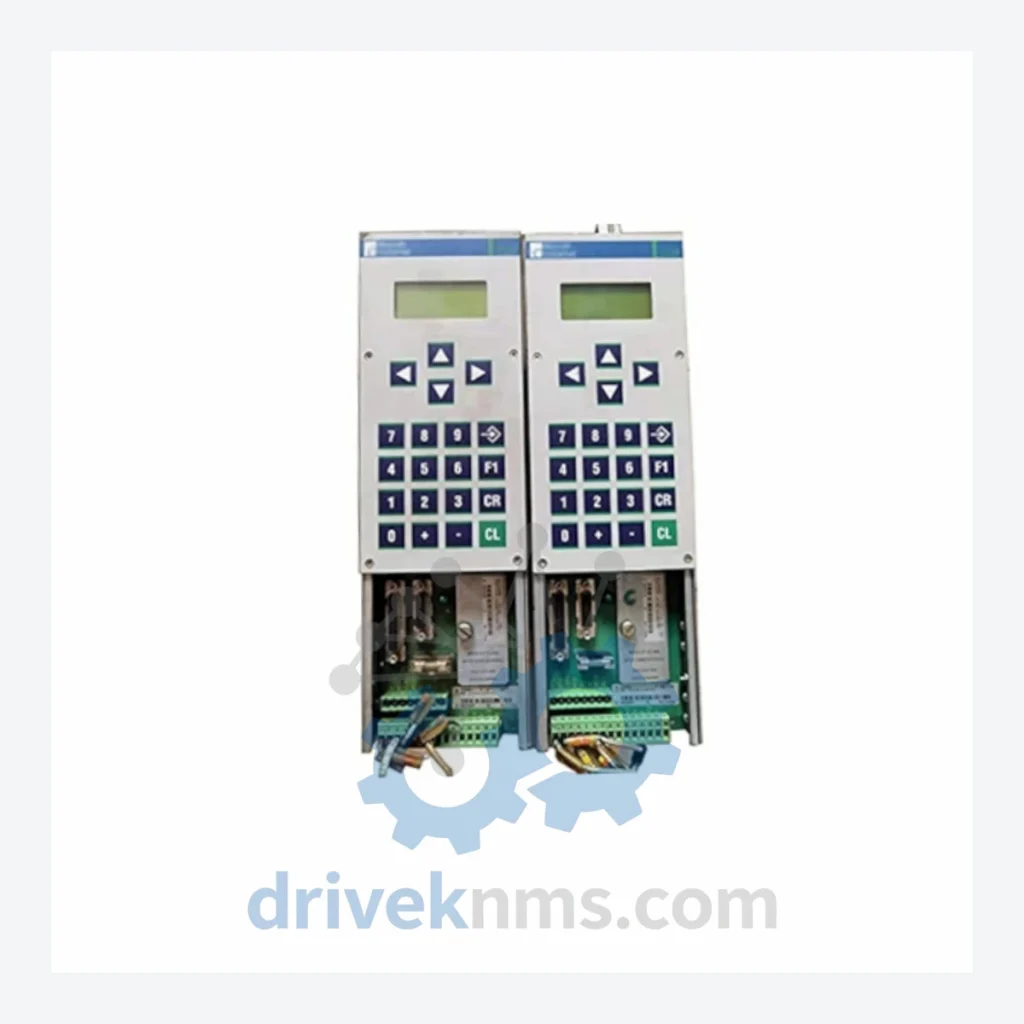
Model: CLM01.4-N-E-2-B-FW FWA-CLM1.4-LA1-01V06-MS
Product Overview
Commercial availability is handled through direct RFQ, model verification and export-oriented follow-up rather than public cart checkout.
Datasheet Preview
Use attached product manuals when available. If the manual is not public yet, request the full file directly through RFQ.
Commercial Path
Product pages on DRIVEKNMS are designed to verify model, brand and series first, then move the buyer into one clean quotation path.
Technical Dossier
When an Indramat CLM01.4 axis positioning module fails on your production floor, the clock starts running — not just on downtime, but on a decision that could cost your facility millions. A full migration away from an Indramat CLM-based motion control architecture typically involves new drives, new PLCs, new wiring, new commissioning, and months of engineering hours. Conservative estimates for a single-axis retrofit in a legacy Indramat environment run from USD $80,000 to well over $300,000 per axis, depending on system complexity. The CLM01.4-N-E-2-B-FW, paired with firmware FWA-CLM1.4-LA1-01V06-MS, is the exact hardware that stands between your current operation and that capital expenditure. DriveKNMS maintains verified stock of this discontinued module for facilities that cannot afford to treat a spare part shortage as a modernization trigger.
| Parameter | Detail |
|---|---|
| Manufacturer | Indramat (now Bosch Rexroth) |
| Part Number | CLM01.4-N-E-2-B-FW |
| Firmware Version | FWA-CLM1.4-LA1-01V06-MS |
| Series | CLM (Compact Logic Module) |
| Function | Single-axis positioning control |
| Interface | Parallel I/O, serial communication |
| Discontinuation Status | Discontinued – no longer manufactured by Bosch Rexroth |
| Country of Origin | Germany |
| Compatible Systems | Indramat CLM-series motion control platforms; commonly integrated with Indramat TDM, KDS, and RAC drive series |
Note: Electrical parameters not listed here are not confirmed from verified documentation. DriveKNMS does not publish unverified specifications. Contact us for application-specific technical consultation.
The Indramat CLM series was a dominant axis positioning solution throughout the 1990s and early 2000s, deployed extensively in machine tool, press, and material handling applications across Europe, North America, and Asia. Bosch Rexroth discontinued the CLM product line as part of its transition to the IndraDrive and IndraMotion platforms. Replacement firmware, spare boards, and factory repair services are no longer available through official channels.
For plant managers operating machinery built around CLM-based motion control, this creates a structural vulnerability: a single module failure can halt production with no direct OEM replacement path. The CLM01.4-N-E-2-B-FW is not a commodity component — it carries a specific firmware version (FWA-CLM1.4-LA1-01V06-MS) that governs positioning logic, I/O mapping, and communication protocol behavior. Substituting a different firmware version without re-commissioning the axis is not a viable field repair. This is precisely why sourcing the correct hardware variant from the secondary market is the only low-disruption option available to most facilities.
Facilities that have extended the service life of their Indramat CLM systems by 5 to 10 years through strategic spare part procurement consistently report the same approach: identify the three to five modules with the highest failure probability, secure verified spares before failure occurs, and document the firmware version tied to each axis. This is not a workaround — it is a recognized asset protection strategy used by maintenance engineers at automotive OEMs, aerospace manufacturers, and heavy industry operators worldwide.
The cost comparison is straightforward. A verified CLM01.4-N-E-2-B-FW spare from DriveKNMS represents a fraction of the engineering cost required to retrofit even a single axis to a current-generation drive platform. For facilities with multiple CLM axes, the calculus becomes even more decisive. Keeping the existing system operational through targeted spare part investment is, in most cases, the lowest total cost of ownership path available — provided the spare parts can be sourced.
Discontinued hardware sourced from the secondary market carries inherent risk if not properly evaluated. DriveKNMS applies a 5-step inspection protocol to all CLM01.4 units before they are offered for sale:
Step 1 – Visual and Mechanical Inspection: Full board examination for physical damage, burn marks, cracked solder joints, and connector pin condition. Corroded or bent pins are documented and assessed for impact on signal integrity.
Step 2 – Electrolytic Capacitor Assessment: CLM-series boards manufactured in the 1990s and early 2000s use electrolytic capacitors with a finite service life. Each unit is inspected for capacitor bulging, leakage, and ESR deviation. Units with degraded capacitors are either reconditioned or withheld from sale.
Step 3 – Firmware Version Verification: The firmware version is confirmed against the unit's label and, where possible, verified through functional test. Units offered as FWA-CLM1.4-LA1-01V06-MS are confirmed to carry that specific firmware version — not a substitute.
Step 4 – Functional Bench Test: Where test equipment permits, units are powered and tested for basic operational response. Results are documented per unit.
Step 5 – Packaging and Storage: Units are stored in ESD-safe packaging in a controlled environment. Long-term storage conditions are logged to support traceability.
The CLM01.4-N-E-2-B-FW is a direct hardware replacement for failed units of the same part number within an existing Indramat CLM installation. When the firmware version matches (FWA-CLM1.4-LA1-01V06-MS), the replacement module operates as a drop-in substitute — no axis re-parameterization, no PLC program modification, no re-commissioning of the motion profile is required under normal conditions.
This matters operationally. A maintenance team that can swap a failed CLM module and restore production within hours is not the same situation as a facility that must engage a systems integrator, procure new hardware, and schedule a multi-day commissioning window. The engineering cost avoidance alone — typically 40 to 120 hours of integrator time — justifies maintaining at least one verified spare on the shelf for any CLM axis that is critical to production throughput.
For facilities with multiple CLM01.4 axes, a structured spare parts inventory covering the most failure-prone variants is a standard risk mitigation measure. DriveKNMS can advise on stocking strategy based on axis count and criticality.
Q: What warranty applies to a discontinued CLM01.4-N-E-2-B-FW unit?
A: DriveKNMS provides a 90-day warranty against defects identified during our inspection process. Warranty terms are confirmed in writing at the time of sale. Given the discontinued status of this product, we recommend treating the purchased unit as a working spare and sourcing a second unit for long-term backup.
Q: How do I confirm the unit is genuine and carries the correct firmware?
A: Each unit sold by DriveKNMS is accompanied by documentation of its inspection record, including firmware version confirmation. We do not relabel or modify firmware identifiers. If you require additional verification, we can arrange pre-shipment inspection documentation.
Q: Should I buy more than one unit?
A: For any CLM axis that is critical to production, yes. Secondary market availability of specific CLM variants is finite and unpredictable. Facilities that wait until a second failure to source a replacement often find that inventory has been exhausted. A two-unit reserve for each critical axis variant is a standard recommendation for legacy system asset protection programs.
Q: Can DriveKNMS source other CLM variants or related Indramat components?
A: Yes. Contact us with your full part number and firmware version. We maintain sourcing networks for the broader Indramat and early Bosch Rexroth product range, including TDM, KDS, RAC, and DDS drive series.
Related Paths
INDRAMAT BTV06.1HN-RS-FW Operator Panel – Obsolete BTV Series Spare Part When a BTV06.1HN-RS-FW operator panel fails on an active production…
INDRAMAT DKC10.3 Series: Comprehensive Module Range and Technical Overview The INDRAMAT DKC10.3 series represents one of the most widely deployed…
Indramat REFU RZB 01.2-UN Keypad Display Panel – Obsolete REFU Series Spare Part When the operator panel on a REFU…