
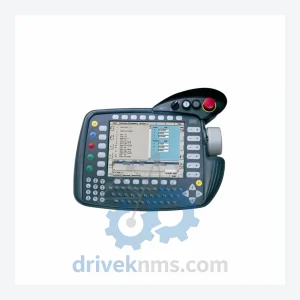
KUKA KCP2 Teach Pendant Modules
KUKA KCP2 Series: Comprehensive Module Range and Technical Overview The KUKA KCP2 (KUKA Control Panel 2) teach pendant is the…
Model: 00-284-170 KPC4 00284170 00-198-269 00-198-260KRC400198260
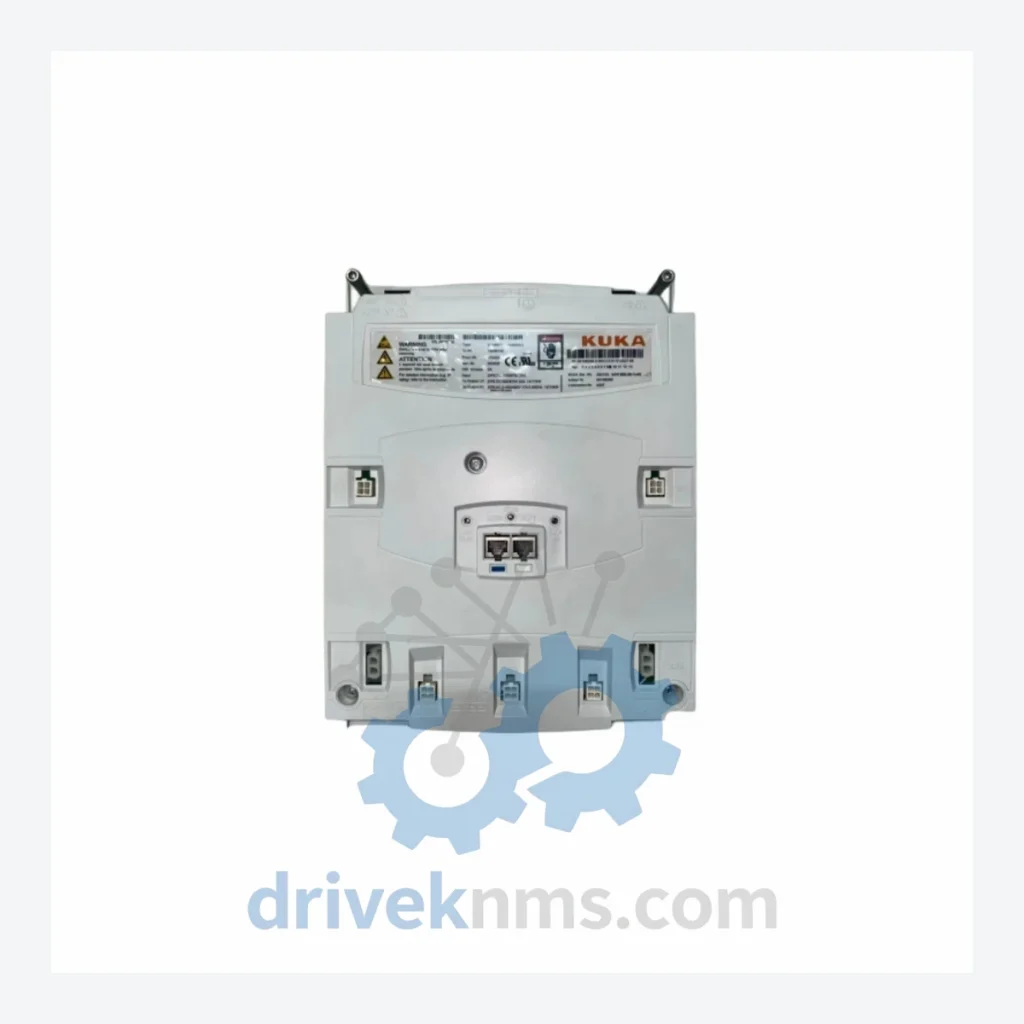
Product Overview
Commercial availability is handled through direct RFQ, model verification and export-oriented follow-up rather than public cart checkout.
Datasheet Preview
Use attached product manuals when available. If the manual is not public yet, request the full file directly through RFQ.
Commercial Path
Product pages on DRIVEKNMS are designed to verify model, brand and series first, then move the buyer into one clean quotation path.
Technical Dossier
When a KUKA KRC4 robot controller loses its CPU module, the production line does not pause politely. It stops. For facilities running KUKA KR series robots integrated into body-in-white welding cells, automotive assembly lines, or heavy-payload palletizing systems, a failed KPC4 board triggers a cascade: unplanned downtime, emergency engineering calls, and — if no replacement exists — a forced migration to a current-generation controller platform. That migration is not a line item. It is a capital project. Reintegration of a single robot cell into an existing PLC network, safety circuit, and MES infrastructure routinely costs USD 150,000 to 400,000 per unit, excluding lost production. The KUKA 00-284-170 KPC4 module, now discontinued, is the single component standing between your existing asset and that expenditure. DriveKNMS holds verified physical stock of this unit.
| Part Number | 00-284-170 / 00284170 |
|---|---|
| Cross Reference | 00-198-269 / 00-198-260 / KRC400198260 |
| Module Designation | KPC4 – KRC4 Controller PC Unit |
| Compatible Controller | KUKA KRC4, KRC4 compact, KRC4 smallSize |
| Compatible Robot Series | KR AGILUS, KR CYBERTECH, KR QUANTEC, KR FORTEC |
| Function | Main CPU / Industrial PC unit for KRC4 robot controller cabinet |
| Discontinuation Status | Discontinued by KUKA. No longer available through standard distribution channels. |
| Country of Origin | Germany |
| Condition Available | New surplus / Professionally refurbished (see QA section) |
The KUKA KRC4 platform was the dominant robot controller architecture deployed globally from approximately 2010 through the mid-2020s. Hundreds of thousands of KRC4 cabinets remain in active service across automotive, aerospace, electronics, and general manufacturing. The KPC4 module is the computational core of that cabinet — it runs KUKA System Software (KSS), manages real-time motion control, and handles all I/O communication with the robot's servo drives and safety circuits.
KUKA has transitioned its current product line to the KR C5 platform, which uses a fundamentally different hardware and software architecture. A KRC4 cabinet cannot be upgraded to KR C5 software without replacing the entire controller — and in most cases, the robot's wiring harness, teach pendant, and fieldbus configuration must be reworked as well. For a plant running 20 to 80 KUKA robots on a KRC4 baseline, this is not a maintenance decision. It is a multi-year capital program.
The practical alternative — the one that preserves existing capital investment and defers platform migration on the plant's own schedule — is maintaining a strategic inventory of KPC4 spare modules. A single unit on the shelf converts a potential week-long production stoppage into a two-hour swap. For facilities operating on just-in-time schedules, that difference is measured in millions.
Long-tail maintenance strategy: extending KRC4 asset life by 5 to 10 years
Plant managers facing pressure to retire KRC4-based cells before end of mechanical life should consider the following framework. First, conduct a criticality audit: identify which robots, if failed, would halt the entire line versus those with parallel redundancy. Prioritize spare KPC4 procurement for the former group. Second, establish a minimum stock level of one KPC4 unit per four to six KRC4 cabinets in critical cells — this ratio reflects observed mean time between CPU failures in high-cycle industrial environments. Third, negotiate a multi-unit purchase now, while stock exists in the secondary market. The supply window for discontinued KUKA KRC4 components narrows each year as existing surplus is absorbed. Waiting until a failure occurs means sourcing under emergency conditions, at emergency prices, with no guarantee of availability. Fourth, document the firmware version currently running on each KRC4 in your facility. When a replacement KPC4 is installed, the KSS version must match or be compatible — a mismatch requires a licensed software reinstallation that adds time and cost to the repair. DriveKNMS can advise on firmware compatibility before shipment.
Every KPC4 unit shipped by DriveKNMS passes a five-stage inspection protocol before it leaves our facility. This process was developed specifically for discontinued industrial computing hardware, where age-related degradation — not mechanical damage — is the primary failure mode.
Stage 1 – Visual and physical inspection: Full examination of the PCB surface, connector pins, and housing for corrosion, burn marks, cracked solder joints, and physical impact damage. Units with pin corrosion or oxidized contacts are rejected at this stage.
Stage 2 – Electrolytic capacitor assessment: Electrolytic capacitors are the most time-sensitive component on any industrial CPU board. We measure capacitance and ESR (equivalent series resistance) on all primary filter and decoupling capacitors. Units showing capacitance loss exceeding 20% of rated value or elevated ESR are either recapped with equivalent-spec components or rejected.
Stage 3 – Firmware version verification: The KSS version and BIOS/firmware build present on the unit are documented and disclosed to the buyer prior to shipment. We do not flash or modify firmware without explicit customer instruction.
Stage 4 – Functional power-on test: Where test equipment permits, the unit is powered and basic POST (power-on self-test) completion is verified. Results are logged.
Stage 5 – Packaging for long-term storage: Units are packed in anti-static bags with desiccant, inside rigid foam-lined cartons rated for international freight. This protects against electrostatic discharge and humidity ingress during transit and storage.
The 00-284-170 KPC4 is a direct hardware replacement for the original unit installed in your KRC4 cabinet. It does not require robot reprogramming, reconfiguration of the KRL motion programs, or modification of the safety circuit layout. The replacement procedure follows KUKA's standard KPC4 swap documentation: power down the cabinet, disconnect the existing module, seat the replacement, restore power, and verify KSS boot. In the majority of cases, the robot resumes operation from its existing program backup without any engineering intervention beyond the physical swap.
This drop-in compatibility eliminates the engineering hours, software licensing costs, and production qualification runs that accompany a controller platform migration. For a facility with established cycle-time baselines and certified robot programs, preserving the existing software environment is not a convenience — it is a requirement. Requalification of a robot program after a platform change can take days to weeks depending on the application and the certifying body involved.
What warranty applies to a discontinued part like the KPC4?
DriveKNMS provides a 90-day warranty on all refurbished units covering functional failure under normal operating conditions. New surplus units carry a 180-day warranty. Warranty claims are handled by direct replacement or full refund — no restocking fees.
How do I know the unit is genuine KUKA hardware and not a counterfeit?
All units are sourced from decommissioned KUKA-authorized installations or verified surplus channels. We provide the unit's serial number and, where available, original KUKA labeling. Buyers are encouraged to cross-reference the serial number with KUKA's service records if required for their internal compliance process.
Should I buy more than one unit?
For any facility with more than three KRC4 cabinets in critical production roles, holding a minimum of two KPC4 spares is the operationally sound position. The secondary market supply of this part is finite and shrinking. A second unit purchased today costs a fraction of the downtime cost of sourcing under emergency conditions twelve months from now.
Can DriveKNMS source other KRC4 spare parts?
Yes. DriveKNMS specializes in hard-to-find and discontinued components across major industrial automation brands. Contact us with your full part number list for availability and lead time.
© 2026 DriveKNMS. All trademarks belong to their respective owners. Specifications are for reference only and subject to change without notice. Verify all parameters against official documentation before installation.
Related Paths
KUKA KCP2 Series: Comprehensive Module Range and Technical Overview The KUKA KCP2 (KUKA Control Panel 2) teach pendant is the…
KUKA KCP2 VKCP2 Robot Control Panel: Sourcing Strategy & Asset Return Value in a Constrained Global Supply Chain The KUKA…
KUKA KVGA Series: Comprehensive Module Range and Technical Overview The KUKA KVGA (KRC Video Graphics Adapter) series is a family…