
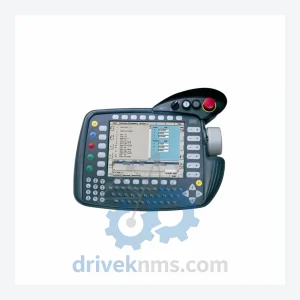
KUKA KCP2 Teach Pendant Modules
KUKA KCP2 Series: Comprehensive Module Range and Technical Overview The KUKA KCP2 (KUKA Control Panel 2) teach pendant is the…
Model: KRC2 00-119-763 SBM2 KRC4 KSP600-3¡Á20 00-198-266 KRC2 KPS-600/20-ESC00-134-525
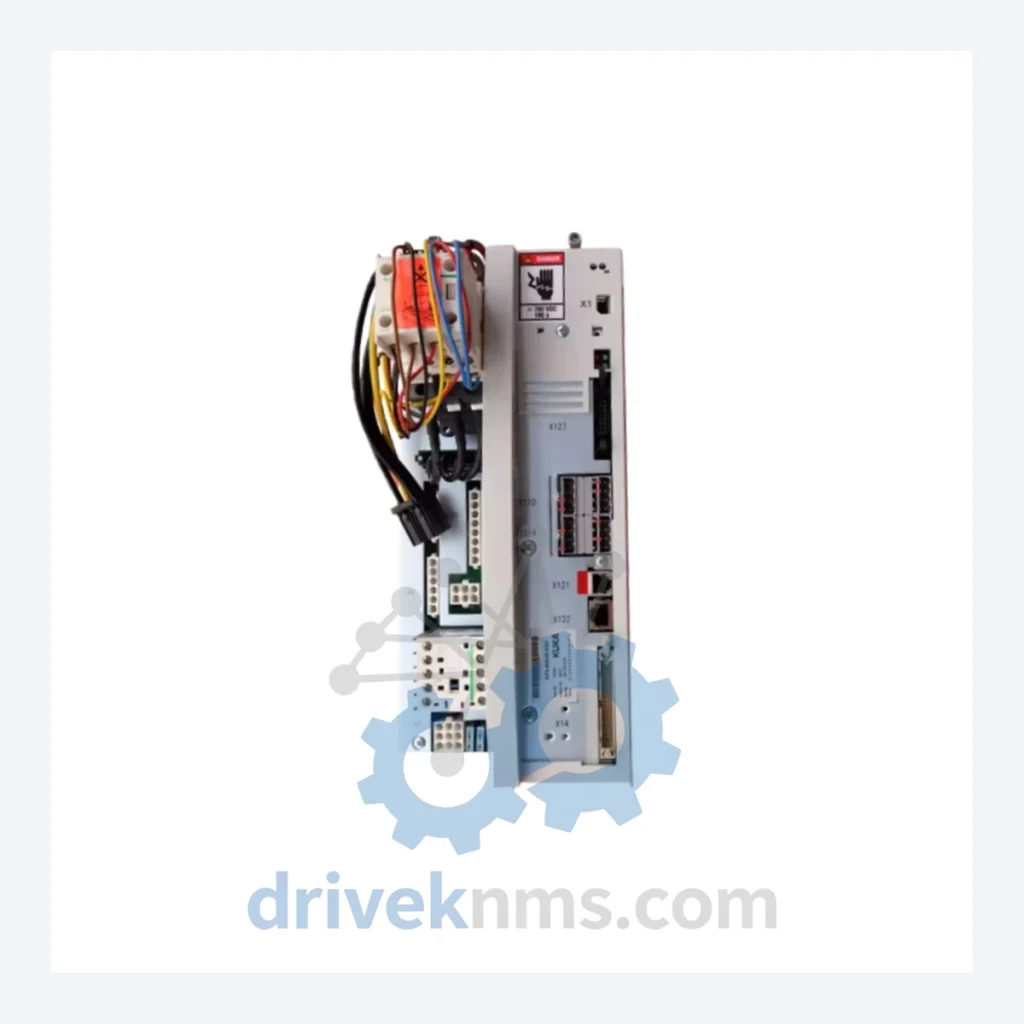
Product Overview
Commercial availability is handled through direct RFQ, model verification and export-oriented follow-up rather than public cart checkout.
Datasheet Preview
Use attached product manuals when available. If the manual is not public yet, request the full file directly through RFQ.
Commercial Path
Product pages on DRIVEKNMS are designed to verify model, brand and series first, then move the buyer into one clean quotation path.
Technical Dossier
When a servo power supply module fails inside a KUKA KRC2 or KRC4 robot controller, the production line does not pause politely. It stops. For facilities running KUKA industrial robots on legacy KRC2 controllers — a platform KUKA officially discontinued — sourcing a replacement for part numbers 00-119-763 (SBM2), 00-198-266 (KSP600-3×20), or 00-134-525 (KPS-600/20-ESC) through standard distribution channels is no longer straightforward. The alternative — a full KRC4 or KRC5 controller upgrade — carries engineering costs, downtime, and reintegration expenses that routinely exceed six figures per robot cell. DriveKNMS holds verified physical stock of these servo power supply units. This is not a brokered listing. Securing one unit today can keep a robot arm operational for another 5 to 10 years.
| Parameter | Detail |
|---|---|
| Brand | KUKA Robotics |
| Part Numbers | 00-119-763 (SBM2) | 00-198-266 (KSP600-3×20) | 00-134-525 (KPS-600/20-ESC) |
| Component Type | Servo Power Supply Unit |
| Compatible Controllers | KUKA KRC2 (discontinued), KUKA KRC4 |
| Series | KRC2 / KRC4 |
| Country of Origin | Germany |
| KRC2 Platform Status | Discontinued – End of Life (EOL) |
| KRC4 KSP600 Status | Active production; treated as critical long-lead spare |
| Typical Host Systems | KUKA KRC2 robot controllers (KR 6, KR 16, KR 30, KR 60, KR 100, KR 150, KR 200 series); KUKA KRC4 compact and standard cabinets |
Note: Electrical parameters (input/output voltage, current ratings) vary by sub-variant. Confirmed specifications are provided upon request with unit serial number verification. No parameters are published here that have not been independently verified.
The KUKA KRC2 controller platform entered end-of-life status years ago. KUKA no longer manufactures replacement modules, and authorized service channels have progressively depleted their safety stock. For plant managers operating KRC2-based robot cells in automotive body shops, foundries, palletizing lines, and general assembly, this creates a compounding risk: every operational month brings the facility closer to a point where a single component failure triggers an unplanned capital expenditure rather than a maintenance event.
The servo power supply unit — part numbers 00-119-763, 00-198-266, and 00-134-525 — sits at the center of the KRC2 power architecture. It converts incoming AC supply into the regulated DC bus voltage that feeds the servo amplifier modules driving each robot axis. Without a functional unit, the controller cannot initialize. The robot does not move. The cell is dark.
Replacing the entire controller cabinet to resolve a single module failure is a decision driven by parts unavailability, not engineering necessity. A verified replacement servo power supply unit restores full controller function without touching the robot's kinematic calibration, teach pendant programs, or safety zone configurations. The existing investment in robot programming, tooling, and process validation is preserved entirely.
For facilities managing fleets of 10, 20, or 50 KRC2-based robots, the calculus is straightforward: maintaining a controlled spare parts inventory for these power supply modules costs a fraction of one unplanned production stoppage. Plants that have adopted a structured obsolescence management program — identifying critical single-point-of-failure components and holding verified spares — consistently extend the productive life of their robot assets by 5 to 10 years beyond the OEM's support window.
Sourcing obsolete industrial components from the secondary market carries legitimate risk. DriveKNMS applies a structured 5-step inspection protocol to every servo power supply unit before it is offered for sale.
Step 1 – Electrolytic Capacitor Assessment: Capacitor aging is the primary failure mode in power supply modules that have been in storage or light service for extended periods. Each unit is inspected for capacitor bulging, electrolyte leakage, and ESR deviation. Units with degraded capacitors are not offered as serviceable stock.
Step 2 – Firmware Version Verification: Where applicable, the firmware revision of the unit is confirmed against KUKA's known compatibility matrix for the target controller version. Mismatched firmware can cause initialization faults that are difficult to diagnose in the field.
Step 3 – Pin and Connector Corrosion Inspection: All edge connectors, bus connectors, and signal pins are inspected under magnification for oxidation, mechanical damage, and contact integrity. Corroded contacts are the second most common cause of intermittent faults in stored modules.
Step 4 – Functional Bench Test: Where test infrastructure permits, units are powered and output voltages are verified against specification before shipment.
Step 5 – Packaging and ESD Protection: Units are shipped in anti-static packaging with appropriate mechanical protection. Condition grade (New Old Stock, Refurbished, or Tested Used) is declared explicitly on the invoice and shipping documentation.
The 00-119-763, 00-198-266, and 00-134-525 servo power supply units are direct mechanical and electrical replacements for the original KUKA-supplied modules. Installation does not require robot reprogramming, axis recalibration, or safety system reconfiguration. The replacement procedure follows the standard KUKA KRC2/KRC4 service documentation for power supply module exchange.
This drop-in replacement characteristic is the core economic argument for spare parts-based maintenance over controller replacement. Engineering hours for a module swap are measured in hours. Engineering hours for a controller migration — including program conversion, I/O remapping, safety validation, and production requalification — are measured in weeks. The cost differential is not marginal.
For facilities under pressure from corporate asset management teams to justify continued operation of legacy robot platforms, a documented spare parts strategy — with verified stock on hand — provides a concrete, auditable basis for deferring capital expenditure while maintaining production output and safety compliance.
What warranty applies to obsolete spare parts?
DriveKNMS provides a 90-day warranty against defects in materials and workmanship on all tested and refurbished units. New Old Stock (NOS) units carry a 30-day warranty. Warranty terms are confirmed in writing at the time of order.
How do I confirm the unit is genuine KUKA and not a counterfeit?
All units supplied by DriveKNMS are sourced from decommissioned KUKA robot installations, authorized service channel surplus, or verified OEM distributors. Part number labels, date codes, and board markings are inspected for consistency. Documentation of provenance is available upon request for high-value orders.
Should I buy more than one unit as a long-term reserve?
For facilities operating more than three KRC2-based robots, holding a minimum of two servo power supply units as on-site spares is a defensible maintenance strategy. The KRC2 platform will not return to production. Secondary market availability will continue to tighten. Procurement cost today is lower than procurement cost in 18 months.
Can this unit be used in both KRC2 and KRC4 controllers?
The three part numbers listed cover distinct variants. 00-119-763 (SBM2) is specific to KRC2. 00-198-266 (KSP600-3×20) and 00-134-525 (KPS-600/20-ESC) are associated with KRC4 and KRC2 respectively. Please confirm your controller model and existing part number before ordering. DriveKNMS technical staff will verify compatibility prior to shipment.
Related Paths
KUKA KCP2 Series: Comprehensive Module Range and Technical Overview The KUKA KCP2 (KUKA Control Panel 2) teach pendant is the…
KUKA KCP2 VKCP2 Robot Control Panel: Sourcing Strategy & Asset Return Value in a Constrained Global Supply Chain The KUKA…
KUKA KVGA Series: Comprehensive Module Range and Technical Overview The KUKA KVGA (KRC Video Graphics Adapter) series is a family…